Marywood Art Galleries
- Shields Center for Visual Arts
- Check individual gallery pages for specific hours.
- 570-348-6278
- gallery@marywood.edu
PAST EXHIBITS:
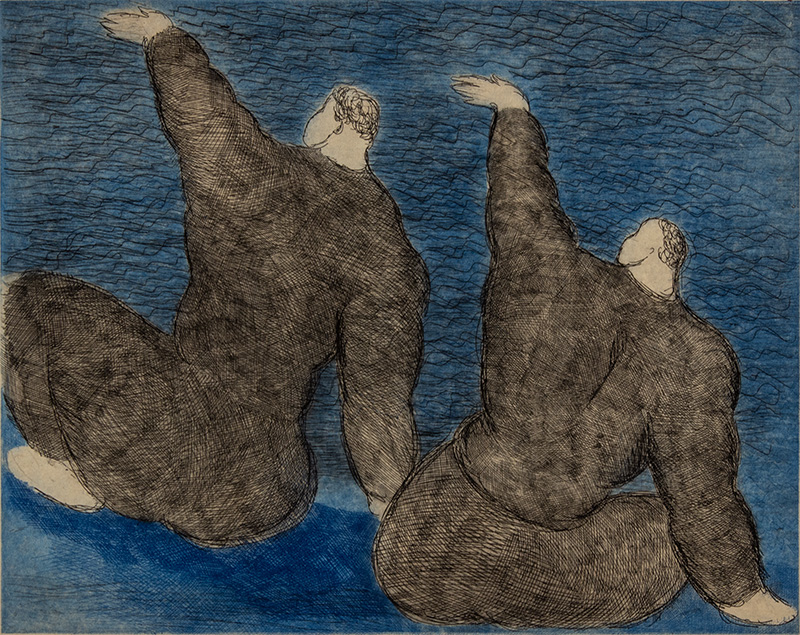
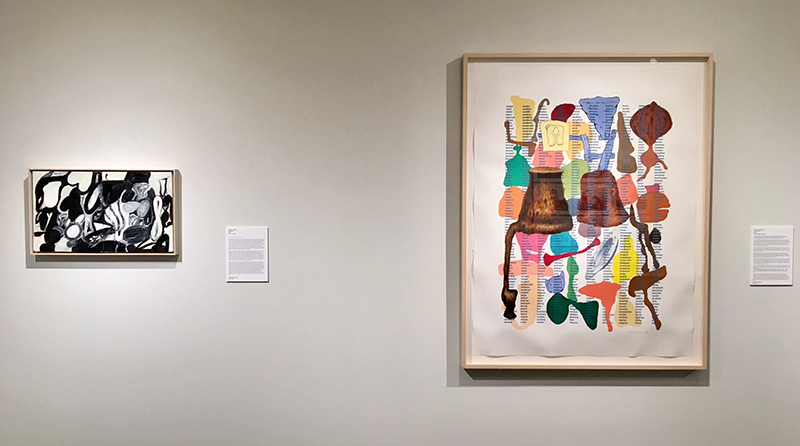
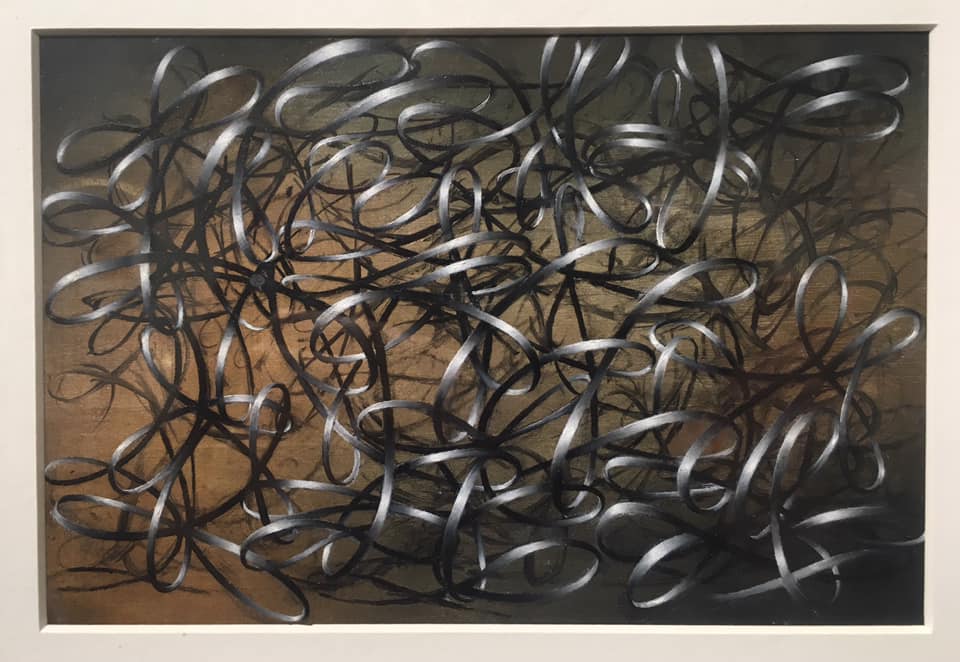
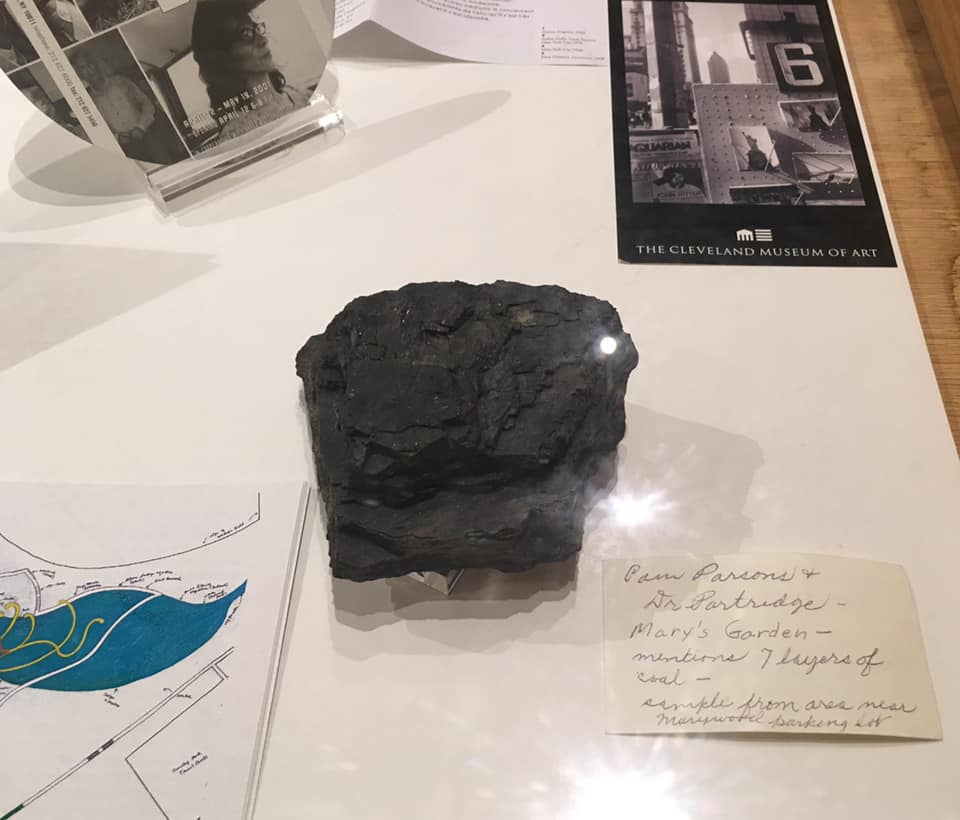
Sep 20, 2018 - Nov 02, 2018
CONNECT: The College of Arts and Sciences Selects from The Maslow Collection
As a celebration of the interconnectivity between all fields in higher learning and the recent reformation of Marywood’s College of Arts and Sciences, a faculty representative from each of the ten disciplines within the College of Arts and Sciences curates a work from The Maslow Collection into the exhibition. They then write about the artwork’s relationship to their area of study. Unexpected and fascinating dialogues are generated, showing how critical, creative, and collaborative we all are in this environment.
Opening Reception: Thursday, September 20 from 5:30-7:30 PM
This exhibition and opening reception runs concurrently with the 2018 Marywood Art Faculty Biennial exhibition in the Mahady Gallery and the 2018 Print Guild Exhibition in the Suraci Gallery.
Mar 26, 2018 - May 11, 2018
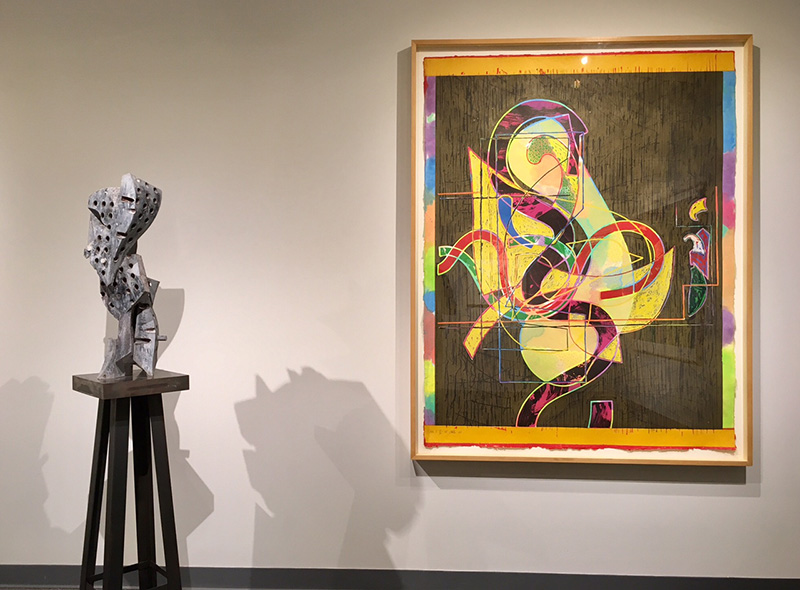
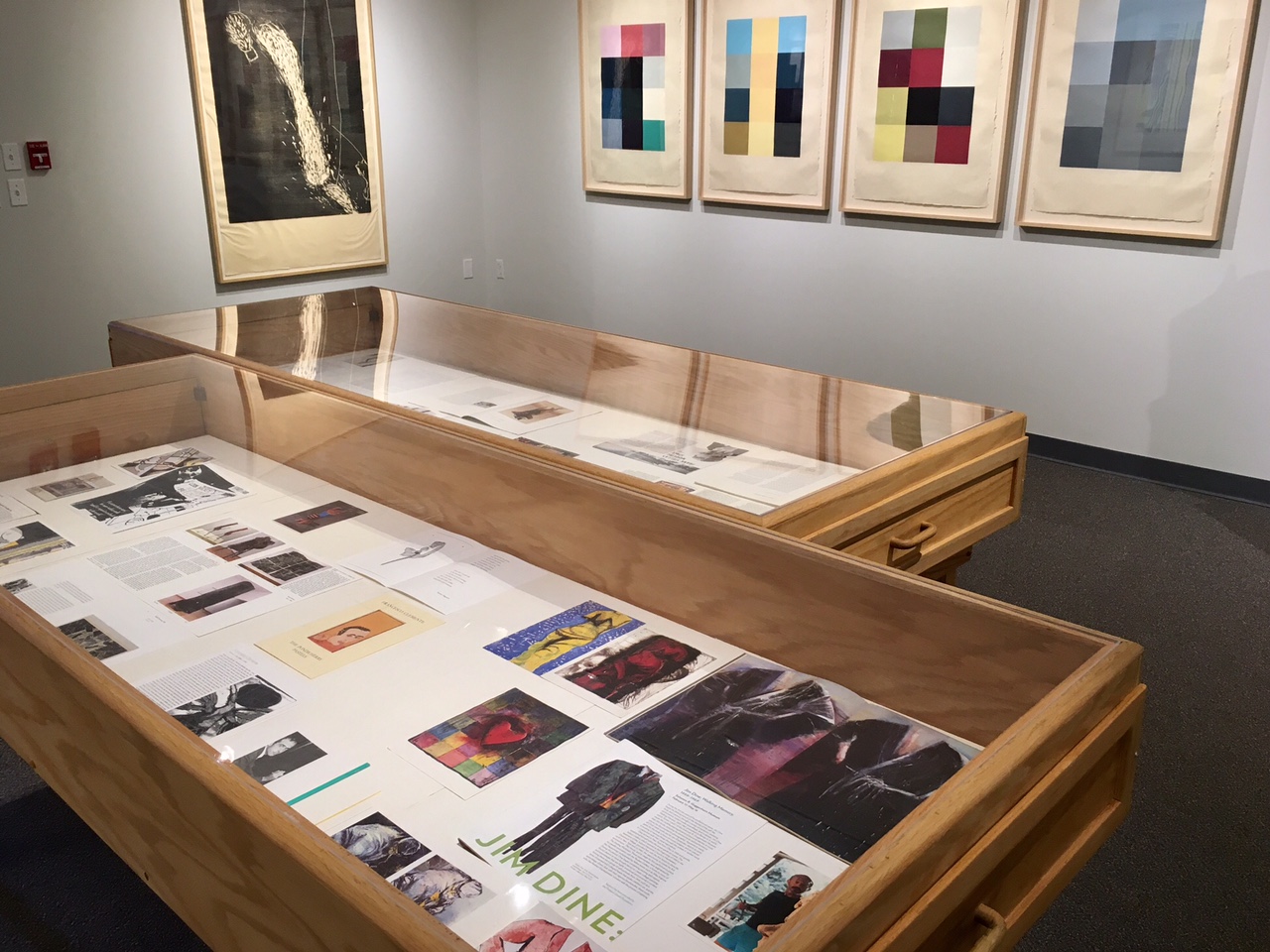
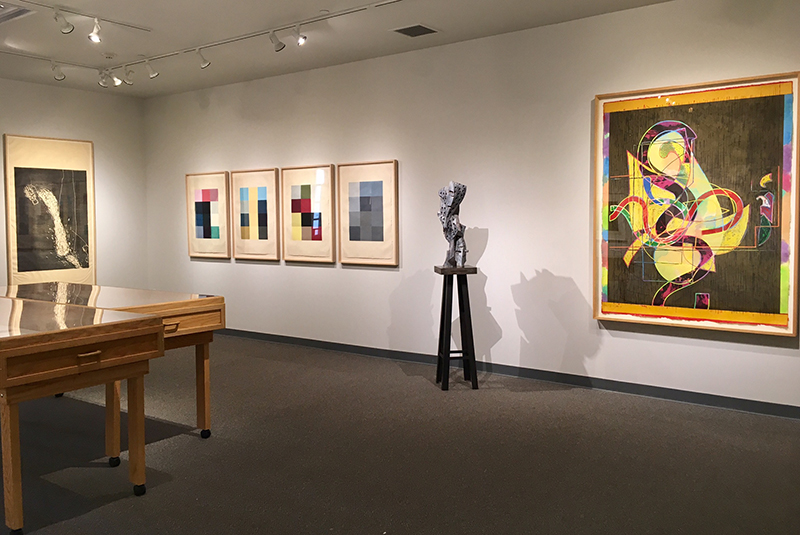
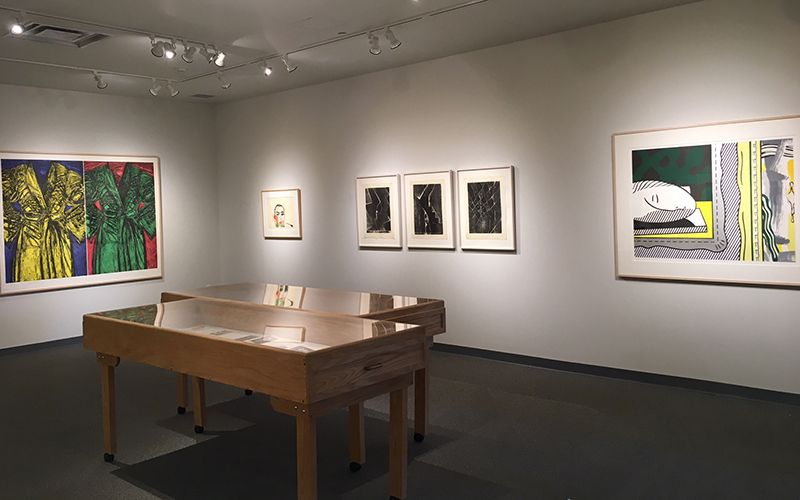
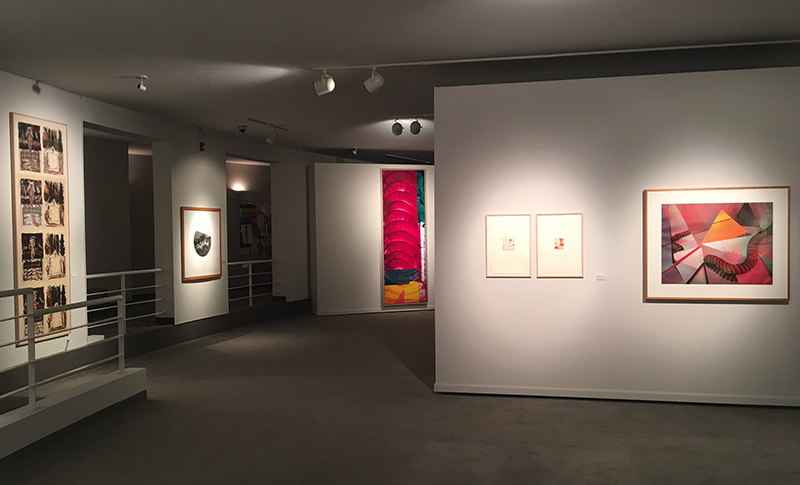
STUDIES IN RELIEF: Exploring Woodcut and Raised Printing in The Maslow Collection
Work for the exhibition “STUDIES IN RELIEF: Exploring Woodcut and Raised Printing in The Maslow Collection” was selected to highlight examples of relief printing used exclusively or in mixed media applications.
In the 2018 spring semester three courses in printmaking were taught by Peter Hoffer. One of these courses, basic printmaking, deals primarily with relief block techniques, including wood and linoleum. The other two cover areas in addition to relief, or block, printing.
Other than the Roy Lichtenstein and Frank Stella prints, all works exhibited demonstrate the woodcut used alone to create work. These exceptions use the woodcut but also other processes such as screen printing or lithography in mixed media combinations.
Through the use of this early and basic method of printing, the prints on view collectively convey the wide range of stylistic and technical effects available today to the creative printmaker.
Jim Dine’s large and colorful signature Kindergarten Robes, a woodcut block printed twice side by side on one paper in contrasting colors, was hand carved and press printed. This conveys dynamic gestural and textural qualities inherent in the medium.
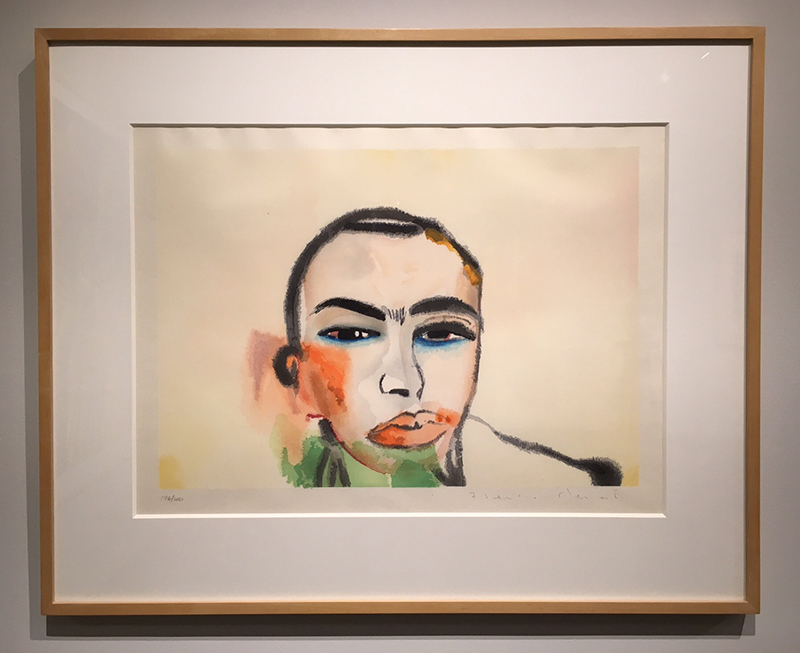
In contrast, the woodcut print realized by Francesco Clemente almost suggests a watercolor painting, belying the actual material used. The technique employed is that of the traditional Japanese color woodcut, or ukiyo-e print. Printed by hand with brush-applied water-based pigment, this print is a technical tour de force executed by master printers working directly with the artist. It should be noted that this impression is one of many in a large edition, all of which are in likeness essentially interchangeable.
Puppet, a large woodcut by Susan Rothenberg, an American painter and printmaker gaining prominence in the 1980’s, is informed by the German Expressionist woodcut of the early 20th century, echoing her involvement in neo-expressionist trends.
Mel Kendrick, a sculptor working in wood, also creates prints using wood, at times using the surface of his sculptures for printing to exploit the grain patterns unique to wood. Kendrick’s bold but nuanced black and white images, emphasize angularly constructed shapes and form. Appearing to be cut into sections, the parts are inked in a variety of ways, then assembled and press printed, achieving interesting and dynamic spacial relationships. It also seems that varying press pressure was employed to create slight tonal and textural contrasts. The cut block, jigsaw approach is akin to one used by Edvard Munch to achieve multi-color printing with one pass. Although in Munch’s case, he printed by hand rather than with a printing press.
In Meltdown, Sherri Levine’s woodcut print could have been achieved using screen printing, lithography, or Intaglio. However, the quality yielded and the ‘finish’ of the image, are to the discerning eye unmistakably achieved by wood, which is what the artist felt was needed. The image is actually one informed by early computer-generated imaging capabilities and printing technology, characterized in its relative infancy by obvious pixilation that today seems primitive and unknown. Perhaps the artist’s statement was in part ironic, using the ancient, pre-industrial woodcut material and form to convey a late 20th century concept addressing the exaggerated pixel, primitive also in its way. A final thought to consider is that the execution of Levine’s printed image, using wood, is highly sophisticated, technically masterful and precise, suggesting the technological advancement to come based on cruder beginnings.
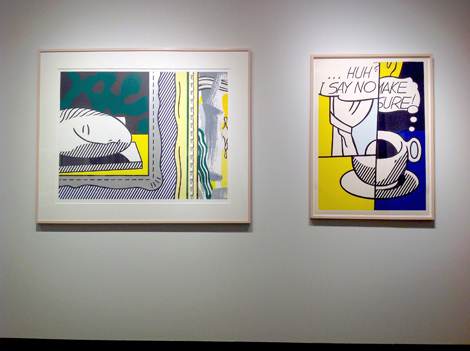
Sleeping Muse by Roy Lichtenstein and Pergusa Three by Frank Stella are large, technically and visually complex prints employing wood in concert with other processes- lithography and screen print in the case of Lichtenstein and relief etching in the case of Stella. These are works, done in Ateliers or studios operated by master printers and publishers, where artists and printers create masterful prints in collaborative effort. Known as mixed media, these particular examples use lithography, screen printing, and etching (printed as relief) as additional ingredients in the sauce. Generally speaking, the undertaking of large and technically complex prints such as these require the skills and expertise of master printers as well as their well-equipped shops- ones with appropriate presses and generous space.
Students and other visitors to the gallery are offered a glimpse into the world of the woodcut, an ancient printing method that continues its relevance and influence as an art form. Although the oldest and most direct of all the printing processes, the simple woodcut is deceptive in its potential for boldness, complexity, and visual expression. The exhibit also offers students an opportunity to view firsthand the signing and presentation of limited edition fine art multiple-originals by notable contemporary artists.
- Peter Hoffer, Associate Professor of Art, Printmaking Area Coordinator
Jan 26, 2018 - Mar 21, 2018
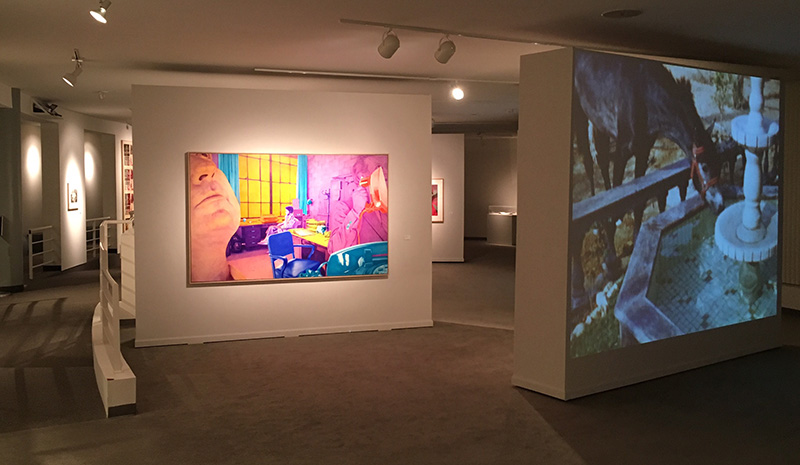
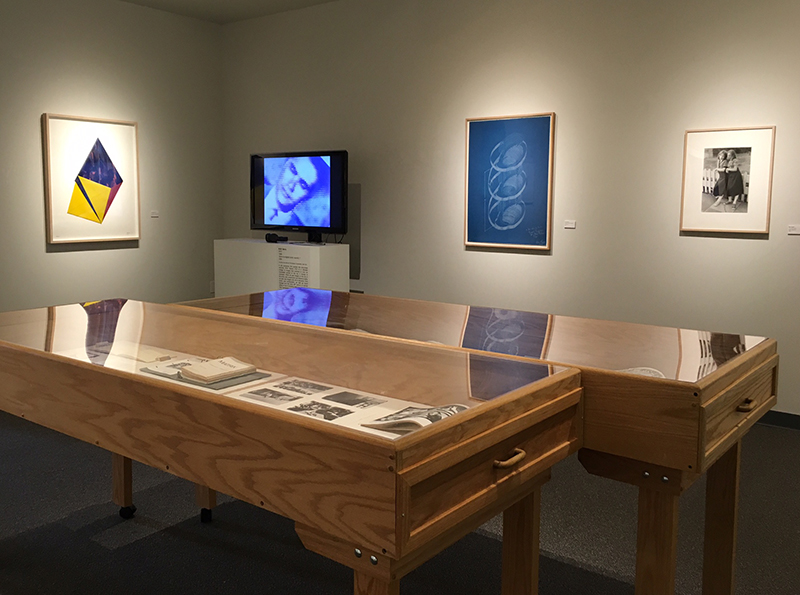
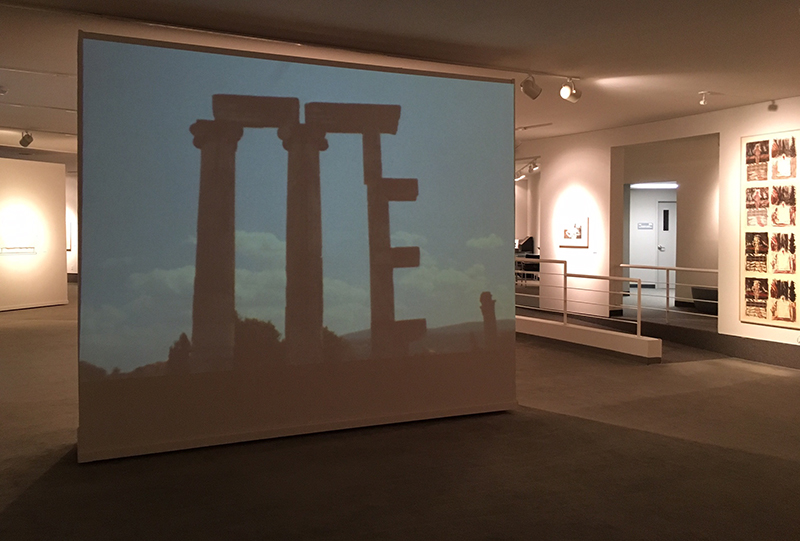
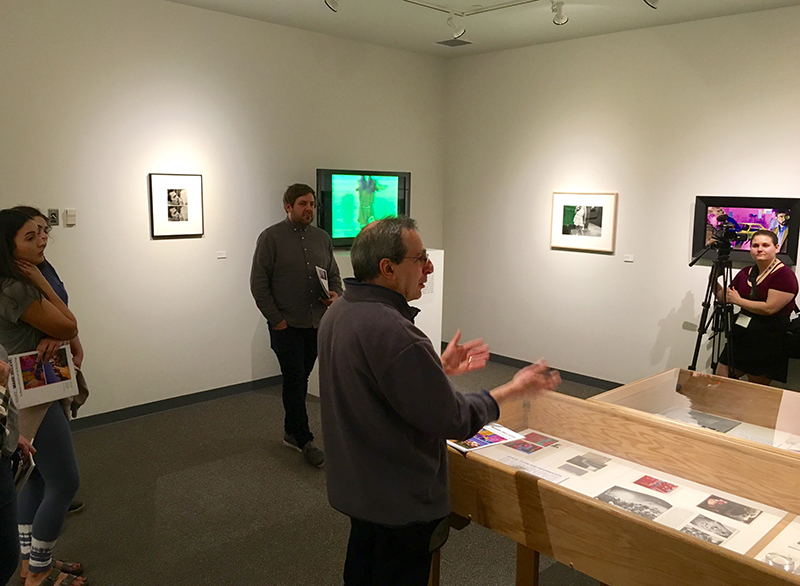
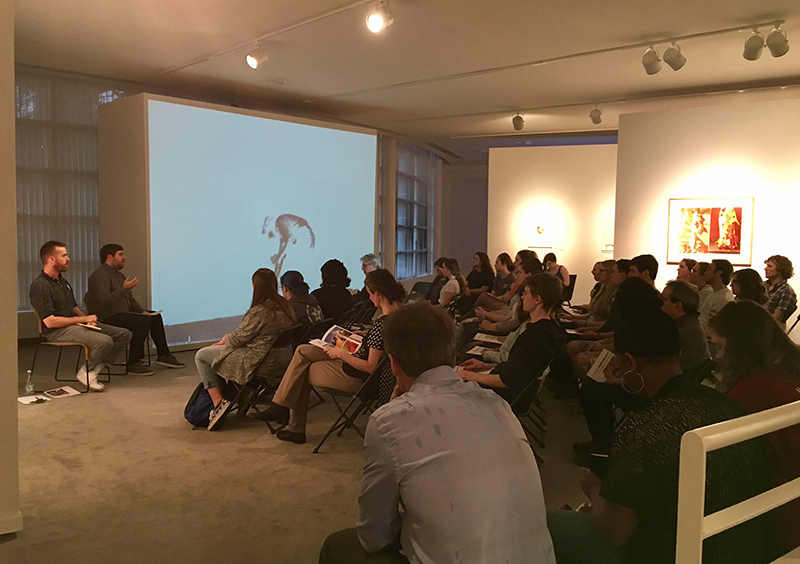
Make, Believe: The Maslow Collection and the Moving Image
Make, Believe generates a dialogue between the work of artists in The Maslow Collection and artists working with the moving image. The films and videos of Basma Alsharif, Nazlı Dinçel, Julie Harrison & Neil Zusman, David Haxton and M.M. Serra all, in their respective ways, interrogate the notion of the acceptance of reality. What might otherwise be considered documentary scenarios become realities that slip, shift and falter, and we begin to inhabit spaces of the unreal or uncanny. These artworks demonstrate a fluid mobility between stable, recognizable ground and the far reaches of the mind and imagination. This freedom of movement also presents itself through a number of diverse practices within The Maslow Collection. Using photography, drawing, painting, printmaking and conceptual practices throughout the 1970s, 80s and 90s, artists like Alice Aycock, Mark Cohen, Barbara Kasten, Dorothea Rockburne and Sandy Skoglund examine similar themes surrounding unexpected spatial realities. They each ask, in their own way, “Will you believe what you see?”
Featuring moving image works by: Basma Alsharif, Nazlı Dinçel, Julie Harrison & Neil Zusman, David Haxton and M.M. Serra; with works from The Maslow Collection by: Alice Aycock, Jennifer Bartlett, Mark Cohen, Hamish Fulton, David Haxton, Barbara Kasten, Martin Mull, Ellen Phelan, Robert Rauschenberg, David Reed, Dorothea Rockburne, Sandy Skoglund and Andy Warhol.
Make, Believe is curated by Herb Shellenberger (independent curator) and Ryan Ward (Curator, The Maslow Collection).
About Herb Shellenberger:
Herb Shellenberger is a curator and writer originally from Pennsylvania and based in London. He has curated screenings at institutions such as Irish Film Institute, Light Industry (Brooklyn), Lightbox Film Center (Philadelphia), LUX (London) and NYU. Since 2016, he has been Associate Programmer for Berwick Film & Media Arts Festival (Berwick-upon-Tweed, UK). Shellenberger has lectured on film and contemporary art at museums, universities and art spaces internationally, and has written for publications including Art-Agenda, Art Monthly and The Brooklyn Rail. He curated the series “Independent Frames: American Experimental Animation in the 1970s + 1980s” which premiered at Tate Modern in 2017 and is touring internationally. He is co-programmer (with Almudena Esobar López) of "COMMON VISIONS", a series examining collaborative practices in non-fiction film and media, presented by the Flaherty Seminar at Anthology Film Archives, New York in winter 2018.
Dec 01, 2015 - Dec 18, 2015
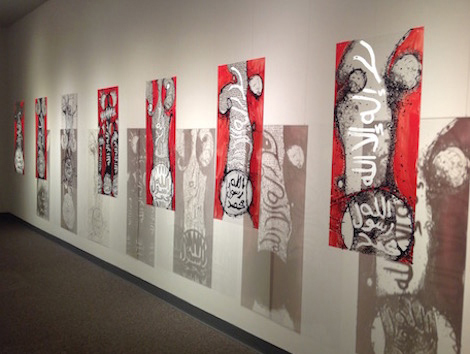
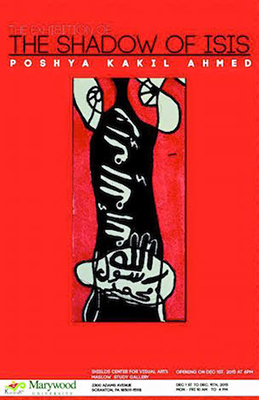
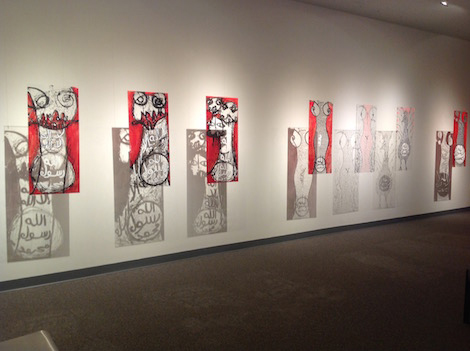
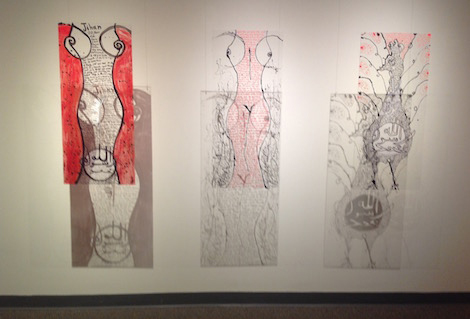
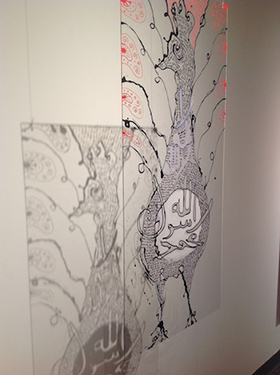
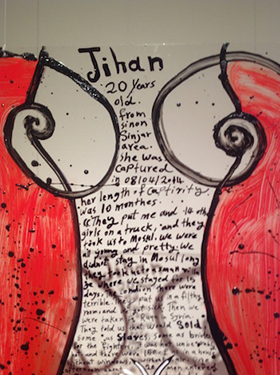
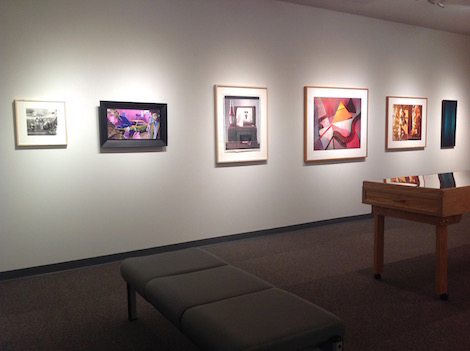
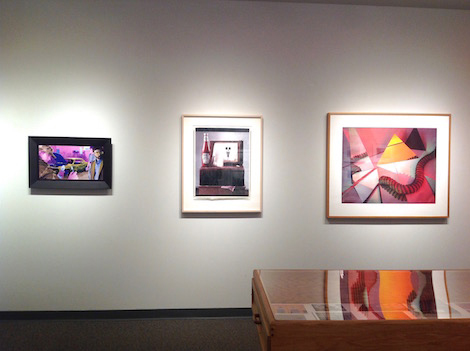
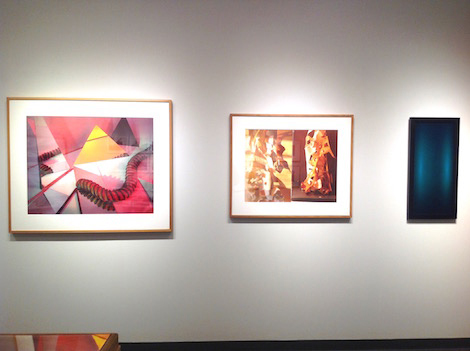
The Shadow of ISIS
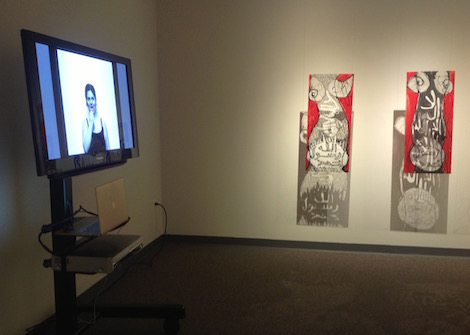
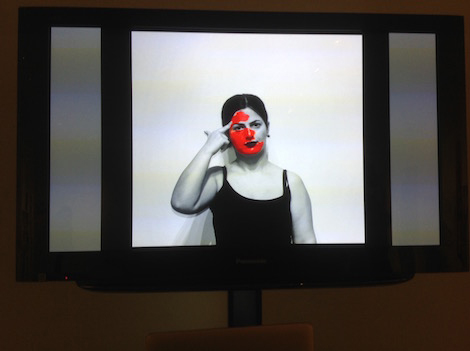
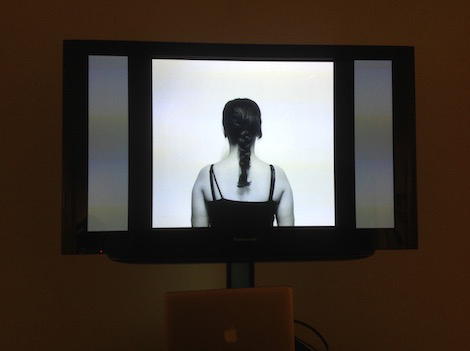
The current installation in the Maslow Study Gallery is titled The Shadow of ISIS. This is a departure for the Maslow Study Gallery in that it is one of the very few times we have presented an exhibition in the gallery that is not based on, and drawn from, The Maslow Collection. The artist for this exhibition is Poshya Kakil Ahmed. Poshya has created a number of performance pieces and videos prior to arriving in the U.S. in her home country of Kurdistan (Iraq) that have received international attention, though this is her first one person exhibition in the U.S. This body of work and installation came about through a year–long dialogue between Robert Schweitzer, curator for The Maslow Collection, and Poshya who is currently a Marywood graduate student majoring in Interior Architecture.
From Poshya Kakil Ahmed's text for her video:
“I am criminal , because I am a woman
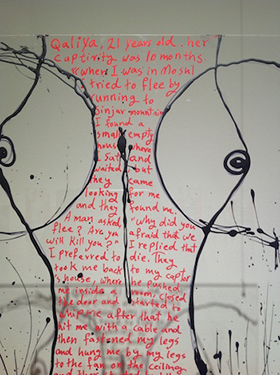
This project express my feelings and reacts for those Yazidi and christian women who are cruelty, slavery and sexual abuse endured at the hands of Islamic State fighters. ISIS kidnapped more than 5000 women from very young girls from 9 years old to above and selling them in the public markets , which their prices are depend on their virginity and ages.
Those girls are held captive and sold out many times , and some of them could escape ,but now they are also underscores the social stigma that follows some of the abused women for the rest of their lives. they are facing society and cultural abuse by patriarchal societies and ultra-conservative families.
Some of the escaped women are threatened to be killed if the “men” from their families found out of that ISIS sexually abused her and “tainted” her honor.
there is my question toward the society: Who is the criminal in this case? why women should be abused from ISIS and and from her own society? what is her fault? just being a woman is a huge fault in my society that is why I am a criminal as a woman and I should face all the violations from religions , war, ISIS, and society.
I donated my hair to the honor of those women. I cut my braid to show that my dishonor for being a women in this society.”
Nov 09, 2015 - Nov 25, 2015
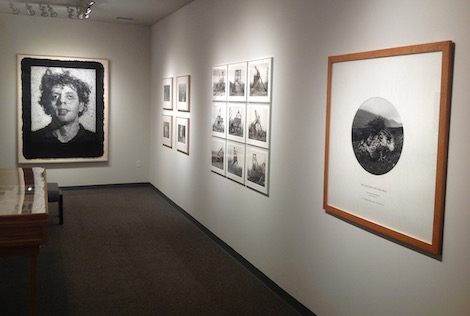
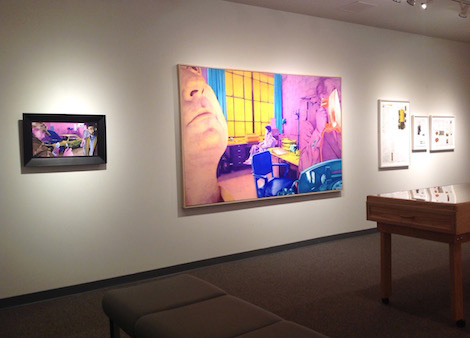
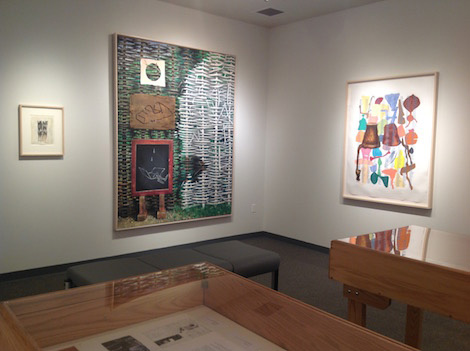
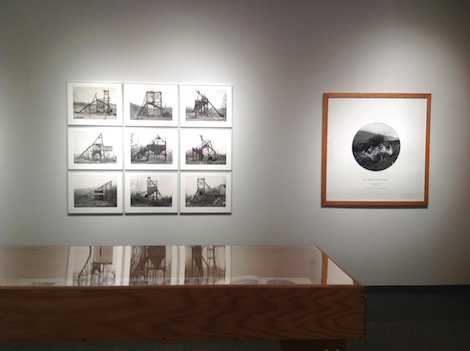
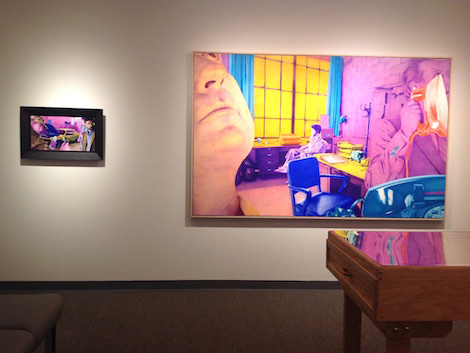
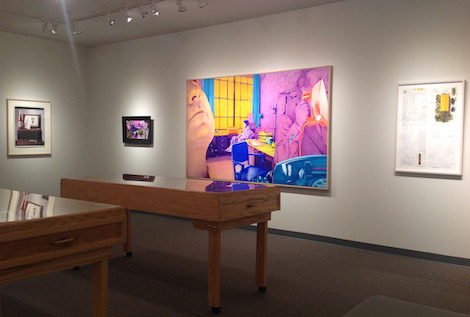
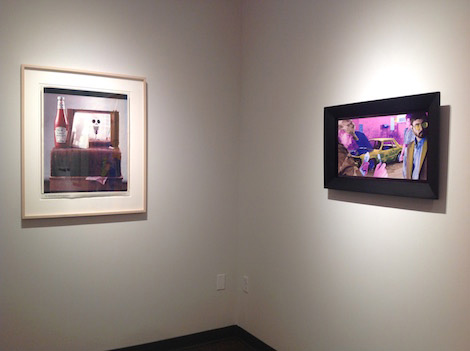
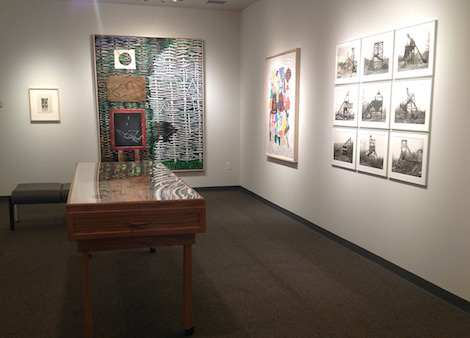
History of Photography, Part 2
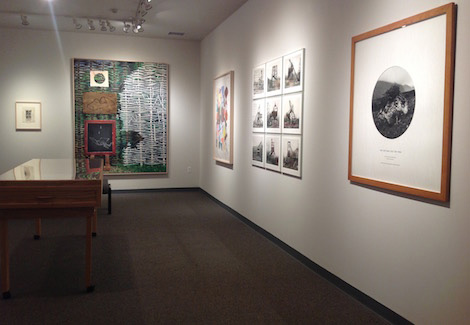
The selection of works for this installation supports and extends the students’ discussion of artists and issues related to the History of Photography - Part 2 course being taught this semester by Niko Kallianiotis.
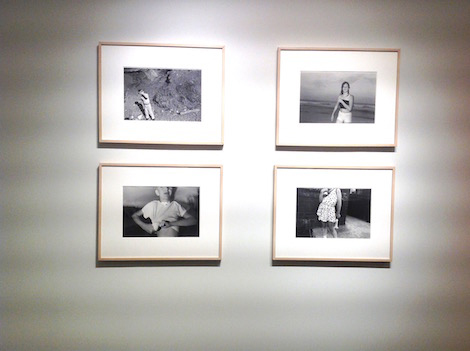
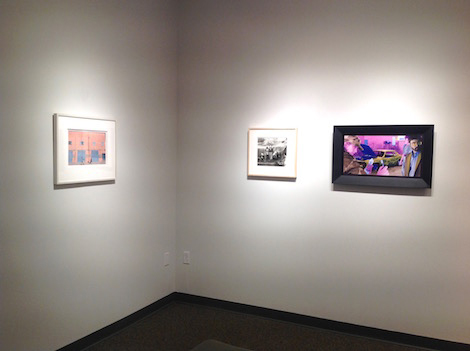
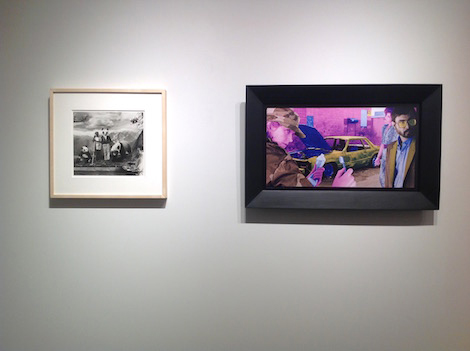
Issues such as the emergence of street photography in the early 70s is strongly evidenced in the black and white photographs by Mark Cohen. The use and manipulation of various materials and light in a studio environment is addressed through the works of Barbara Kasten, David Haxton, Robert Cumming, and Herwig Kempinger. Manipulation and collage of images to form a more complex statement is clearly revealed in the work by Sandy Skoglund, while in the photograph by Jane Hammond, the fact of the manipulation is intentionally concealed through the process, raising question regarding the truthfulness of the photograph.
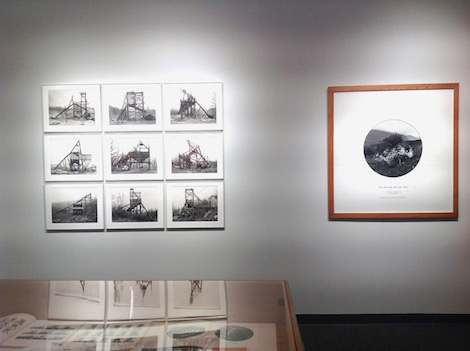
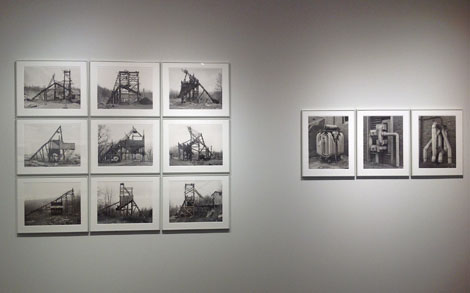
The major work by Bernd and Hilla Becher provides for a discussion of what is involved in the development of a sustained long term project, and the issues that need to be addressed to maintain a consistent image view that, in their case, is meant to objectify the subject. In the case of the Bechers, it is also relevant to consider the influence they have had on generations of photographs that have come after them. We have also included the signature print by Chuck Close, Phil III, 1982 in order to examine the way photography has functioned to extend an artist's work into other media.
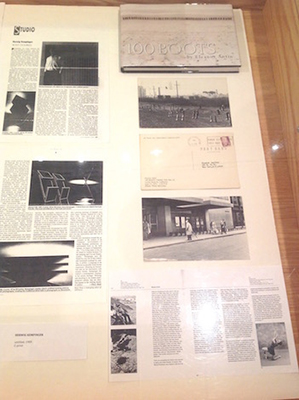
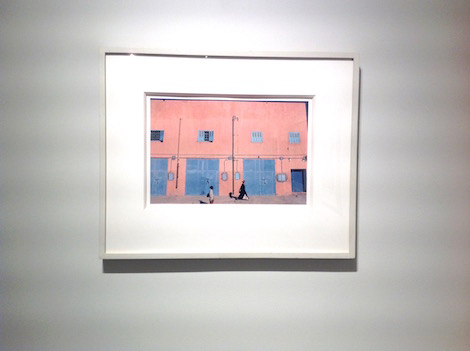
Photographs in this installation include: four black and white photographs by Mark Cohen, Boy in Pit, 1971, Girl Holding Popsicle, 1972, Twisting, 1976, and Girl Coming Out of Ocean, 1989; Bernd and Hilla Becher’s ’s Winding Towers, 1983; Hamish Fulton’s The Skylark and the Frog, 1986; Robert Cumming’s Red Perceives Only a Bulb in the Outline, 1979; Sandy Skoglund’s The Laws of Interior Design, 1986; Barbara Kasten’s Construct NYC – 8, 1983; David Haxton’s Untitled (266), 1983; Herwig Kempinger’s untitled, 1989; Harry Callahan’s Morocco, 1980; and Jane Hammond’s The Touch Up, 2012. In addition, three mailed post cards from Eleanor Antin’s 100 Boots, 1971-73 are included in one display case.
The installation of the works in this exhibition was carried out by the curator, Robert Schweitzer, along with the assistance of La’nae Charles and Victoria Marples, two of the interns working with The Maslow Collection this semester.
Oct 17, 2015 - Nov 8, 2015
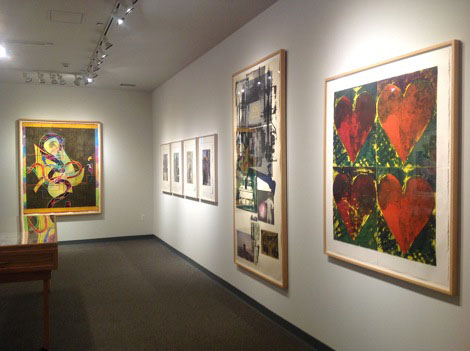
Dilemma
The selection of works for this installation is based on a request from professor Stephanie Wise to create an exhibition that would engage her art therapy students in a dialogue on the term ‘dilemma’. Each year Stephanie provides the curator and the arts administration interns with a challenge to think through the works in The Maslow Collection in order to come up with a selection of works that will creatively and meaningfully respond to her request; in previous years the exhibitions were based on Ethics, and Trauma.
It should be understood that most of the artists represented in this exhibition did not create their works with the intent to directly address such an issue or state of affairs, nor to be in an exhibition with such a conceptual framework. The challenge for the viewer coming into the gallery for this exhibition is to keep in mind the word ‘dilemma’, and determine in what way the works presented may resonate with this condition.
This installation includes: Edward Henderson’s Vein, Vain, Vane, 1986 and Untitled (L), 1989; Bernd and Hilla Becher’s ’s Winding Towers, 1983; Hamish Fulton’s The Skylark and the Frog, 1986; Robert Cumming’s Red Perceives Only a Bulb in the Outline, 1979; Sandy Skoglund’s Something on the Wall, 1986, and The Laws of Interior Design, 1986; and David Reed’s Working Drawing for Painting 571-2, 2009–14 and Working Drawing for Painting 561, 2007.
The installation of the works in this exhibition was carried out by the curator, Robert Schweitzer, along with the assistance of Victoria Marples, one of the interns working with The Maslow Collection this semester.
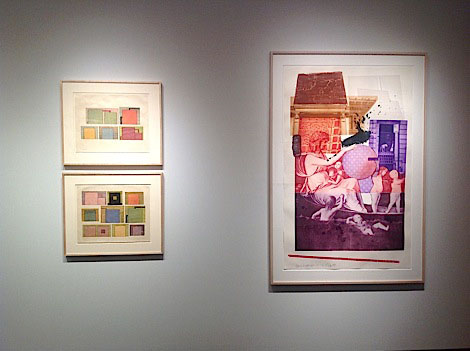
Sep 08, 2015 - Oct 04, 2015
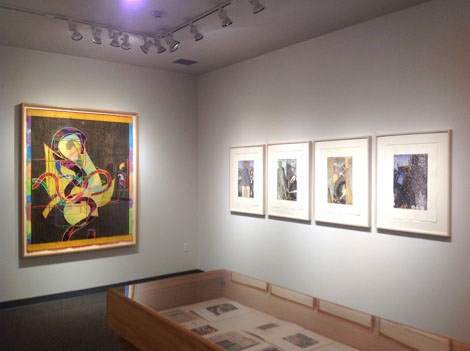
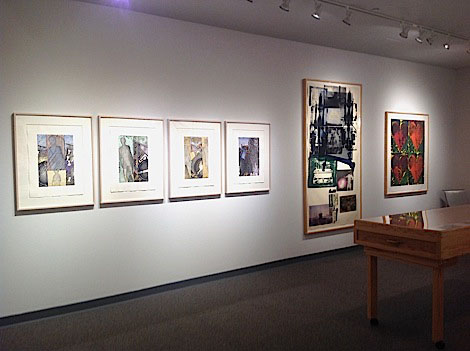
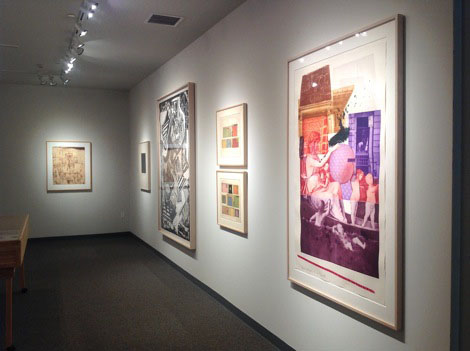
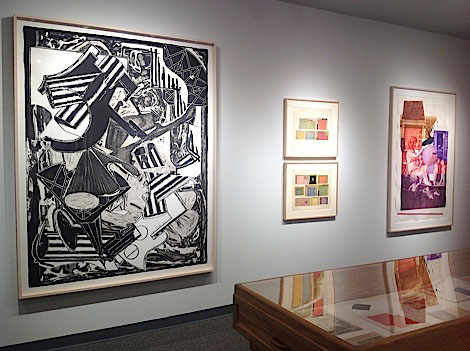
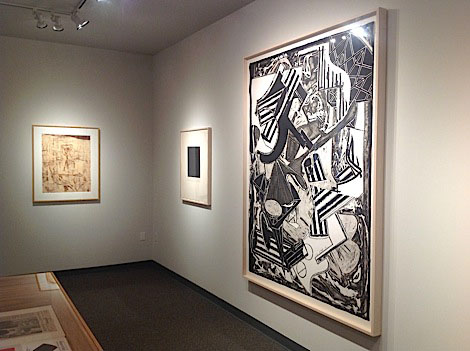
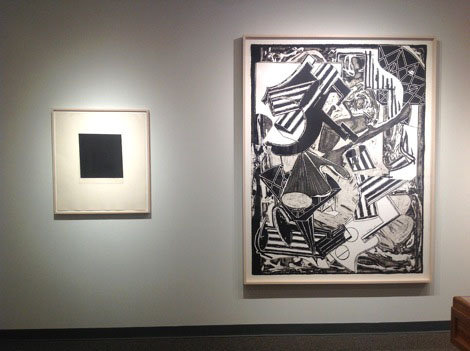
Printmaking - Intaglio +
The first exhibition in The Maslow Study Gallery this semester is the fifth installation, taking place over a period of six years, of intaglio and related prints from The Maslow Collection. This exhibition, like the ones prior, addresses issues and processes relating to the printmaking course being taught this semester by Peter Hoffer.
The intaglio process includes etching, engraving, drypoint, and aquatint. The Maslow Collection holds a number of important works by major artists who worked with these processes from the 60s through the 90s. The particular works selected for this exhibition will enable the students to see a wide range of possible approaches to the intaglio processes that were employed by these artists.
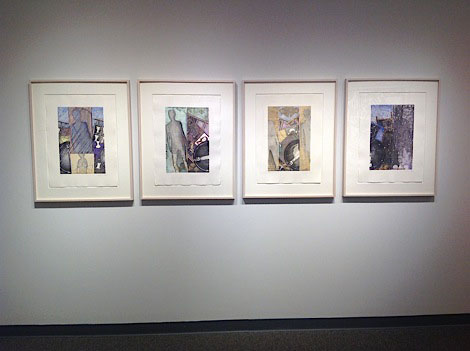
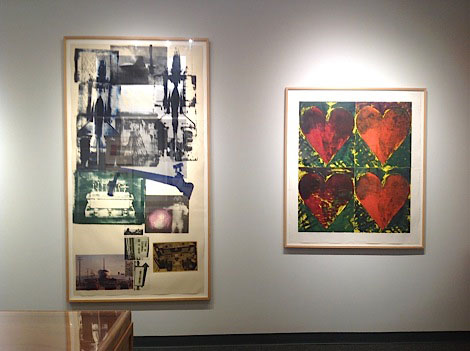
Certain works in this installation exhibit multiple processes to achieve the final print. For example, Frank Stella’s massive Pergusa Three – State I used etching and woodcut, while Jasper Johns’s series, The Seasons from 1987, and Ellsworth Kelly’s Wall from 1979, both incorporated etching and aquatint. Another large work by Frank Stella in the exhibition, La Penna di hu, 1988, also involves etching and aquatint.
Additional works in this exhibition include: Jim Dine’s L.A. Eyeworks; Robert Rauschenberg’s two large prints Bellini #2, 1987, and Hotshot, 1983 which is the one work in the exhibition that is a lithograph with collage; Peter Halley’s two prints from the series A Tour of the Monuments of Passaic, NJ (1), 1989; and Julian Schnabel’s etching Tod-Cage Without Bars, 1982.
Once again the installation of the works in this exhibition was carried out by the curator Robert Schweitzer with the assistance of Victoria Marples and La’Nae Charles, the student interns working with The Maslow Collection this semester.
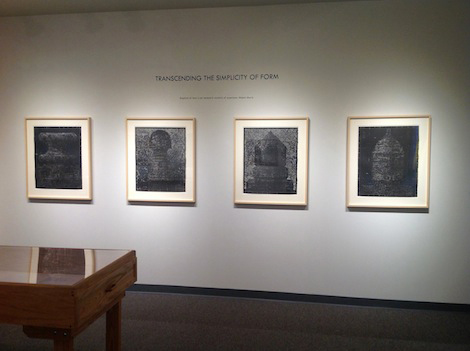
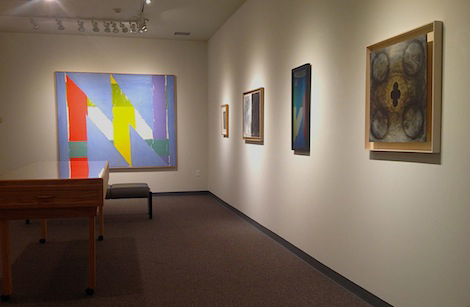
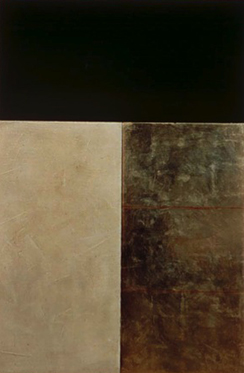
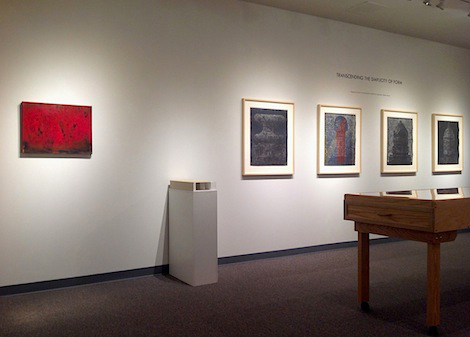
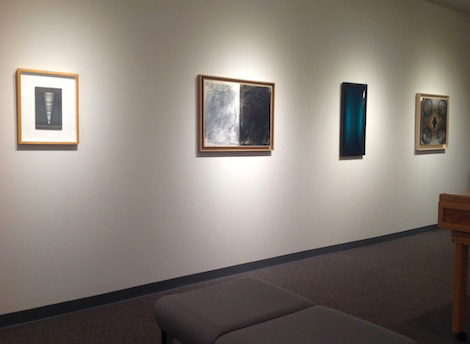
Mar 28, 2015 - Jun 05, 2015
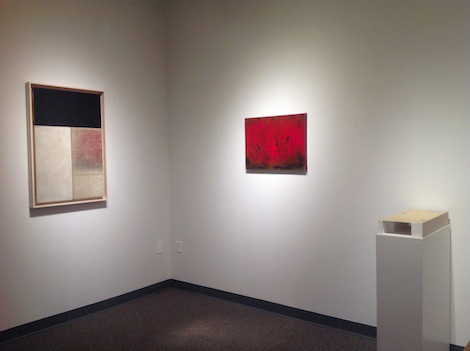
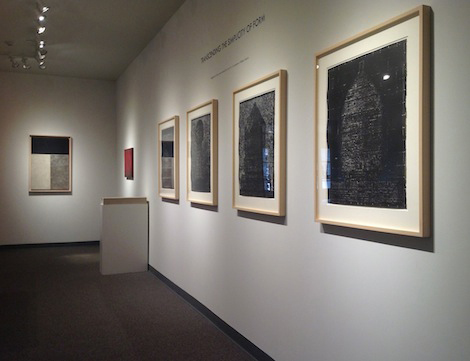
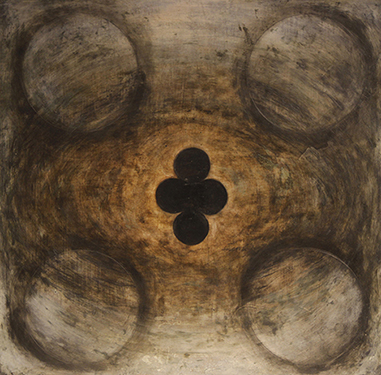
Transcending the Simplicity of Form
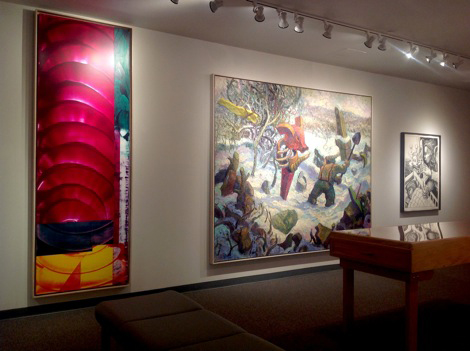
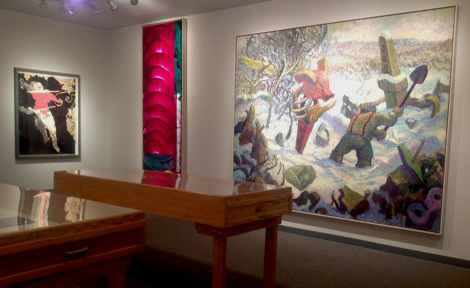
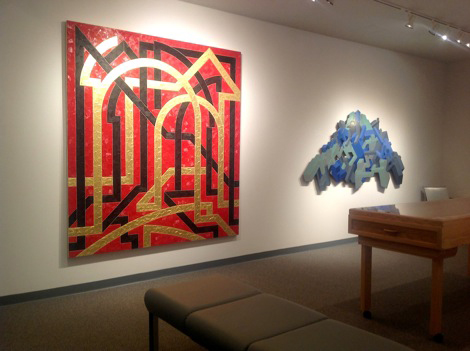
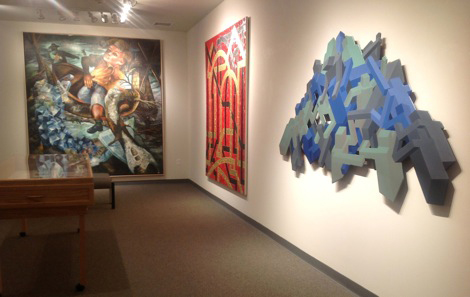
Transcending the Simplicity of Form, curated by Amanda Hinkel, Marywood University senior with a dual concentration in Arts Administration and Art History, is derived from her Contemporary Art Independent Study of Spring 2015.
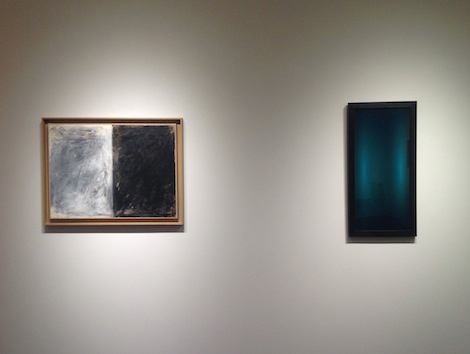
The works in this exhibit have been carefully selected for the purpose of exemplifying how artists with roots from minimalism can provide a transcendental experience through systematic and uncluttered spaces. Hinkel challenges the viewer to look beyond the simplicity of form and find a deeper experience.
Works in the exhibition:
Nancy Haynes, Segno, 1985
Linda Nisselson, Celebration, 1995
Jurgen Albrecht, untitled, 1990
Robert Cumming, Smooth Mind Suite (Series of 4), 1989
Thornton Willis, Streets of Tupelo, 1984
Will Mentor, untitled, 1988
Nancy Haynes, untitled, 1989
Herwig Kempinger, untitled, 1989
Lynn McCarty, An Orderly Arrangement of What is Separate, 1990
Mar 02, 2015 - Mar 23, 2015
Baroque and Renaissance (in the Contemporary) 3
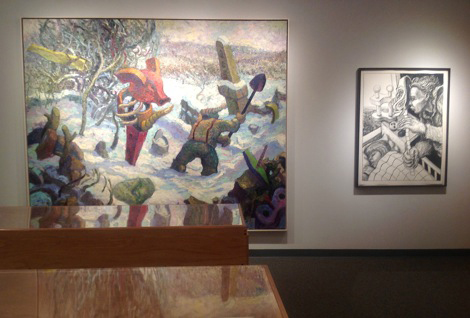
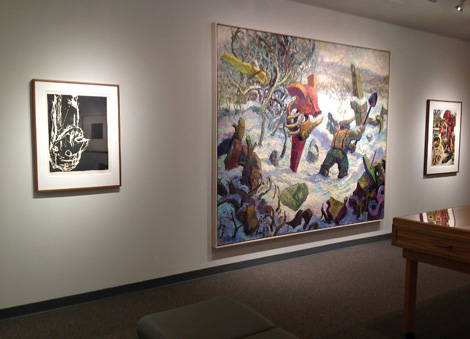
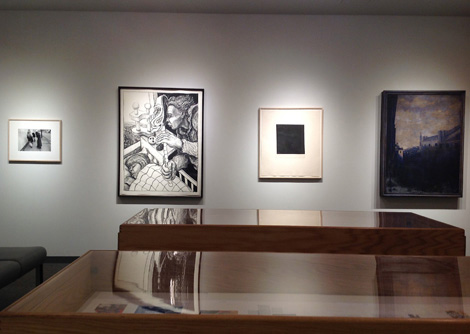
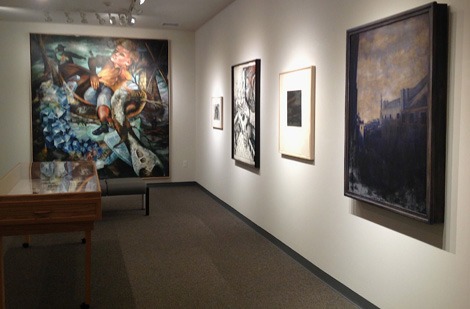
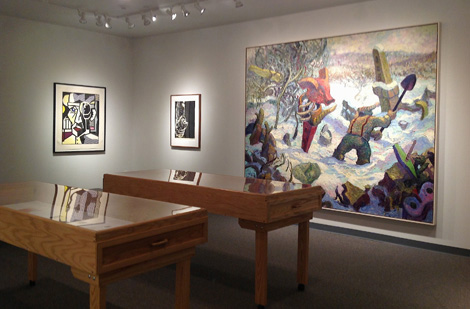
The current exhibition in The Maslow Study Gallery was installed for Dr. Susan Branger’s Art History II and Art History II Honors students. The selection of paintings from The Maslow Collection presented in this exhibition express in one manner or another references to the Baroque or Renaissance. This is the third exhibition within the past 4 years addressing this topic.
The works in this exhibition include: the allegorical painting by Robert Jessup titled Winter from 1987, along with Jessup’s charcoal drawing from 1987 titled Watchful Father; Steven Campbell’s story-like narrative painting titled Young Man Frozen by a Waterfall, 1985; David Reed’s No. 230 (for Beccafumi) from 1986; a shaped work on board from 1986 by Roger Boyce titled Succession; an untitled collage work by Louis Lane from 1990; and a signature work from the Pattern and Decoration movement by Valerie Jaudon titled Smyra,1983.
The students in Dr. Branger’s class will compare and contrast works by Renaissance and Baroque artists they have researched to the contemporary works in the exhibition and make group presentations in the gallery later in the month.
The two large works by Steven Campbell and Robert Jessup, as well as Jessup’s drawing were also included in the previous art therapy exhibition titled ‘Trauma.' By including these three works in this exhibition pertaining to issues of the Baroque and Renaissance, the students recognize that each work can be read differently given an alternative context.
This exhibition was designed and installed with the assistance of Emma Pilon, this semester’s arts administration student intern who is working directly with the curator for The Maslow Collection, Robert Schweitzer.
Jan 20, 2015 - Feb 16, 2015
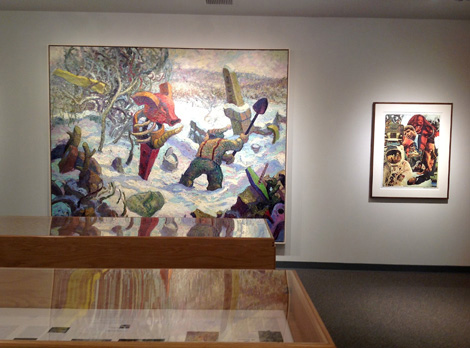
Trauma
The selection of works for this installation from The Maslow Collection provides a basis for discussion for the students in Stephanie Wise’s graduate art therapy class dealing with trauma.
The students will each choose one of the works in the exhibition to explore and express how they feel it may relate to some aspect or dimension of trauma. The thematic rationale for the selection of the works for this exhibition certainly creates a context that most likely would never have been anticipated by the artists making these works. Therefore this installation explores only a narrow possible reading of the works involved. Two of the paintings included in this current exhibition will remain for the following two exhibitions in The Maslow Study Gallery, enabling them to be considered within two very different contexts: contemporary painting styles, and the baroque in contemporary art. By offering the viewer multiple opportunities and contexts within which to consider the same painting they can begin to understand that no work should ever be locked into one limited singular reading.
The works chosen for this exhibition are: Girls Hiding from Camera, February 1972, by Mark Cohen; Signs, 1970, by Robert Rauschenberg; Winter, 1987, and Watchful Father, 1987, by Robert Jessup; Young Man Frozen by a Waterfall, 1985, by Steven Campbell; Wall, 1979, by Ellsworth Kelly; Canal, 1986 by Tracy Grayson; Dr. Waldman, 1980, by Roy Lichtenstein; and Head, 1981, by Georg Baselitz.
This exhibition was selected, designed and installed with the assistance of Emma Pilon, this semester’s arts administration student intern who is working directly with the curator for The Maslow Collection, Robert Schweitzer.
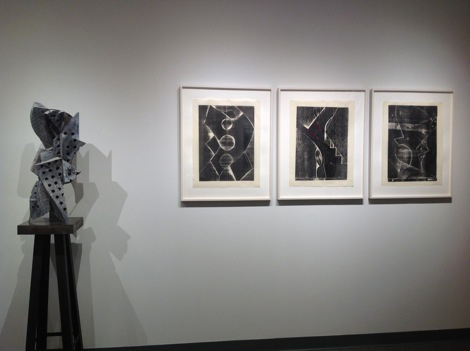
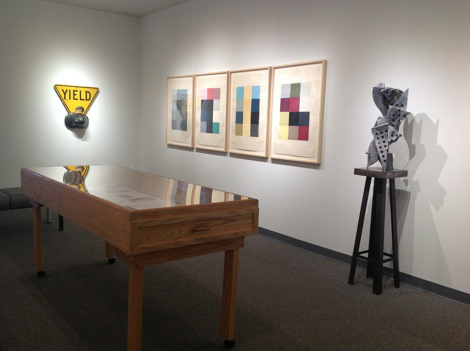
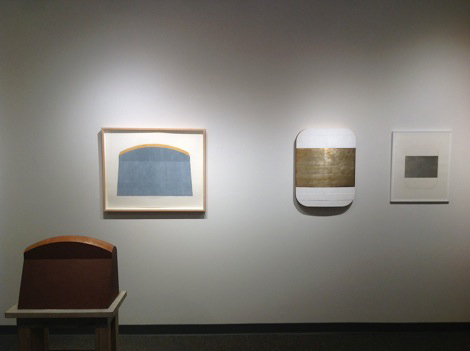
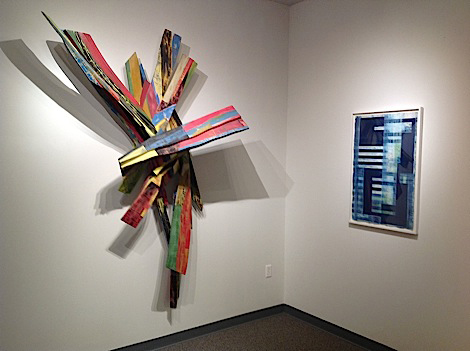
Oct 22, 2014 - Dec 02, 2014
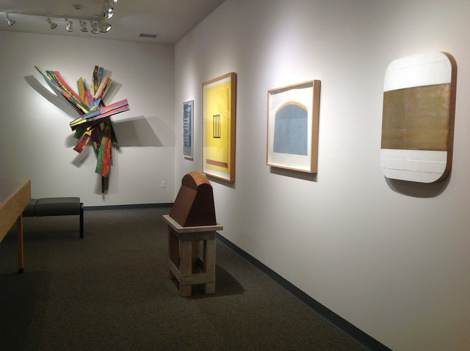
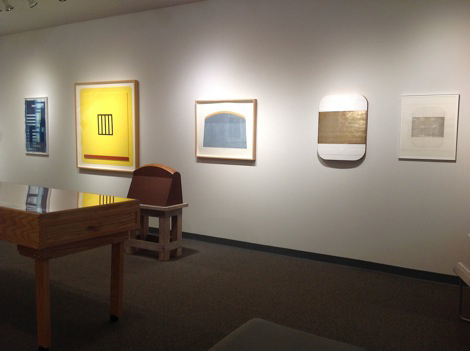
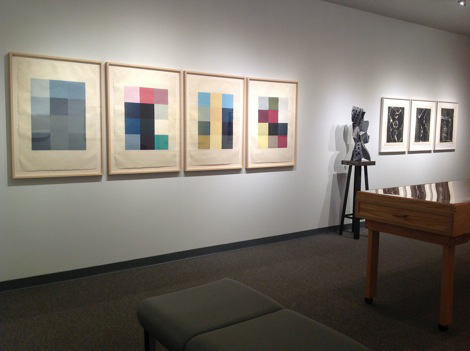
2D and 3D Design
The selection of works for this installation from The Maslow Collection provides a basis for discussion for the students in Rob McKirdie's 2D and 3D Design classes this semester.
Three artists in particular from The Maslow Collection are primarily known as sculptors, while they also generate works in 2D that often relate directly to their sculpture. Mel Kendrick's sculpture and prints clearly have a strong visual affinity with each other, while Kevin O'Toole often works from drawings in various media. A large wall–mounted sculpture and a smaller work on paper by James Biederman are also included.
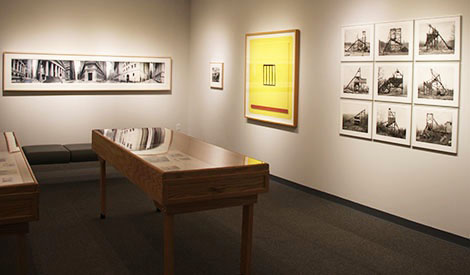
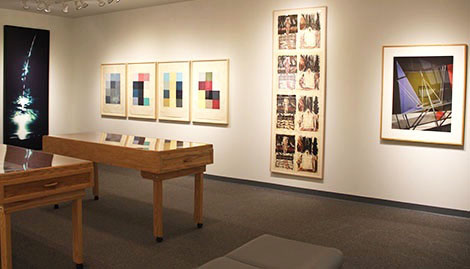
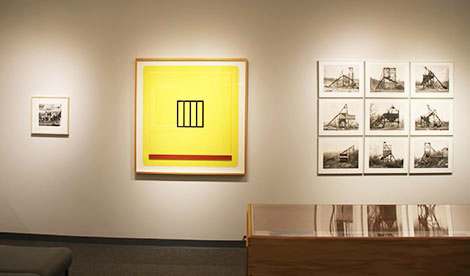
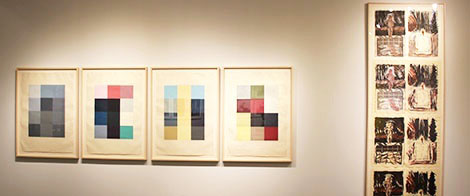
It should be noted that this installation includes two works that were included in the previous installation, enabling students to recognize the multiple ways to read the individual works within a changing context: Sherrie Levine's Meltdown and Peter Halley's Prison. Additionally for this installation we have added Mel Kendrick's Basswood with Clay and Holes along with three untitled prints from a series of six; two sculptures by Kevin O'Toole, LW 51–89 and LWR 86–92, along with their accompanying studies; James Biederman's Go–Jo and an untitled work on paper; and Anthony Sorce's mixed media work titled Yield.
The assistant to the curator, Nicole Zarick, worked with Robert Schweitzer, curator for The Maslow Collection, throughout the installation process, as well as selected and prepared the related materials for the information cases.
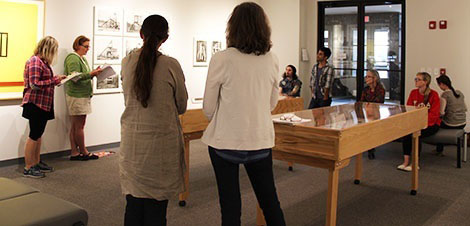
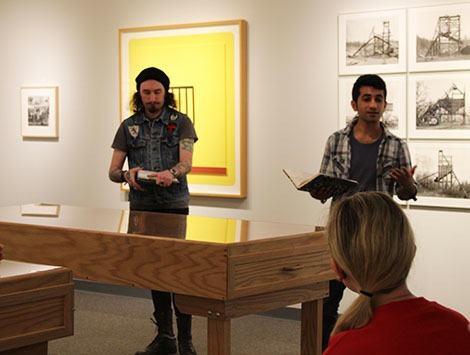
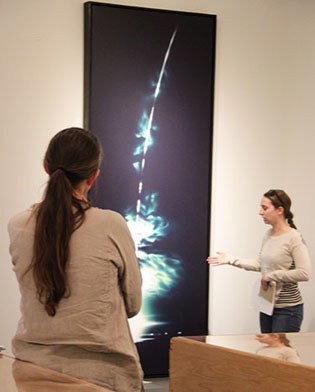
Sep 29, 2014 - Oct 20, 2014
Art Criticism
The Maslow Collection provides a significant resource for Dr. Linda Partridge’s graduate Art Criticism course. The students select one artist and work from a range of works in The Maslow Collection to research, focusing on the critical discussion of the work and artist that can be found in journals, newspapers, and catalogue essays.
Each year the curator for The Maslow Collection and Dr. Partridge make an initial selection from which the students can make their choice. These works are then installed in The Maslow Study Gallery where the students make their presentations based on their research.
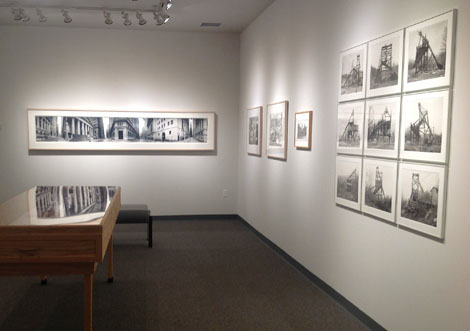
This installation includes: Kenneth Snelson’s Wall Street, Bernd and Hilla Becher’s Winding Towers, and Coal Mines (details), Sherrie Levine’s Meltdown, Jennifer Bartlett’s In the Garden #40, Jane Hammond’s The Touch-Up, Jack Goldstein’s Untitled (MP #127), Barbara Kasten’s Construct L-B6, and Peter Halley’s Prison.
The assistant to the curator, Nicole Zarick, worked with Robert Schweitzer, curator for The Maslow Collection, throughout the installation process, as well as selected and prepared the related materials for the information cases.
Aug 29, 2014 - Sep 21, 2014
History of Photography: Part 1
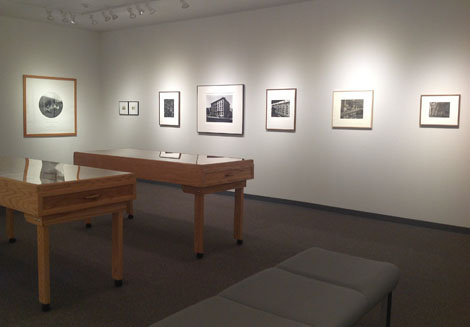
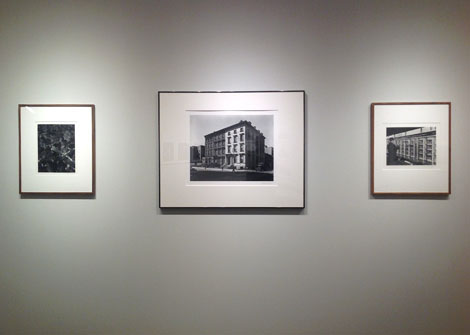
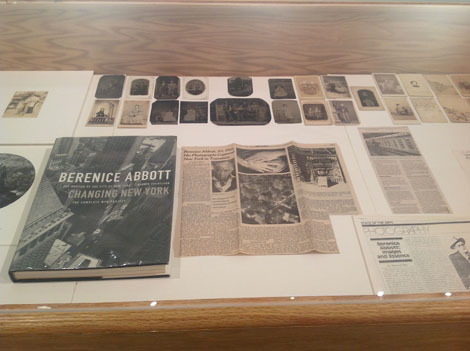
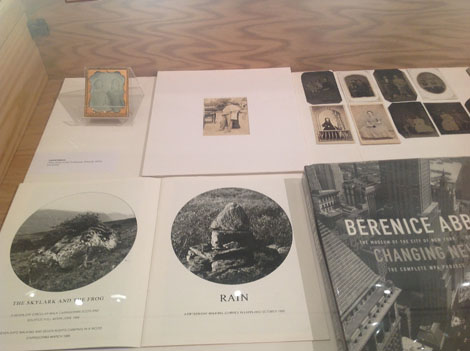
The History of Photography course is being taught in two sections. This semester the course offered pertains to the early history of image making; therefore, the images chosen from The Maslow Collection for this installation reflect the early black and white photographs in the Collection.
The works presented reflect a range of approaches and processes employed by mid 19th to mid 20th century photographers that enabled them to explore both the capturing of subject matter as well as reveal and document a particular moment in time. Early daguerreotypes, salt prints and tintypes, along with albumen prints used for carte de visites and cabinet cards bring us from the mid 1800s to the early 20th century when large format cameras were used to create gelatin silver prints.
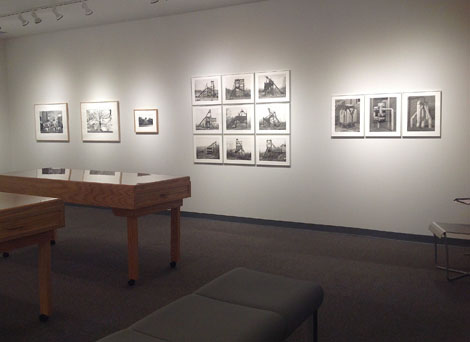
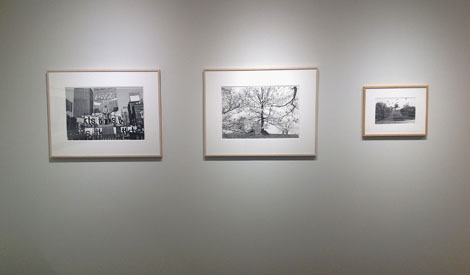
This installation includes: three works by Berenice Abbot from the 1930s, The Automat, New York at Night, and Fifth Avenue at 8th Street; Wendell MacRae’s Kitchen for Rainbow Room, c. 1945; Wright Morris’s Drawer with Silverware, 1947; Evelyn Hofer’s Haughwout Building, New York, 1960; three works by Lee Friedlander from the early 1970s, Father Duffy, Times Square, New York City, General Andrew Jackson, Lafayette Park, Washington, D.C., and Gettysburg; and from the 1980s there is one work by Kenneth Snelson, Wall Street, another work by Hamish Fulton, The Skylark and the Frog, and two works (with multiple images) by Bernd and Hilla Becher, Winding Towers, and Coal Mines (details). Also included in the exhibition are earlier works selected from the curator’s collections, including anonymous salt prints from the 1870s, a daguerreotype from the 1850s, numerous tintypes, carte de visites, and stereo cards from the mid 1800s to the early 1900s.
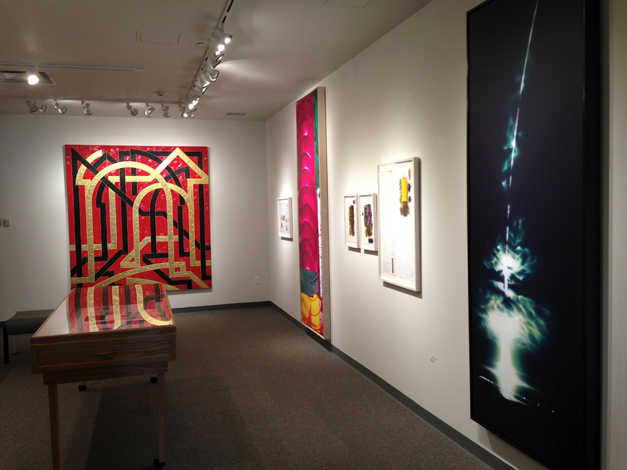
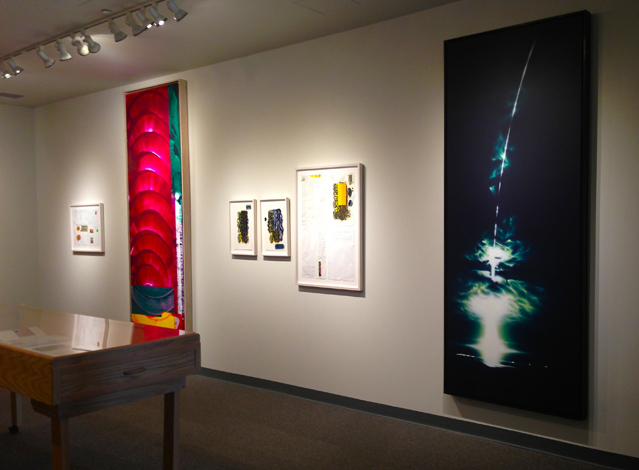
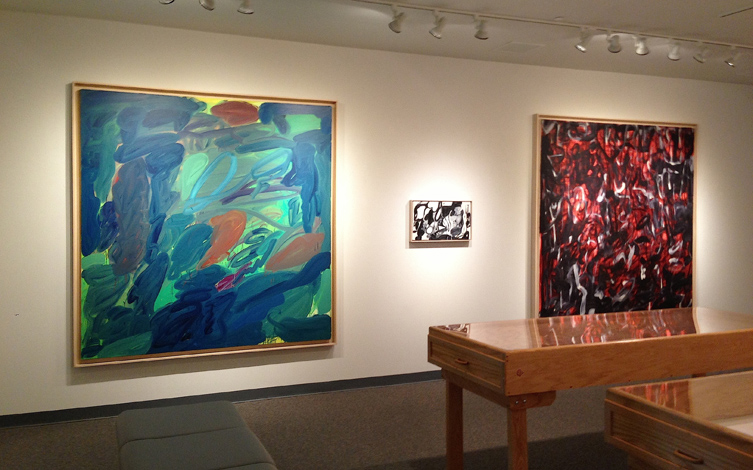
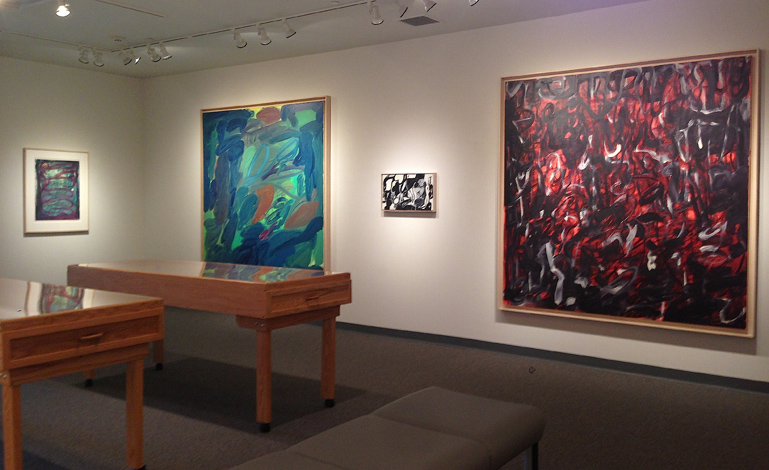
Jan 20, 2014 - May 03, 2014
Spring 2014 Exhibition
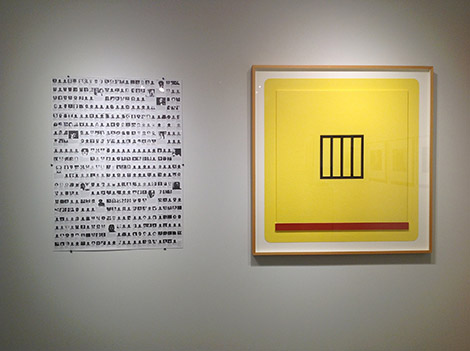
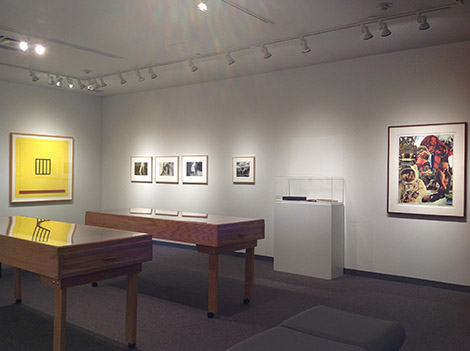
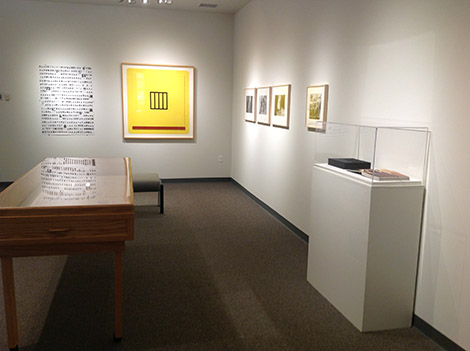
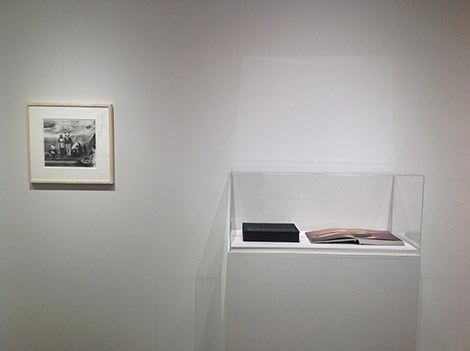
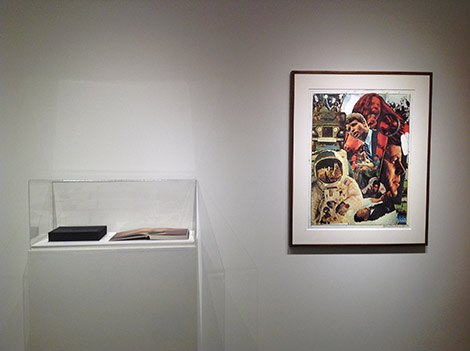
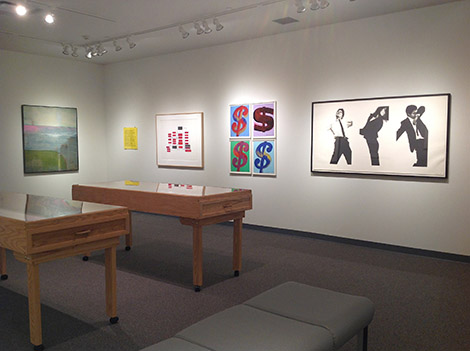
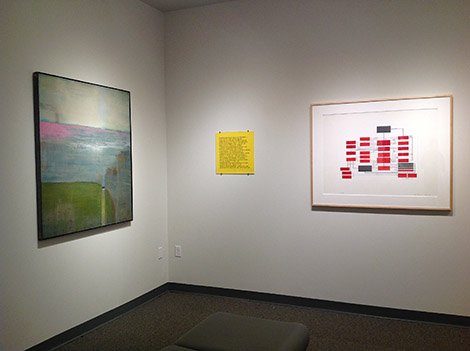
Most of the exhibitions in The Maslow Study Gallery this semester, as they were last semester, will present specific requested works that will enable the Art Therapy department to carry out an on-going research project with the elder population in the area.
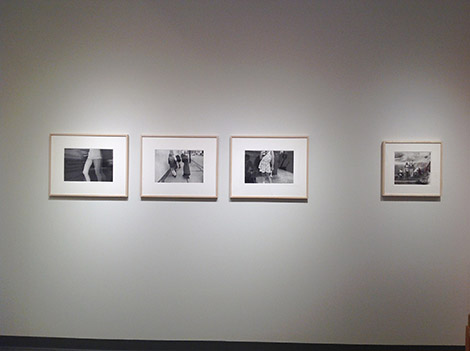
These installations will change on a weekly basis and include a number of works from The Maslow Collection including: Melissa Meyer’s Volterra, Will Mentor’s The Lost Order, and Valerie Jaudon’s Smyra, all large canvases; prints by Frank Stella and Wayne Theibaud; and photographs by Mark Cohen, Hamish Fulton, and Wright Morris, among others.
The selections of works for each weekly installation relate to categories such as energy and movement, home and comfort, symbolic self-portraits, and the seasons and nature.
The current installation of works by David Reed, Jack Goldstein, Valerie Jaudon, and Melissa Meyer will be on-going exhibition that will be modified each week to meet the needs of the Art Therapy project.
Later in semester we will also revisit the installation of contemporary works from The Maslow Collection that relate to the Baroque and Renaissance for Dr. Susan Branger’s Art History class.
Current List of works on exhibit:
MELISSA MEYER, X, 1990, monoprint
MELISSA MEYER, Volterra, 1990, oil on canvas
MELISSA MEYER, untitled, 1987, oil on canvas
MELISSA MEYER, In Love with Night, 1992, oil on canvas
VALERIE JAUDON, Smyra, 1983, oil on canvas
DAVID REED, Working Drawing For Painting 561, 2007, mixed media on paper
DAVID REED, No. 230 (for Beccafumi), 1986, oil and alkyd on canvas
DAVID REED, Color Study 47, Color Study For Painting 571-2, 2009, oil and alkyd on illustration board
DAVID REED, Color Study 68, Color Study For Painting 571-2, 2009, oil and alkyd on illustration board
DAVID REED, Working Drawing For Painting 571-2, 2005-2009, mixed media on paper
JACK GOLDSTEIN, Untitled (MP #127), 1984, acrylic on canvas
Sep 23, 2013 - Oct 14, 2013
Ethics
The selection of works for this installation was based on a request from professor Stephanie Wise to create an exhibition that would engage her art therapy students in a dialogue on ethics.
It should be understood that most of the artists represented in this exhibition did not create their works with a direct intent to address ethics, though a few of them certainly do have specific and real concerns with social and environmental issues. The challenge for the viewer coming into the gallery for this exhibition is to keep in mind the word "ethics" and determine in what way the works presented may raise or resonate with ethical issues.
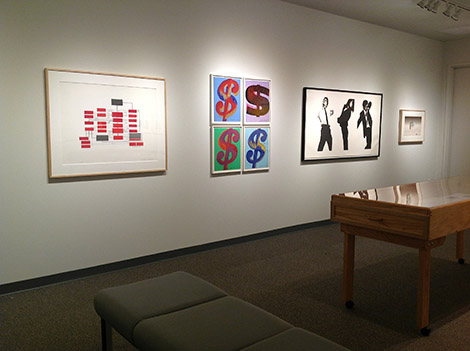
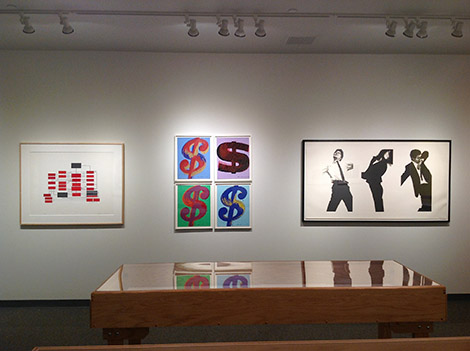
This installation includes:Robert Rauschenberg's Signs, 1970; Andy Warhol's $1; Peter Halley's Prison, 1987, Limited Partners, 1990; one of Jenny Holzer's Inflammatory Essay, 1979-82; Scott Kelley's Shores of Perth 3, 1988; Robert Longo's Jules, Gretchen, Mark State II, 1982-3; Edward Ruscha's Sin, 1970; Jane Hammond's The Touch-up, 2009; Mark Cohen's Legs/Corduroy Shorts, 1972, Girl Holding Popsicle, May 1972, Girls Hiding from Camera, February 1972; Felix Gonzales Torres's untitled (death by gun), 1990; and Alfredo Jaar's Katale Refugee Camp (Rwanda Project), 1996.
The installation of the works in this exhibition was carried out by the curator along with the assistance of Amanda Hinkel and Kristen Mary Draeger, two of the student interns working with The Maslow Collection this semester. Additional research to assemble a range of thought provoking case materials was done by Abby Miller, graduate gallery assistant.
Sep 03, 2013 - Sep 16, 2013
The 50s and 60s
This installation of works, by artists who emerged in the late 50s and 60s to engage the public and the critics with a new perspective on expanding the vocabulary for both the content and process of art, addresses some of the initial issues being considered by the students in Marywood's Contemporary Art History class this semester.
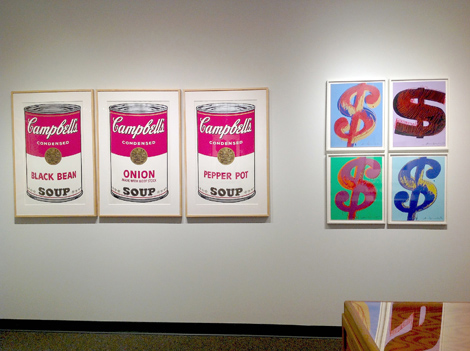
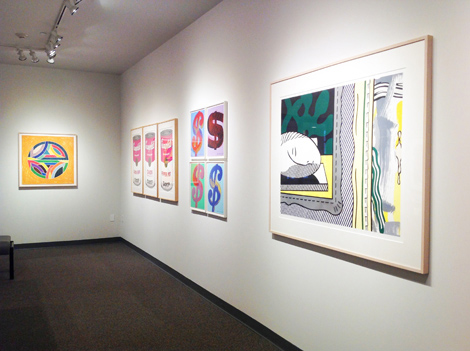
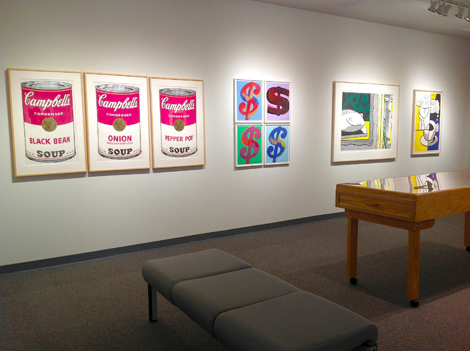
The works by Andy Warhol and Roy Lichtenstein in this exhibition most directly express what we have come to know as Pop art, where consumerism and the images from our everyday experience held the gaze of the viewer. This exhibition also include the work of both Robert Rauschenberg and Jasper Johns who are considered the most significant creative forces that opened up the range of expanding possibilities in content and process during this period, while Frank Stella furthered a more clean, bold approach to abstraction through his art practice during this same time frame.
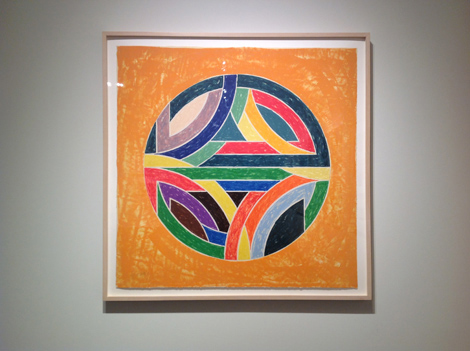
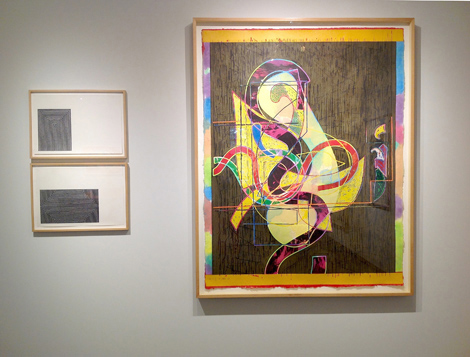
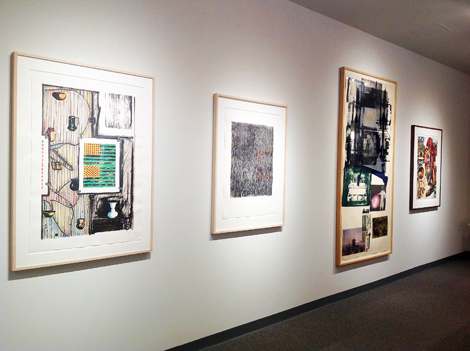
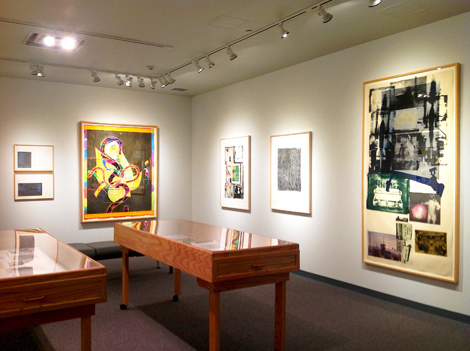
This installation includes: Frank Stella's Pergusa Three–State I, 1983, Clinton Plaza (Black Series), 1967, Bethlehem's Hospital (Black Series), 1967, and Singerli Variation Squared with Colored Ground IV, 1981; Jasper John's Coat Hanger I, 1960 and Voice 2, 1963; Robert Rauschenberg's Signs, 1970 and Hot Shot, 1983; Andy Warhol's Campbell's Soup (Onion/Black Bean/Pepper Pot), 1968 and $1, 1982; and Roy Lichtenstein's Huh!, 1976 and Two Paintings: Sleeping Muse, 1984.
The installation of the works in this exhibition was carried out by the curator along with the assistance of Amanda Hinkel, one of the student interns working with The Maslow Collection this semester. Amanda is also a student in this semester's Contemporary Art History Honors class.
Apr 13, 2013 - Jul 03, 2013
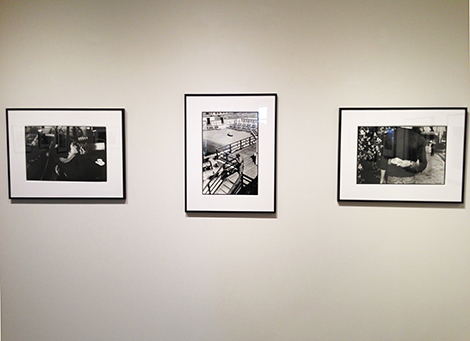
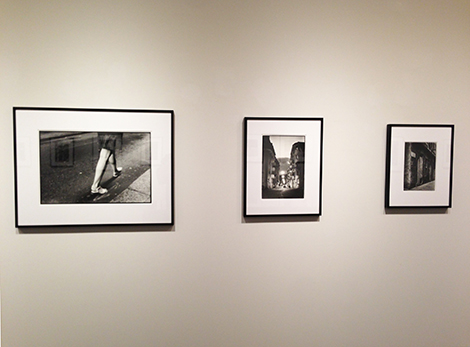
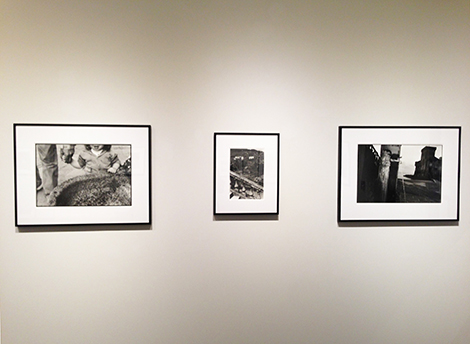
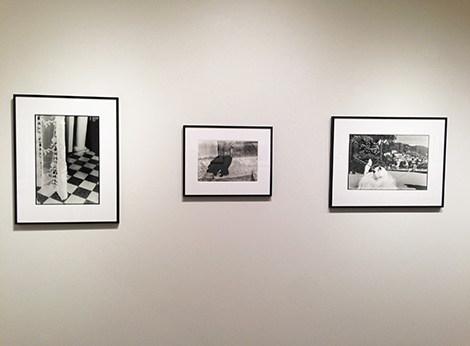
Mark Cohen: Italian Riviera, 2008
A selection of works from Mark Cohen’s ‘Italian Riviera’ series will be the first presentation of these photographs in the United States, having first been exhibited in 2008 at the Antico Castello sul Mare, Rapallo, Italy, curated by Francesco Zanot.
Opening Reception: April 13, 2–4 PM
Mark Cohen, born in Wilkes-Barre in 1943, was included in the 1969 exhibition ‘Vision and Expression’ that was presented at the International Museum of Photography at the George Eastman House in Rochester. This exhibition, curated by Nathan Lyons, was instrumental in expanding the dialogue on contemporary image making. Three years later Cohen had his first one-person exhibition at the Museum of Modern Art in 1973. Cohen’s work is included in major museum collections world wide, including: the Metropolitan Museum of Art; the Museum of Modern Art, New York City; the Museum of Fine Arts, Houston; the Corcoran Gallery, Washington, D.C.; the Art Institute of Chicago; and the Musee de la Photograhpie, Belgium, among many others. The Maslow Collection at Marywood University also includes 16 works by Mark Cohen from the 1970s and 80s.
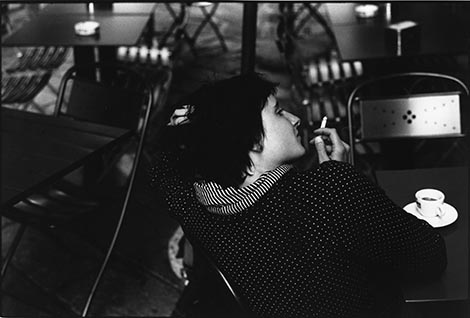
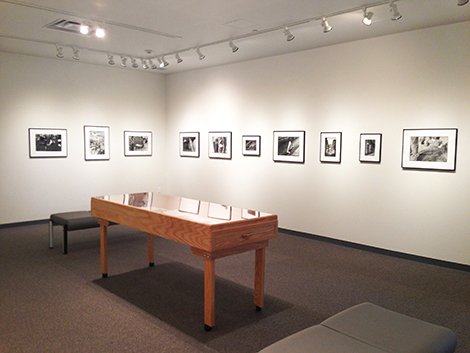
The selection of works for this current exhibition at Marywood is from a series of photographs Cohen took in Rapallo and Genoa, Italy in 2008. Cohen was asked to visit the Italian Riviera as the guest artist for ‘Rapallo Fotografia Contemporanea’. The photographic images that Cohen captured for this series reflect his signature ‘street photography’ approach that he has followed since the late 60s.
These photographs were first exhibited in 2008 at the Antico Castello sul Mar, Rapallo, Italy, curated by Francesco Zanot. This Marywood exhibition will be the first for these works in the United States.
This installation was carried out by the curator, along with the assistance of Nicole Zarick, the student intern working with The Maslow Collection this semester.
Mar 11, 2013 - Apr 05, 2013
Baroque and Renaissance (in the Contemporary)
The current exhibition in The Maslow Study Gallery was installed for Dr. Susan Branger’s Art History II and Art History II Honors students. The selection of paintings from The Maslow Collection presented in this exhibition express in one manner or another references to the Baroque or Renaissance.
The works in this exhibition include: the allegorical painting by Robert Jessup titled Winter from 1987; Tony Wong’s large untitled painting from 1984 that expresses a mythological encounter employing a rich and dense palette that is built on the canvas as the paint is applied directly from the tube; David Reed’s No. 230 (for Beccafumi) from 1986; a shaped work on board from 1986 by Roger Boyce titled Succession; and a signature work from the Pattern and Decoration movement by Valerie Jaudon titled Smyra, 1983.
The students in Dr. Branger’s class will compare and contrast works by Renaissance and Baroque artists they have researched to the contemporary works in the exhibition and make group presentations in the gallery in early April.
The installation of the works in this exhibition was carried out by the curator with the assistance of Nicole Zarick, the student intern working with The Maslow Collection this semester.
Feb 04, 2013 - Mar 01, 2013
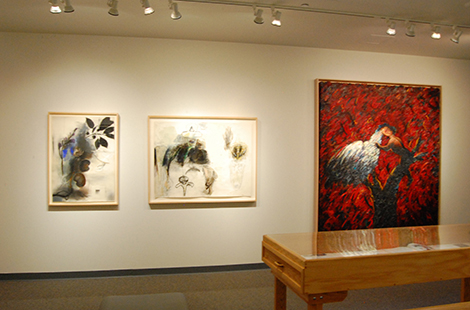
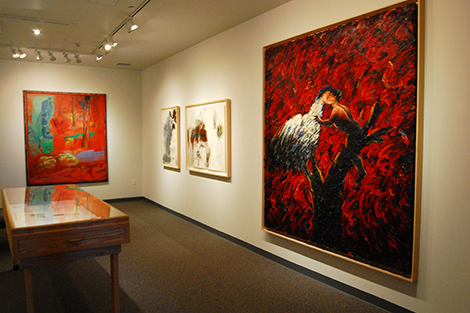
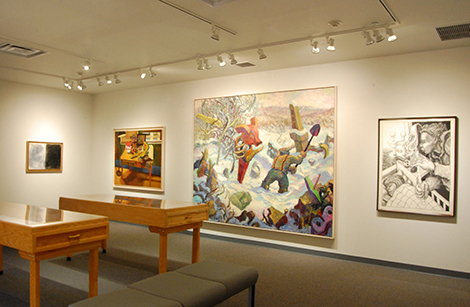
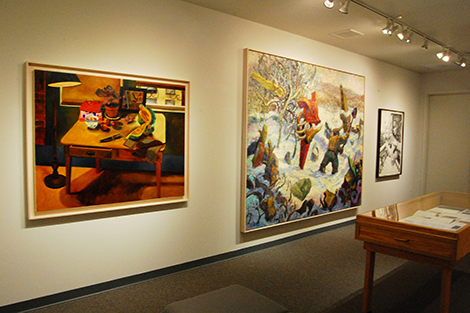
Painting 3
The current exhibition in The Maslow Study Gallery was installed for Pamela Parsons’ painting students. The selected paintings from The Maslow Collection explore a wide range of techniques and processes, from sketches to heavy impasto, and content exploring allegory, myth making, botanical studies, still life, and pastiche.
The rage of winter, driving one to despair and the irrational, can be seen in the allegorical painting by Robert Jessup titled Winter from 1987. Tony Wong’s large untitled painting from 1984 expresses a mythological encounter employing a rich and dense palette that is built on the canvas as the paint is applied directly from the tube. Using another seasonal title, Anne Abrons, presents a still life titled Fall, completed in 1991. David Hornung, the author of a book on color theory that is widely used by art students, presents a view of nature that juxtaposes familiar elements in a constructed unified image. Two works on paper by Chihung Yang titled Sonnet of Orchid and Bone (1988) and Seeds, Leaves, and Others (1989) present studies from nature using acrylic, pastel, charcoal and pencil. The one untitled non-objective work in this exhibition by Nancy Haynes, a study in black and white, completes the range of possible subject matter in this exhibition.
The installation of the works in this exhibition was carried out by the curator with the assistance of Nicole Zarick, the student intern working with The Maslow Collection this semester.
Jan 18, 2013 - Feb 10, 2013
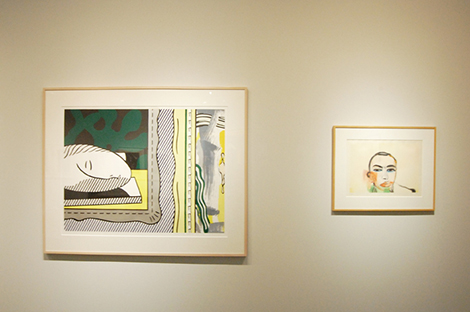
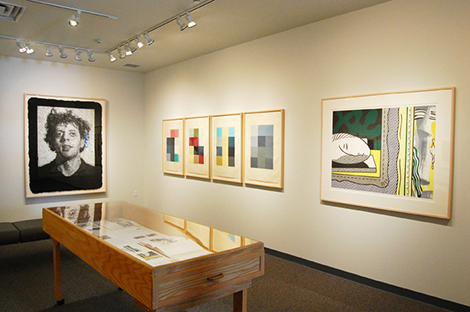
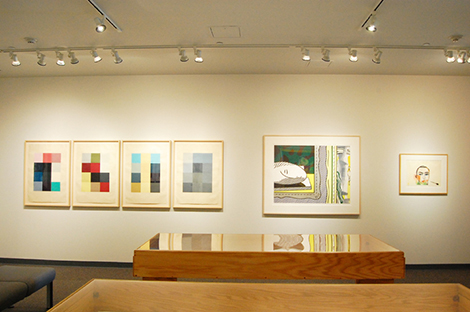
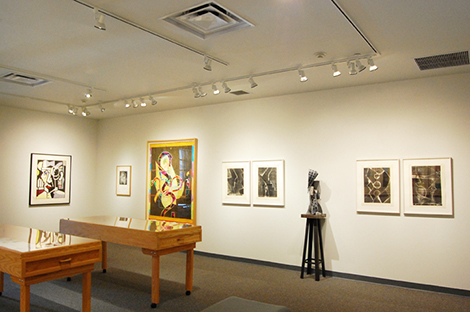
Woodcut Prints
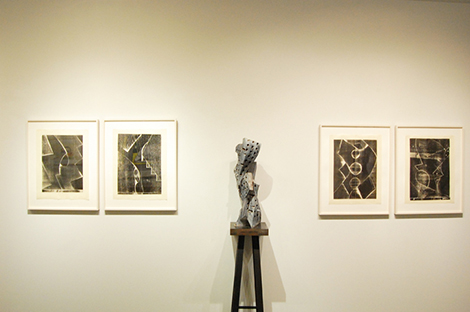
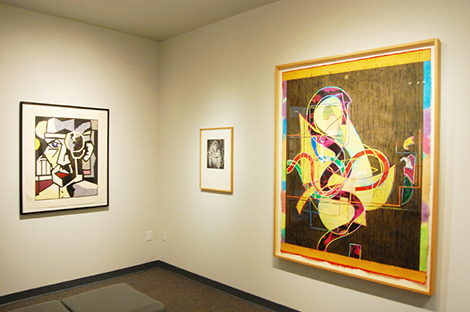
The current exhibition in The Maslow Study Gallery was installed for Peter Hoffer’s printmaking students who are working on woodcut prints this semester. The selected prints from The Maslow Collection explore the range of image making techniques and effects that are possible with woodcuts, and additional mixed media processes.
The untitled self portrait by Francesco Clemente that is often read as a watercolor was printed in the Japanese process know as ukiyo-e, a popular technique form the 17th and 18th centuries that uses multiple blocks for each color (for this work by Clemente 22 woodblocks and 14 colors were used). More straight forward black and white woodblock prints by Mel Kendrick and Susan Rothenberg exhibit a range of textural and tonal possibilities through this printmaking process. Meltdown by Sherrie Levine presents a conceptual and technological rendering down of four well-known paintings to the relative saturation of color that a 1980s piece of computer software could detect. Multiple printmaking processes involving woodblock, lithography and screen printing are scene in Roy Lichtenstein’s Two Paintings Sleeping Muse, while relief-print etching and woodcut are utilized in Frank Stella’s Pergusa Three – State I. The other work by Lichtenstein in the exhibition, a color woodcut titled Dr. Waldman, clearly shows the grain of the wood.
The installation of the works in this exhibition was carried out by the curator with the assistance of Nicole Zarick, the student intern working with The Maslow Collection this semester.
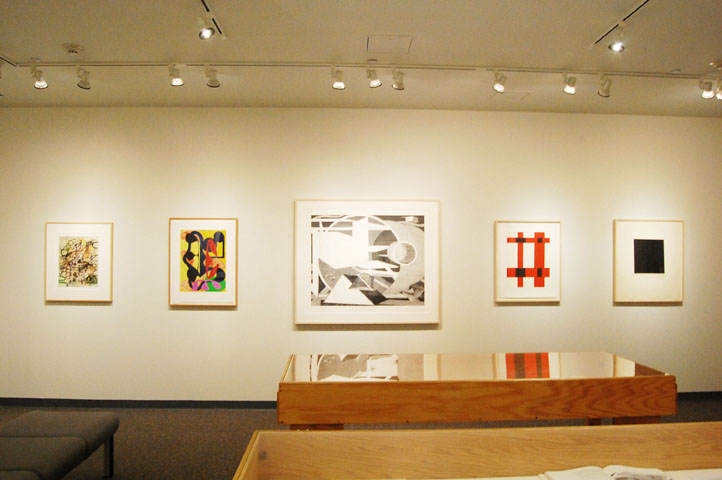
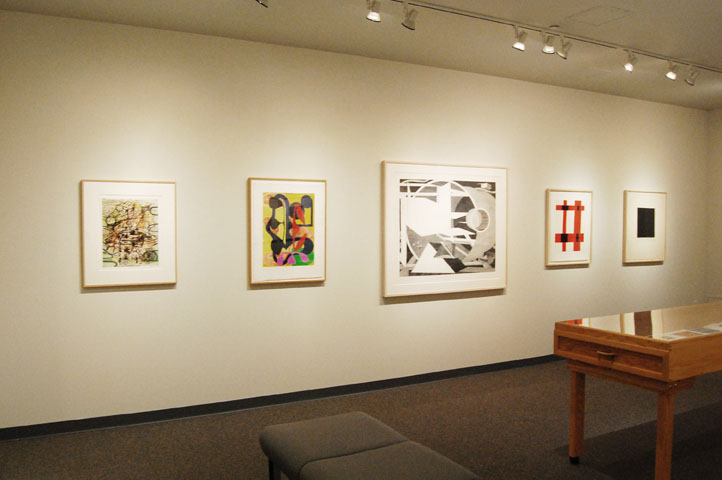
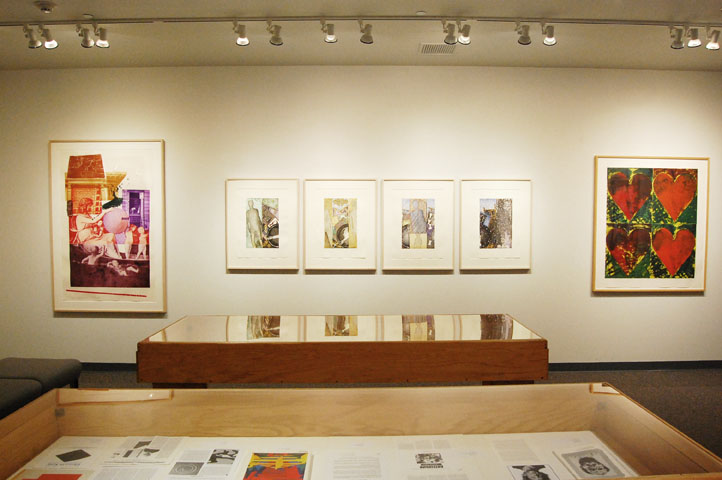
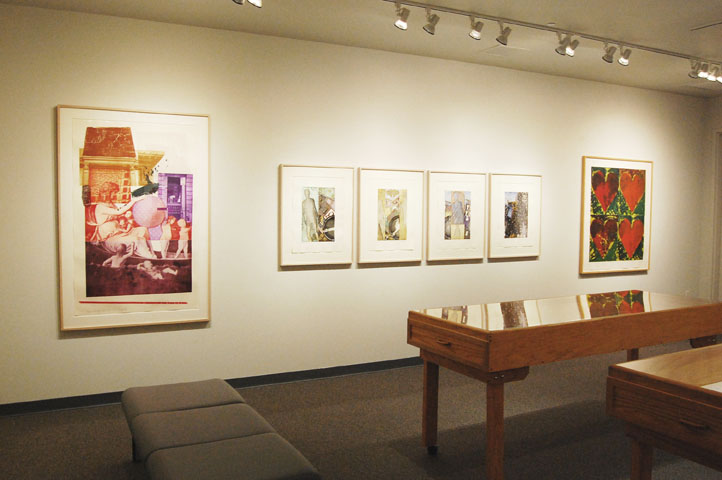
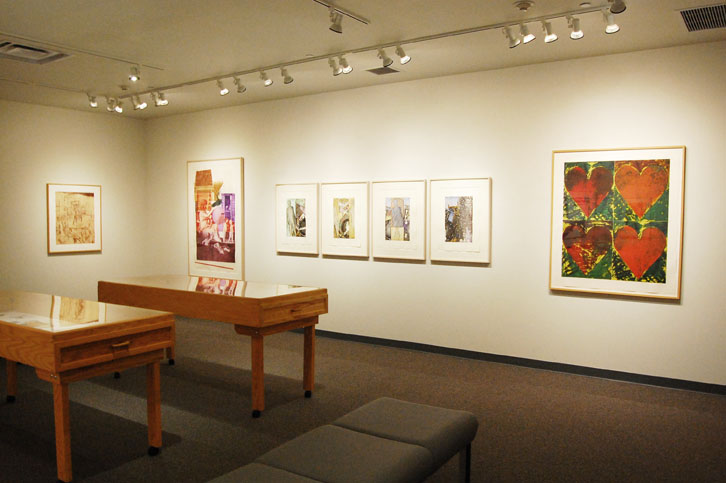
Nov 26, 2012 - Dec 11, 2012
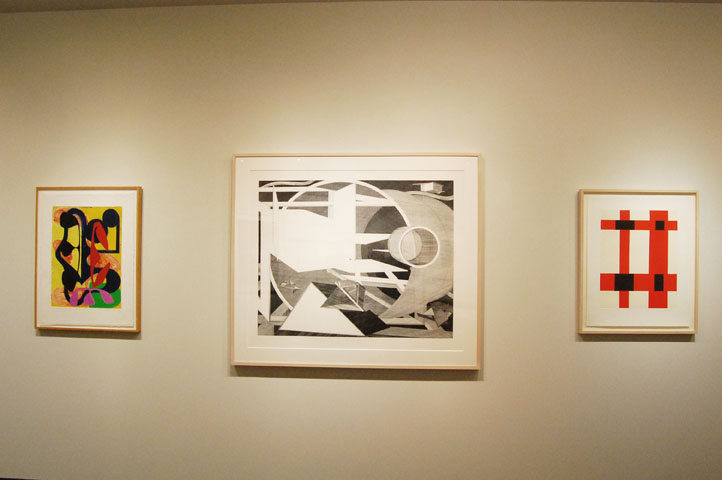
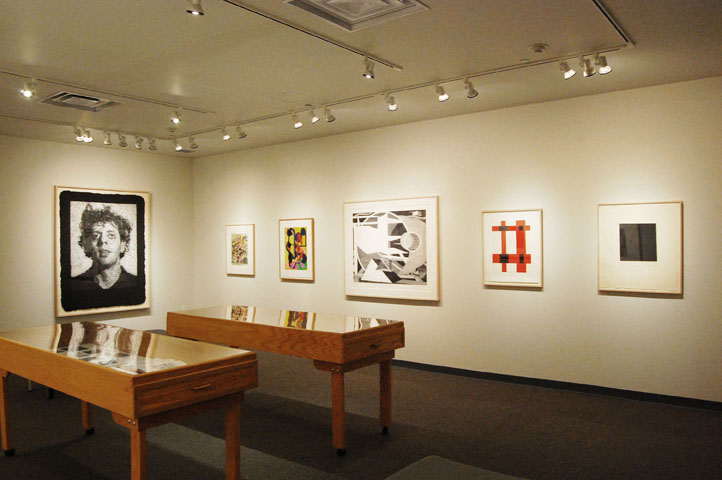
INTAGLIO I & II
The selection of works for the current exhibition in The Maslow Study Gallery reflects the research and studio work carried out by students in Peter Hoffer’s printmaking class this semester. The Maslow curator met with a number of students from the printmaking class a few weeks prior to installation at which time the students made a selection of works for their research.
This semester, students are working on intaglio processes, which include etching, engraving, drypoint, and aquatint; therefore, the final selection of works for this exhibition (except for Chuck Close’s Phil III) are all intaglio prints. As there are a number of significant and varied prints of this type in The Maslow Collection, the final installation represents only a limited representation of the overall depth within the Collection.
The works included in this exhibition are: The Seasons, 1987, by Jasper Johns, and Ellsworth Kelly’s Wall, 1979, both of which involve etching and aquatint; Affirming Flame, 1988, by Willy Heeks involves etching, drypoint and screenprinting; Al Held’s etching, Straits of Magellan, 1985; Julien Schnabel’s Tod-Cage Without Bars, an etching from1982; L.A. Eyeworks, a 1982 etching with carborundum by Jim Dine; Robert Rauschenberg’s Bellini #2 from 1987; and two untitled works, one by Andrew Spence from 1989 and the other by Charles Arnoldi from 1993.
This exhibition was installed with the assistance of The Maslow Collection intern, Katherine Camoni.
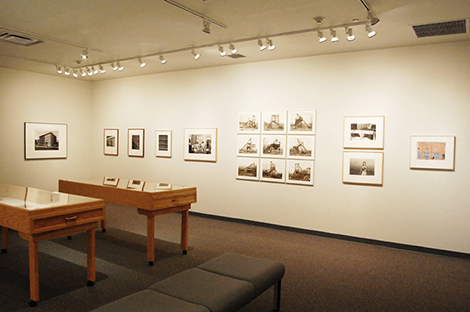
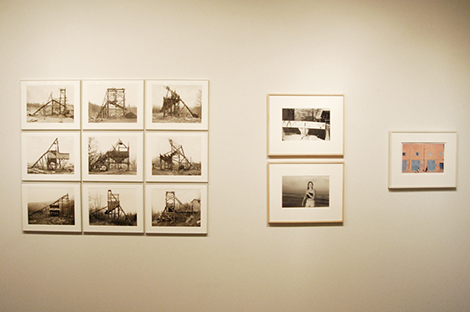
Nov 09, 2012 - Nov 18, 2012
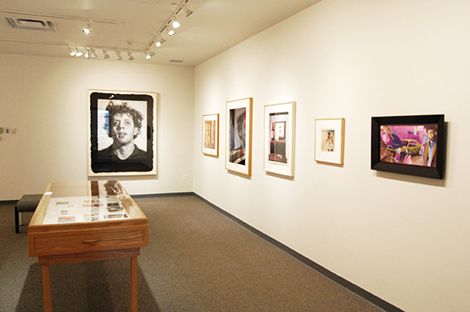
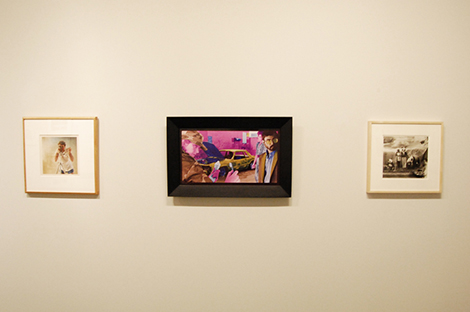
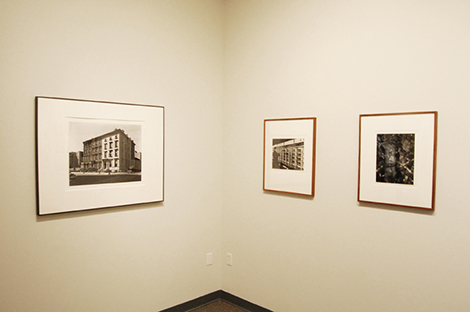
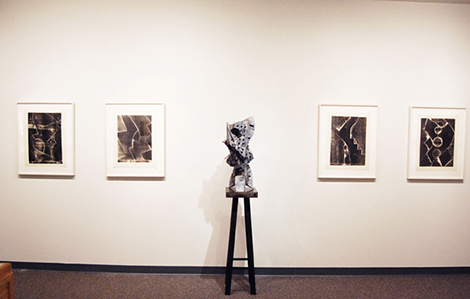
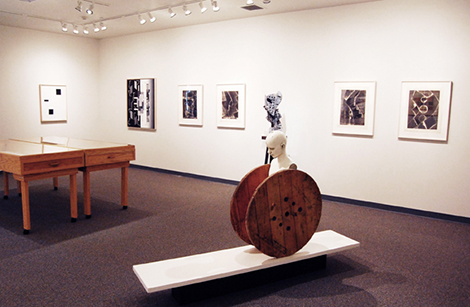
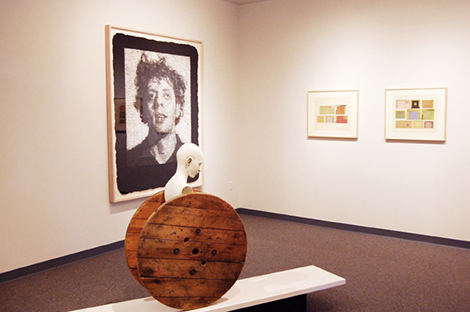
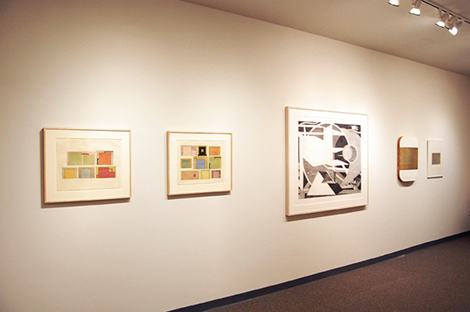
Photography: Vintage to Contemporary No. 3
Both Marywood University and the University of Scranton are offering courses in the history of photography this semester and the professors teaching these courses requested an exhibition of photographic works from The Maslow Collection that would provide a relevant historical overview for their students. Note, in 2008 and 2010 we presented similar exhibitions for the History of Photography students from both universities.
This exhibition of photographic works covers a period from the 1930s to the 1980s. Vintage prints from the 1930s to the 1960s include iconic works by Bernice Abbott and Evelyn Hofer. The gelatin silver prints by Lee Friedlander, Hilla and Bernd Becher, and Mark Cohen represent a changing attitude to subject matter in the 1970s, as does Harry Callahan's color image from Morocco. The 1980s color photographs, mostly done in the studio, are by Barbara Kasten, Sandy Skoglund, Robert Cumming, William Wegman, David Haxton, and Herwig Kempinger. The later works are more experimental in terms of process, materials and subject matter. In addition, a black and white silver gelatin print by Jane Hammond (a recent addition to The Maslow Collection) is the result of composing an image from numerous sources that were processed through Photoshop, and then generating a film negative to make the photographic print. The photograph in its final form appears to be a straight-forward recording of an artist at work, though in fact it is a fiction supported by a careful collage technique. This image is meant to challenge our reception of the photographic image as ‘reality’.
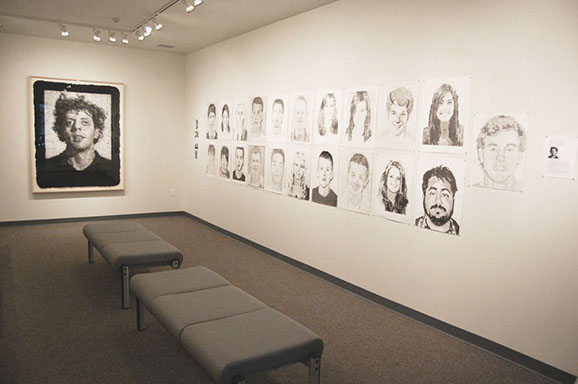
Note: This semester I have chosen to keep Chuck Close’s Phil III in each gallery installation. In this way the visitor to each exhibition will better understand the multiple ‘readings’ possible of this iconic work. Here the source for the pulp paper print is an early black and white photograph that Close took of his friend Philip Glass. The ‘information’ in the photograph, based on using the grey scale in a most precise manner, was reproduced in the print.
This exhibition was designed and installed with the assistance of The Maslow Study Gallery intern, Katherine Camoni.
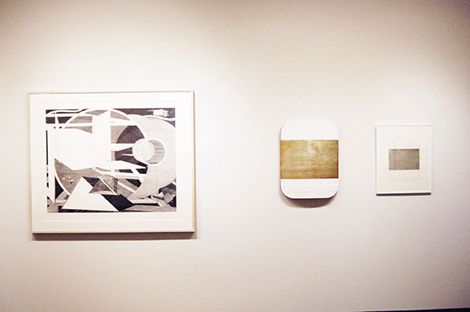
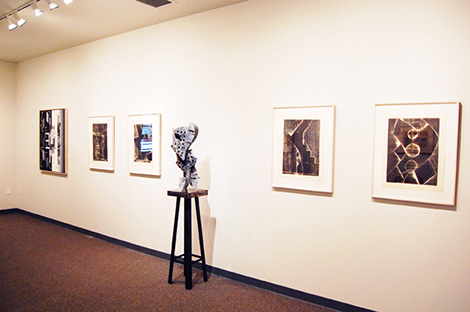
Oct 15, 2012 - Oct 29, 2012
2D | 3D Design
The works in the current exhibition in The Maslow Study Gallery were selected by the Maslow curator along with Gina Rice, instructor for one section of the 2d and 3d Design classes at Marywood.
A number of artists included in The Maslow Collection produce both works on paper, as well as sculpture. Three of these artists are included in this exhibition: Anthony Sorce with an assemblage piece titled 364-6-10, 1965; Mel Kendrick with Basswood with Clay and Holes, 1986, and four prints from his ‘untitled’ series of six woodcuts from 1990; and Kevin O’Toole with both the sculpture, and study for the sculpture, titled LWR 86-92, 1992. The remaining works in the exhibition that are more closely associated with 2d design include: Richard Kalina’s Pretext, 1989; two prints from Peter Halley’s series A Tour of the Monuments of Passaic, NJ, 1989; Alan Uglow’s Drawing #1, 1989, and Al Held’s large print that generates great movement and depth within the 2 dimensional space Straits of Magellan, 1986. This exhibition also includes a work that was in the previous installation in The Maslow Study Gallery, Phil III, 1982 by Chuck Close.
This exhibition was designed and installed with the assistance of The Maslow Study Gallery intern, Katherine Camoni.
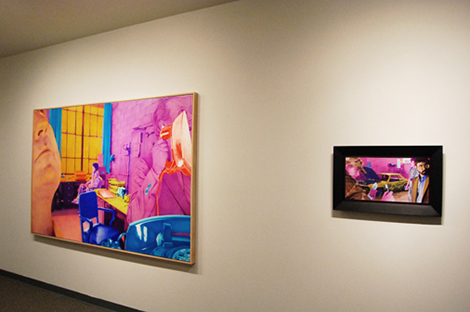
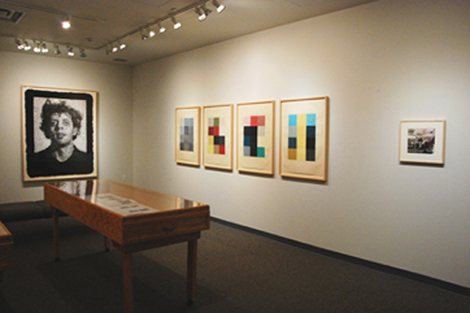
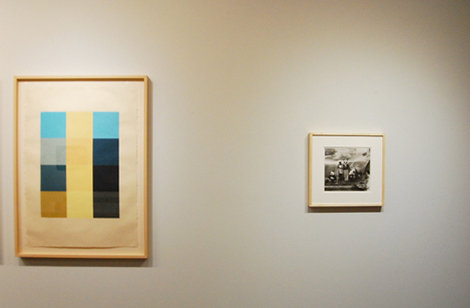
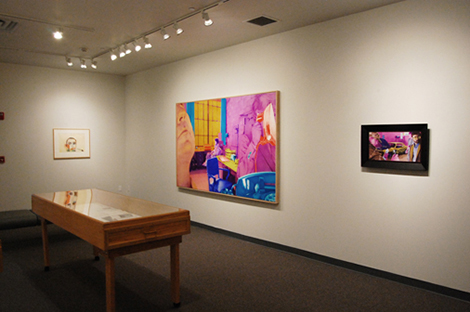
Sep 24, 2012 - Oct 08, 2012
Art Criticism
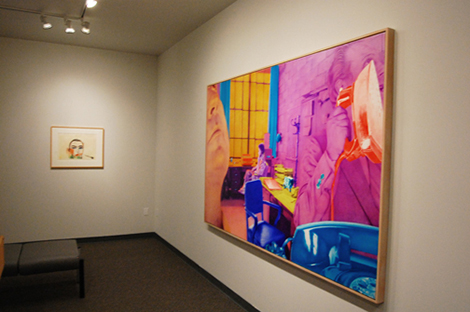
The current exhibition in The Maslow Study Gallery was installed for Dr. Linda Partridge’s Art Criticism class. The students selected three artists from The Maslow Collection to research. One component of their research is to locate reviews written in the 1980s that included these works, or similar works by the artists selected.
The three individual works selected are Chuck Close’s Phil III, 1982, handmade paper employing a ¼ inch grid; Sherrie Levine’s Meltdown, 1989, a series of four wood block prints; and Sandy Skoglund’s Something on the Wall, 1968, acrylic on canvas.
The curator chose to add three additional works that create a dialogue with the student selected works including a second work by Sandy Skoglund, The Laws of Interior Design, 1986, a dye transfer print; Francesco Clemente’s untitled, 1984, a wood block print self portrait; and one of the newest additions to The Maslow Collection, a constructed photograph by Jane Hammond titled Touch-Up from 2009.
The students will meet again in the gallery following their research to discuss both the works and the results of their research.
This exhibition was designed and installed with the assistance of The Maslow Study Gallery intern, Katherine Camoni.
Apr 16, 2012 - Jul 20, 2012
CURATING from a THEATRICAL PERSPECTIVE
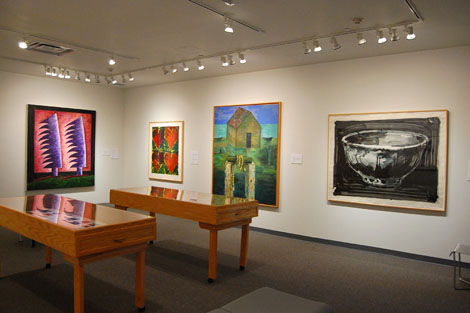
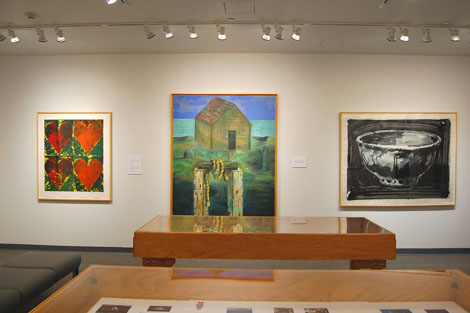
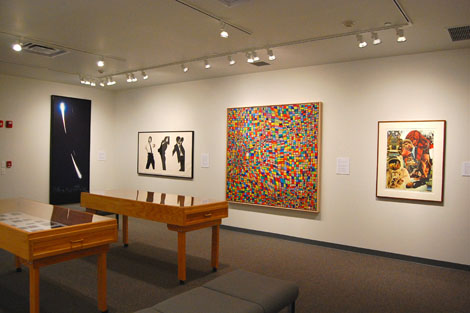
The current exhibition in The Maslow Study Gallery was curated by student intern Emily Bylotas. Emily is majoring in social science and has strong interest in theater. Clearly her studies and interests provide a fresh, outside the box, point of view to formulating a conceptual model for an exhibition. The selection of works for this installation was based on her interest in musical theater. After studying the works in The Maslow Collection, Emily identified certain paintings and prints that she felt resonated with the themes and modes of five different theatrical presentations. She then selected certain lyrics from each performance and matched them with the paintings and prints (for Emily a few of the paintings relate to more than one performance).
Emily’s statement: When one thinks of art, theatre probably isn’t the first thing that comes to mind. It’s the same with theatre as well. It’s an interesting thing because art and theatre have so much in common. Creativity is a major factor, but there is also the process of putting something together for people to see, think about and enjoy. Theatre has always been, and always will be, an important part of my life and will always have a place in my heart. Putting art and theatre together seemed like a difficult task, but with all the commonalties it wasn’t impossible. Lyrics can describe emotions or represent them just as a painting can. Using lyrics from various Broadway musicals and beautiful art works this exhibition shows how these types of art can come together. By combining the two the lyrics or the art work can be viewed and thought about in a whole different way.
Emily matched Rex Lau’s The Wind Demons with both the humorous Seusical and the more serious Spring Awakening. She chose Robert Longo’s Jules, Gretchen, Mark – State II to be seen in the context of both Godspell and American Idiot. Robert Rauschenberg’s Signs from 1970 and Rochelle Feinstein’s Big A Go-Go clearly speak to the times and psychedelic atmosphere Hair, while David Hornung’s Outermost House was matched with Spring Awakening. Robert Cumming’s Industrial Bowl could easily have been part of the staging for both The Phantom of the Opera and American Idiot, and Jim Dine’s print titled L.A. Eyeworks and Jack Goldstein’s Untitled (MP #126) speak to both American Idiot and Spring Awakening.
Emily’s concern for AIDS and the theatrical world’s involvement in AIDS awareness is also addressed in the material and images included in the information cases.
Mar 16, 2012 - Apr 06, 2012
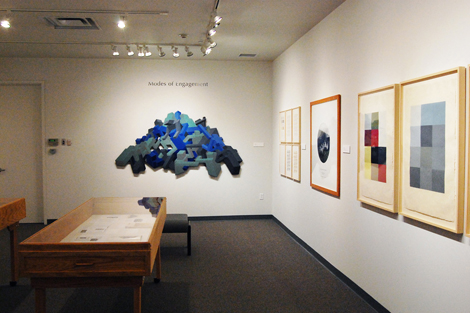
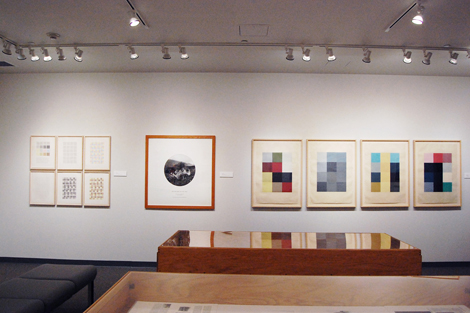
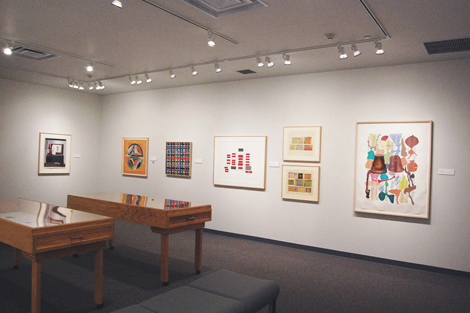
MODES OF ENGAGEMENT
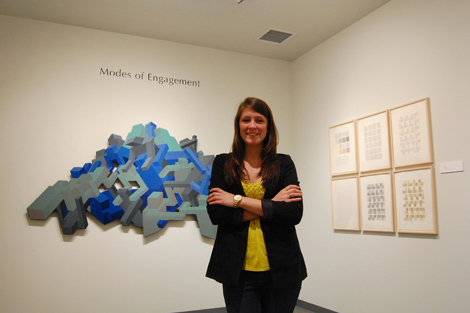
administration major, in conjunction with her honors thesis, "Contextualizing in Curating: A development of theory, reasoning, and participation."
MODES OF ENGAGEMENT
The idea that there may be various levels of engagement for the visitor in an exhibition is based on the premise that the curator has the discretion to enable the art to become more perceptible to the viewer. There are no necessary rules to the game of curating a show, and therefore the art may be juxtaposed to fulfill many contexts and concepts. Modes of Engagement focuses on a selection of artwork from The Maslow Collection that touches on the idea of participation.
Except for the artist, the viewer cannot fathom every known fact about a piece of art. In this exhibition, the artwork thrives on the idea of ‘being explored’. The works in the exhibition include Roger Boyce’s Succession, 1986; Robert Cumming’s Red Perceives Only a Bulb in the Outline, 1979; Hamish Fulton’s The Sky Lark and the Frog, 1986; Peter Halley’s Limited Partners, 1990, and A Tour of the Monuments of Passaic, NJ (two works); Edward Henderson’s untitled (L), 1989; Gary Lang’s Back Out, 1988; Sherrie Levine’s Meltdown, 1989 (series of 4); Sol Lewitt’s Serial Systems, 1977; and Frank Stella’s Singerli Variation Squared with Colored Ground IV, 1981.
The exhibition title is meant to serve as a catalyst and context for understanding the artwork. While becoming involved in the mental and visual participation stop and think why is this piece placed here? What exactly is happening in each work? How am I being engaged? Explore the gallery space and artwork; create dialogue on the premise that the artwork should lead to opinion, interpretation, and the experience.
The curatorial development and installation of this exhibition has been carried out by Nicole Claase in support of her honors thesis entitled “Contextualizing in Curating: A development of theory, reasoning and participation”.
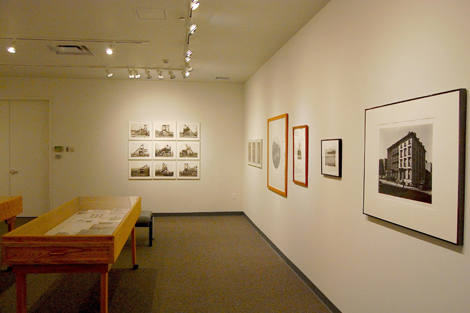
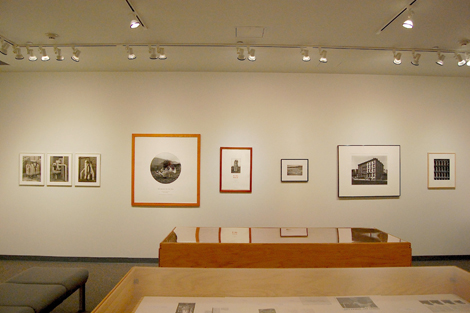
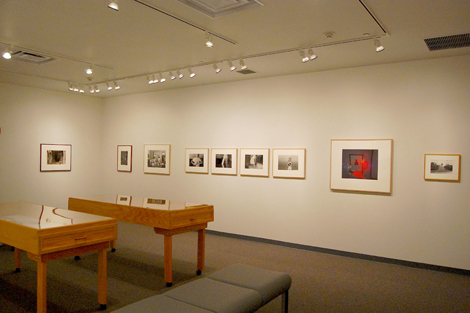
Feb 24, 2012 - Mar 12, 2012
PHOTOGRAPHIC SELECTIONS from The Maslow Collection
This installation coincides with, and is meant to complement, the two other photography exhibitions currently installed in the Marywood galleries: Photography on Campus, and Lost Voices: A Remembrance-Poland 1940-1945. The selection of photographs from The Maslow Collection for this exhibition was therefore based on an expectation of works (considering the range of possible themes) that would be submitted by faculty, students, and staff on campus for the Photography on Campus exhibition in the Mahady Gallery, as well as considering certain formal aspects in the photographs by Dr. Michael Mirabito in the Suraci Gallery in which his images express the human loss and horror experienced in the WWII Nazi concentration camps in German occupied Poland. Clearly, there are no images in The Maslow Collection that address the conditions and experience of such magnitude and emotional depth as those exhibited by Dr. Mirabito, at best a selection of works from The Maslow Collection that may express absence and loss in some respect is all that could be done to approach a relationship to his photographs.
The other themes that are addressed in the Maslow Study Gallery exhibition pertain to: ‘’objects/objectification’, primarily the photographic strategy of identifying and selecting out specific elements within their contextual environment for study and contemplation; ‘the snapshot’ that captures the individual in routine movement and acts; ‘the event’ which documents a particular moment of shared experience; ‘humor’ (in the work by William Wegman); and for the sake of a better term ‘the postcard’ that aims at detailing the context and possible experience of the place in view.
Works by Lee Friedlander, Evelyn Hofer, Bernice Abbott, Hilla and Bernd Becher, Hamish Fulton, Mark Cohen, Todd Watts, William Wegman, Gainfranco Gorgoni, and Denny Moers are included in this exhibition.
Feb 01, 2012 - Feb 19, 2012
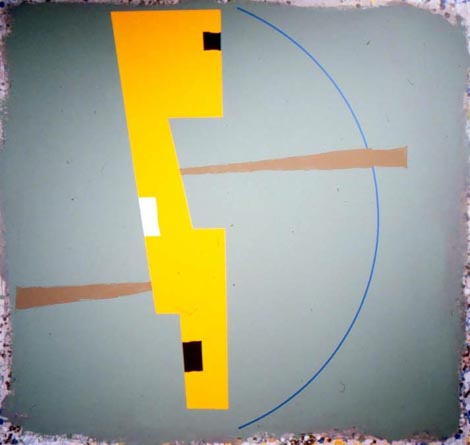
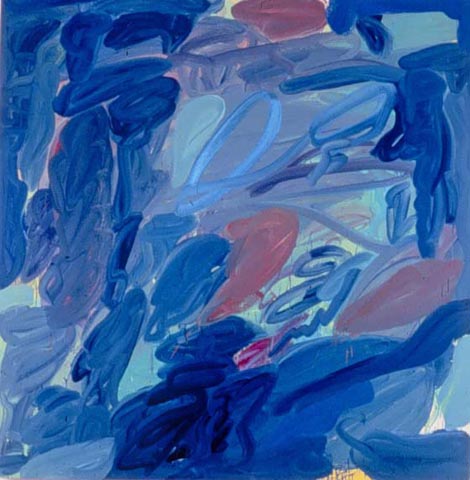
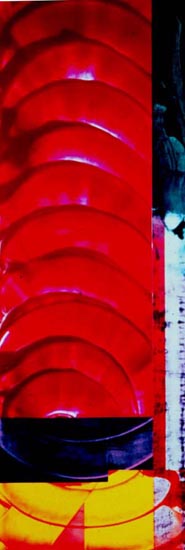
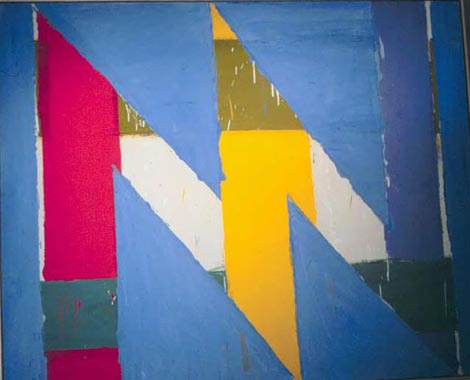
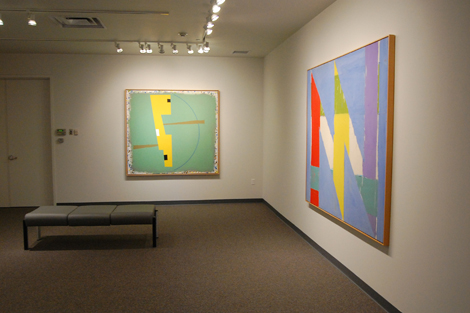
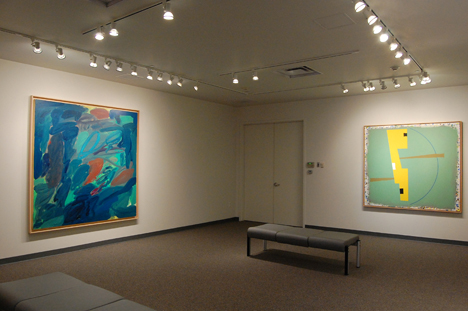
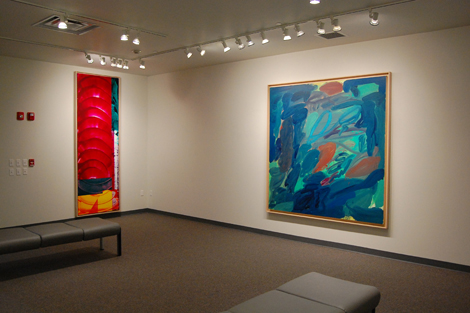
4 PAINTINGS
This installation includes four paintings selected from The Maslow Collection by the curator and Marywood University painting professor Steven Alexander. These four works exhibit distinctly different approaches to the handling of the paint and the intended effect. They were all completed in the 80s and early 90s, during the artists' more formative years, and for the most part, exhibit what has become a signature style that has been maintained by the individual artists over time. Though it can be observed that while the more recent work by Thornton Willis and Peter Plagens maintains a visual relationship to the earlier work, it has changed both structurally and with regard to the textural quality of the painted surface.
The presentation of just four works in this gallery, each work occupying one entire wall, enables the viewer to engage in a heightened and focused degree of contemplation and study for each work, while also allowing for the comparison of approaches between the works.
The works in this exhibition are: Untitled (54-85), 1985, by Peter Plagens; Volterra, 1990, by Melissa Meyer; No. 230 (for Beccafumi), 1985-6, by David Reed; and Streets of Tupelo, 1984, by Thornton Willis. The works by Plagens and Willis are acrylic on canvas, and the works by Meyer and Reed are oil on canvas.
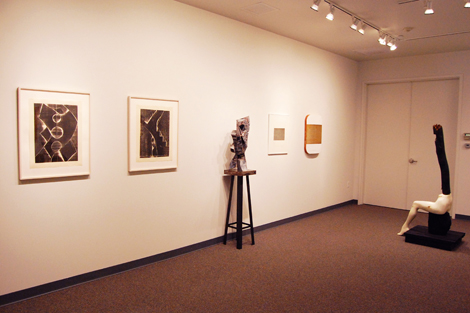
Nov 07, 2011 - Nov 20, 2011
3D Design #3
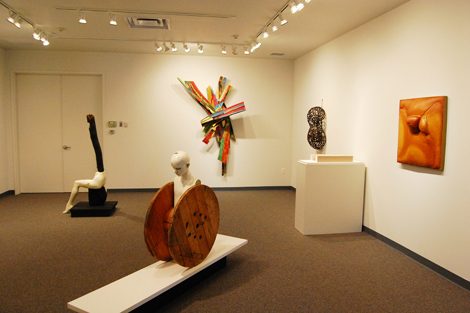
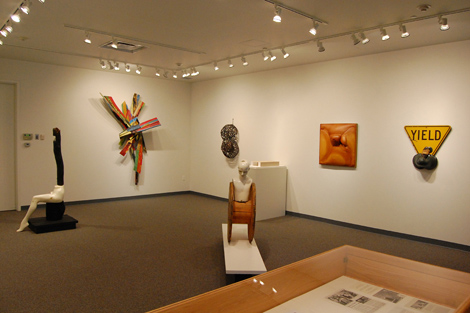
This exhibition was curated for the four 3D Design classes that are being taught this semester by Ruth Koelewyn, Corrie Grant, Gina Rice, and Tony Pachick. The works in this installation, including a number of works from The Maslow Collection that are being presented for the first time in The Maslow Study Gallery, were selected by the curator based on suggestions and requests from students and faculty.
Assemblage, as process and as a finished work, is most evident in three early works by Tony Sorce, Blue Pole, 1965, 364-6-10, 1965, and Yield, 1965-6 that include found objects, such as the large wire spool, mannequin parts, and yield sign. Another work by Sorce, Untitled E (Guggenheim Series), 1966-7, identifies the artist’s interest in exploring the possibilities of new materials (new in the 1960s), in this case polyurethane, for creating forms that express both control and chance. James Biederman’s Go-Jo, 1984, a favorite of the students, again uses what appears to be discarded wood boards, painted, and assembled into a dynamic work that seems to burst from the wall. An interesting study regarding the relationship of an artist working in both two dimensions and three dimensions is seen in the works by Kevin O’Toole, Study for LWR 86-92, 1992, and, LWR 86-92, 1992; and Mel Kendrick’s Basswood with Clay and Holes, 1986, along with two untitled woodblock prints by Kendrick from 1990. The installation also includes a large cast bronze work by Margo Sawyer, Cosmic Ocean, 1990, and an untitled ‘architect’s model’ type work from 1990 by Jurgen Albrecht.
Once again the installation of the works in this exhibition was carried out by the curator with the assistance of Nicole Claase, the student intern working with The Maslow Collection this semester.
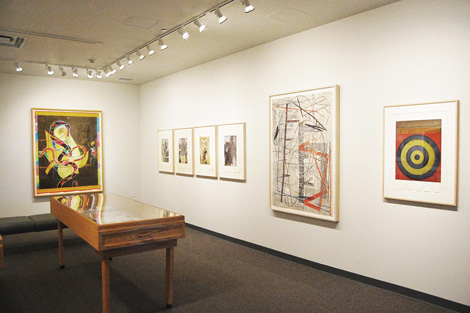
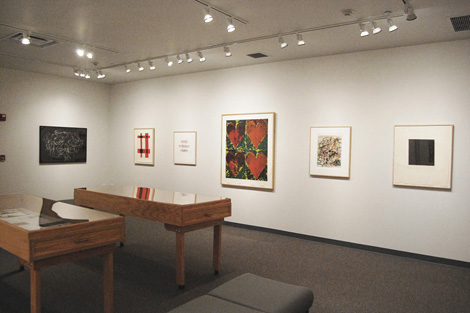
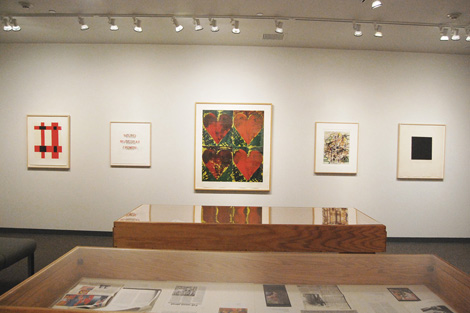
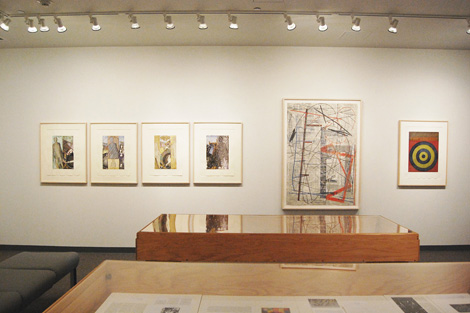
Dec 01, 2011 - Dec 15, 2011
Printmaking – Intaglio
This installation of intaglio prints from The Maslow Collection corresponds to the area of printmaking that is being covered in Peter Hoffer’s printmaking class this semester.
The intaglio process includes etching, engraving, drypoint, and aquatint. The Maslow Collection holds a number of important works by major artists who worked with these processes from the 60s through the 90s. The particular works selected for this exhibition will enable the students to see a wide range of possible approaches to the intaglio processes that were employed by these artists.
Certain works in this installation exhibit multiple processes to achieve the final print; for example, Frank Stella’s massive Pergusa Three – State I used etching and woodcut, while Affirming Flame by Willy Heeks involved etching, drypoint, and screenprinting. The series of four works known as The Seasons by Jasper Johns, and Ellsworth Kelly’s Wall from 1979 both incorporated etching and aquatint.
Additional works in this exhibition include: Jim Dine’s L.A. Eyeworks; Target with Four Faces by Jasper Johns; Edward Ruscha’s Metro, Petro, Neuro, Psycho; Vault, a relief print by Frank Owens; David Salle’s Until Photographs Could be Taken from Earth Satellites, a white etching on black aquatint; and an untitled etching by Andrew Spence from 1989.
Once again the installation of the works in this exhibition was carried out by the curator with the assistance of Nicole Claase, the student intern working with The Maslow Collection this semester.
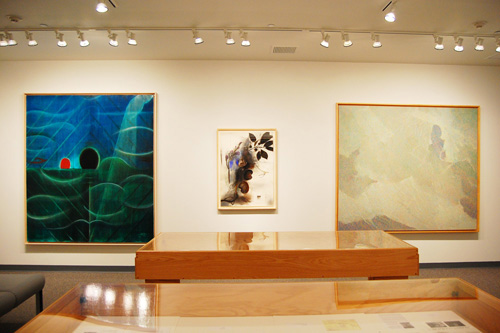
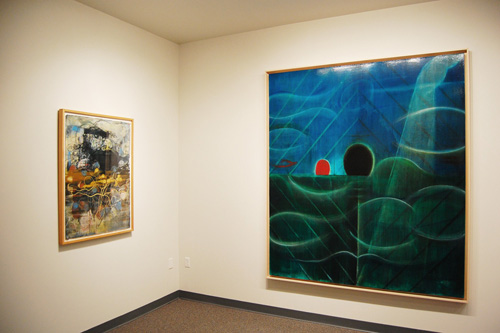
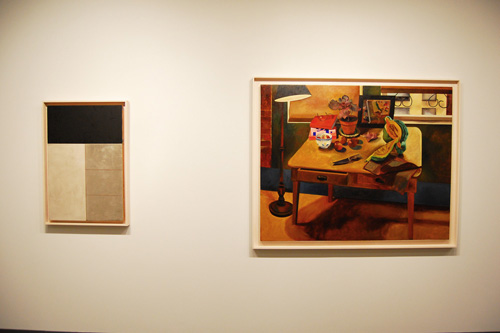
Oct 21, 2011 - Oct 31, 2011
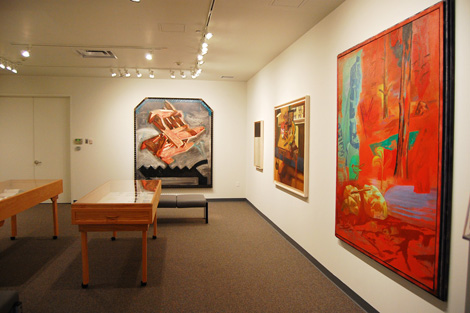
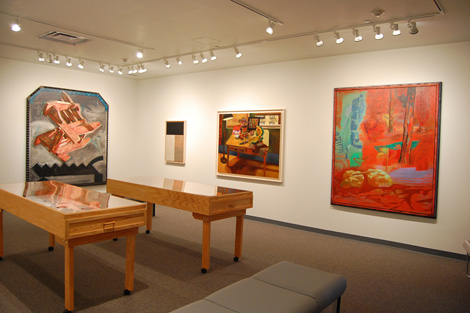
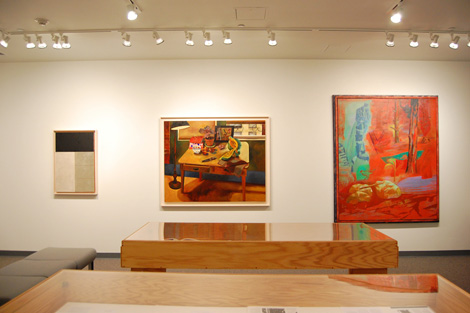
PAINTINGS - STUDENTS SELECT - Part 2
This installation, similar to Part 1 that immediately preceded it, includes eight paintings from The Maslow Collection that were selected by students in art faculty Pamela Parson’s painting class. Having gone through the works in storage and researched the works online, the students made selections based on aspects of these works that in some way speak to the work they are currently doing in the studio, ranging from palette and process, to composition and subject matter.
A number of the works selected for this installation have not been presented before at Marywood, and certainly the concentration of this particular range of works would most likely not have occurred if not for the particular student based interest driving the selection process.
The works in the exhibition include five canvases: Small Constellation 3, 1987, by Robert Cumming; The Swimmer, 1990, by Donald McLaughlin; Icon to an Ice Age, 1988, by David Hornung; Oceanside No. 11, 1979, by Joseph DiGiorgio; and three medium to smaller works including Nancy Haynes's Segno, 1985; Anne Abron’s Fall, 19890; and Chihung Yang's Sonnet of Orchid and Bones, 1988
Once again the installation of the works in this exhibition was carried out by the curator with the assistance of senior arts administration major, Nicole Claase, the student intern working with The Maslow Collection this semester.
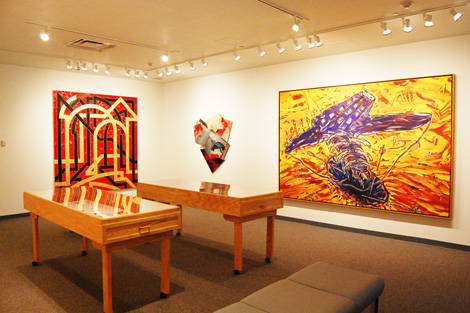
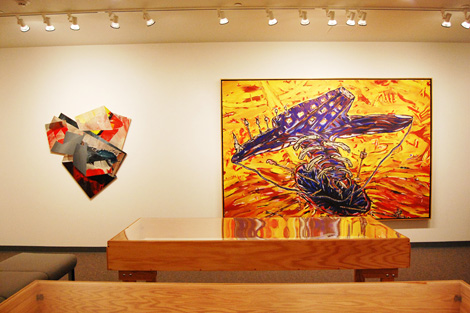
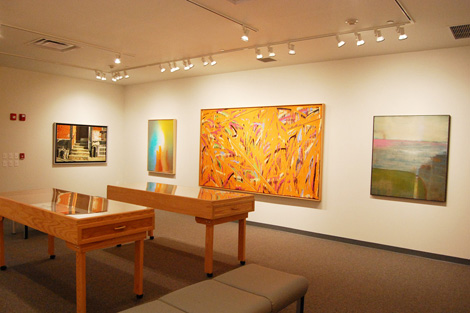
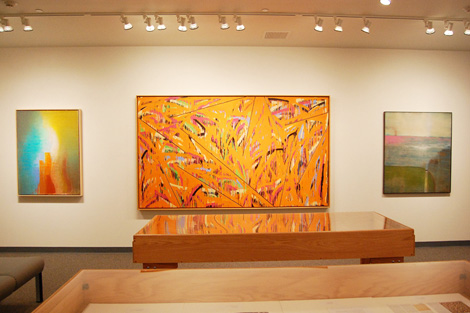
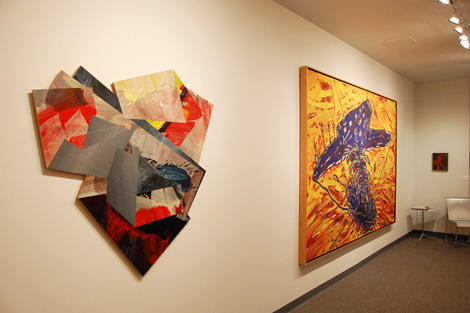
Oct 03, 2011 - Oct 16, 2011
PAINTINGS - STUDENTS SELECT - Part 1
This installation, and the one that will immediately follow in two weeks – Part 2, includes 8 paintings from The Maslow Collection that were selected by students in art faculty, Pamela Parson’s painting class. Having gone through the works in storage the students made selections based on aspects of these works that in some way speak to the work they are currently doing in the studio, ranging from palette and process, to composition and subject matter.
A number of the works selected for this installation have not been presented before at Marywood, and certainly the concentration of this particular range of works would most likely not have occurred if not for the particular student based interest driving the selection process.
The works in the exhibition include the large canvas New York – Natural History, 1982, by Peter Bommels; Plane Field, 1986, by Howard Buchwald; Smyra, 1983, by Valerie Jaudon; Six Steps, 1986, by Y.J. Cho; Scott Kelley’s Shores of Perth 3, 1988; Ross Neher’s The Return from 1990; and two works by Anthony Sorce, Warrior (Homage to Cezanne) from 1963 and Montauk, 1981-2.
Peter Bommels’ work is most generally included in with the German Neo-Expressionists works of Georg Baselitz, Jorg Immendorff, Anselm Keifer, Markus Lupertz and A.R. Penck. Valerie Jaudon, along with Joyce Kozloff, Miriam Schapiro, Robert Kushner, Richard Kalina (Valerie’s husband), was instrumental in forming the Pattern and Decoration movement in the late 70s.
Once again the installation of the works in this exhibition was carried out by the curator with the assistance of Nicole Claase, the student intern working with The Maslow Collection this semester.
This exhibition includes the following works:
- Peter Bommels, New York - Natural History, 1982, dispersion on canvas, 78 3/4 x 118
- Howard Buchwald, Plane Field, 1986, oil on canvas, 75 x 109 1/2
Y.J. Cho, Six Steps, 1986, oil on canvas, 33 x 50 - Valerie Jaudon, Smyra, 1983, oil and gold leaf on canvas, 80 x 88
Scott Kelley, Shores of Perth 3, 1988, oil, wax, varnish on paper mounted on canvas, 48 x 42 - Ross Neher, The Return, 1990, oil on linen, 48 x 36
Anthony Sorce, Warrior (Homage to Cezanne), 1963, kodalith with acrylic paint; monotype, 13 x 10 1/2
Anthony Sorce, Montauk, 1981-2, Rhoplex on board, 50 1/2 x 53 1/2
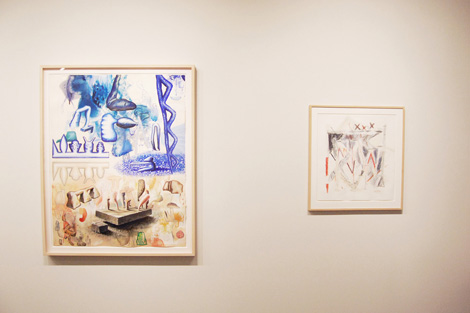
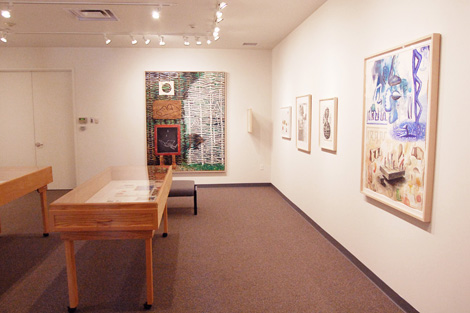
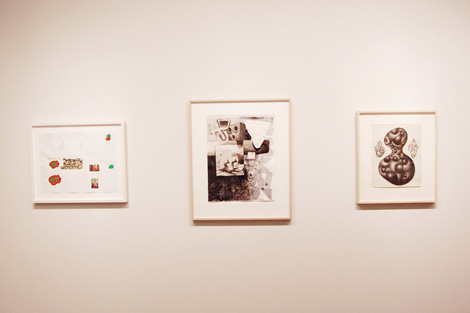
Aug 30, 2011 - Sep 30, 2011
ILLUSTRATION AND DRAWING
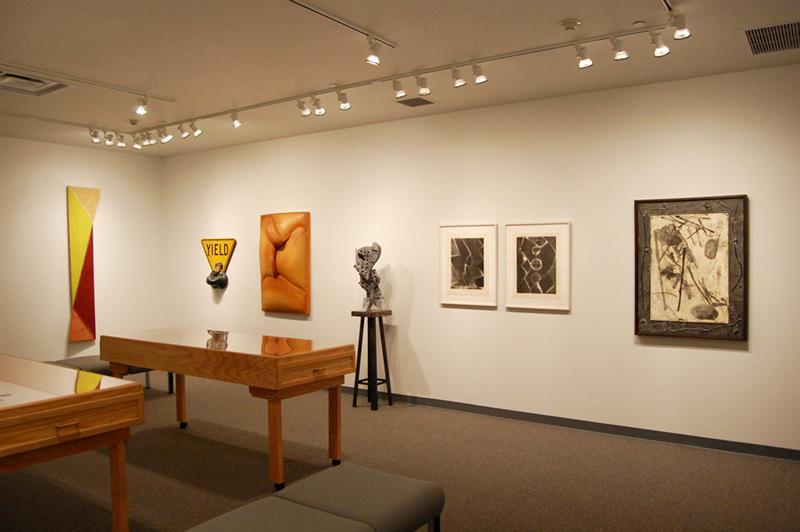
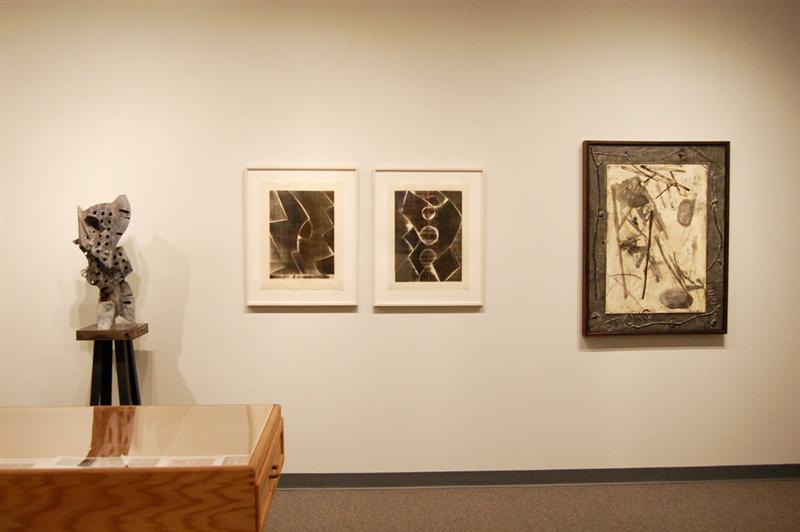
This installation includes a selection of works from The Maslow Collection that addresses a number of issues pertaining to drawing and illustration. Though none of these works were intended to ‘illustrate’ any particular narrative, many of them clearly exhibit elements that could easily be read in such a manner. Other works included are either direct drawings or studies, or have drawing as a major component in the overall development of the finished work.
The layout, design and selection of the particular works for this installation were carried out by Nicole Classe, a student intern working with the curator of The Maslow Collection. The works include prints, paintings, charcoal drawings, and a range of mixed media constructions. Nicole chose to install a number of the works in such a manner as to focus the viewer’s attention on certain similarities of content or process.
Also included in the exhibition is a ‘drawing’ response by Edward Henderson that he sent to the then curator of The Maslow Collection in the 1980s when she wrote to him to request additional information about his work. Henderson returned the letter with drawings covering both sides of the original letter. The title of the painting is “Vein, Vain, Vane” (he reverses the order of the title in his response) which he bleeds down to form the word ‘hail’ on one side of the letter. A clue: the word ‘hail’ can be located within the painting.
The artists in this exhibition are Jane Hammond, Edward Henderson, Robert Jessup, Karla Knight, Pamela Moore, Martin Mull, Katherine Porter, David Reed and Julian Schnabel.
This exhibition includes the following works:
- Jane Hammond, Tuner, 1993, graphite, crayon, color xerox transfers, linoleum block prints, gouache, acrylic on rice paper, 35 1/2 x 32 1/5
- Edward Henderson, Vein,Vain,Vane, 1985-6, oil and inlaid wood on canvas, 84 x 66
Edward Henderson, untitled, 1986, mixed media on paper, 46 1/2 x 36 1/2 - Edward Henderson, untitled, 1990, mixed media on paper, 23 x 17 1/2
Robert Jessup, Watchful Father, 1987, charcoal on paper, 49 3/4 x 37 3/4 - Karla Knight, Study for Descendant, 1989, charcoal on paper, 16 5/8 x 13 5/8
Pamela Moore, Separation, 1983, kodalith with acrylic paint; monotype, 24 x 29 3/8
Martin Mull, Christmas Eve, 1993, oil on linen, 48 x 31 1/2 X 11 1/2 - Katherine Porter, untitled, 1977, graphite, colored pencil, and oil pastel on rag paper, 24 x 22 1/4
- David Reed, Working Drawing for Painting 561, 2007, mixed media on paper, 17 x 22
- Julian Schnabel, Tod-Cage Without Bars, 1982, etching, 29 1/2 x 23 1/4
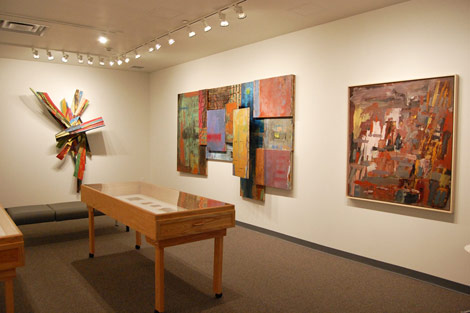
Mar 10, 2011 - Apr 04, 2011
3D-Design #2
This exhibition was curated for the two 3D Design classes taught this semester by Ruth Koelewyn and Martha Westbrook. The works selected by the curator for this installation were based on discussions with both instructors, and are meant to address the specific issues and projects in which their students will be involved.
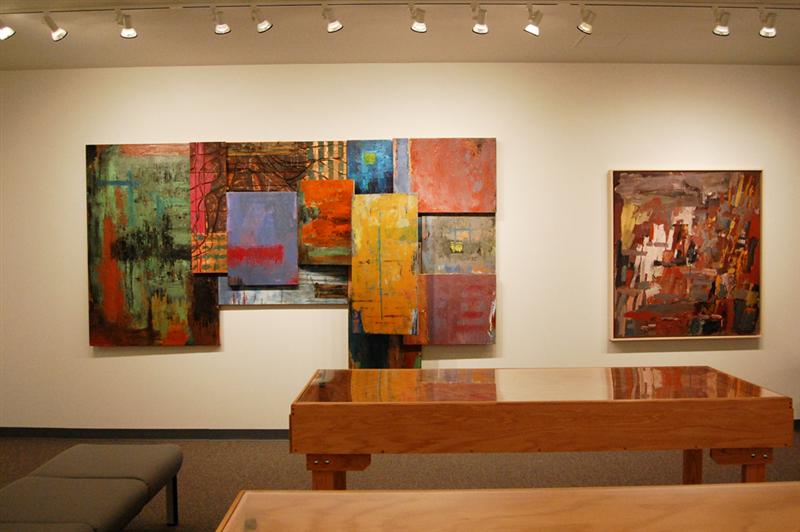
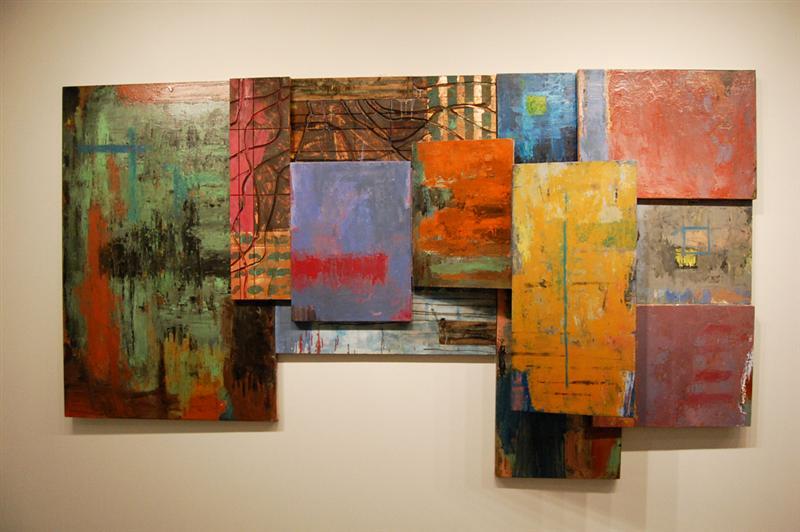
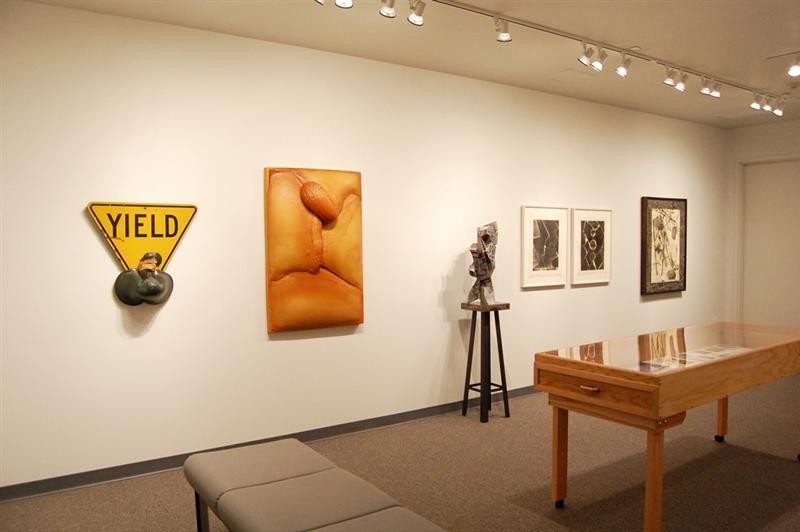
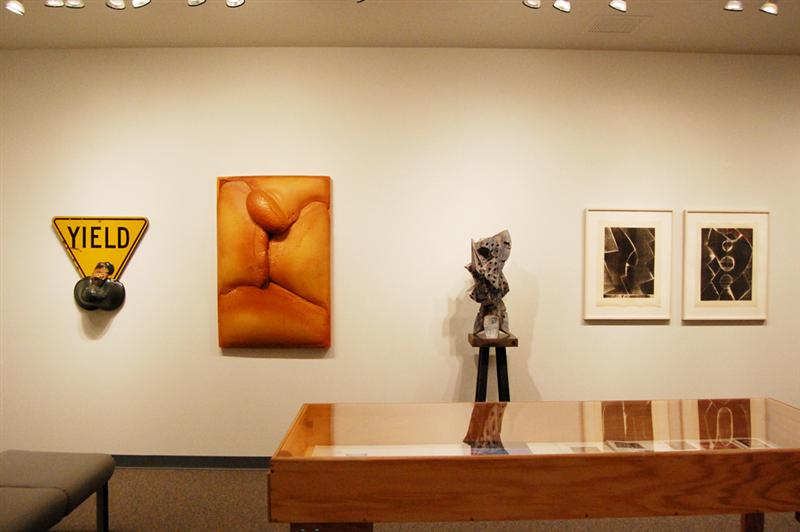
The three works by James Biederman in this exhibition present a painterly approach to moving from the two-dimensional work on a single canvas, to a work involving combined canvases and wood elements entering the three-dimensional space of the gallery, to a work of painted wood that radiates out from the wall. The potential use of a then (mid 1960s) new industrial material, polyurethane, for creating forms that express both control and chance is explored through the two works by Tony Sorce in the exhibition. The work by Frank Owen has the appearance of "relief" but is actually the result of his unique process of using negative space (cut ting into plastasine clay) that is poured and filed with acrylic pigment that is then lifted off the clay and adhered to the canvas. Mel Kendrick's sculpture and prints show the artist's approach to the two-dimensional and three-dimensional relationships of form and line. The wall piece by Tad Wiley is a perfect counterpoint to the large painted wooden work by Biederman, showing restrained use of paint and form.
This exhibition includes the following works:
James Biederman, Broken Flowers, 1992, oil on linen, 52 x 48
James Biederman, Etivaz, 1987, oil, wood, cooper, canvas, 74 1/2 x 130 x 15 1/2
James Biederman, Go-Jo, 1984, oil on wood, 90 x 50 x 20
Mel Kendrick, untitled, 1990, woodcut, (2 from a series of 6), 24 1/2 x 18 3/4 (each)
Mel Kendrick, Basswood, Caly and Holes, 1986, basswood and clay, 27 1/2 x 12 x 10 1/2
Frank Owen, Stone Study #6, 1990, acrylic on canvas, 45 1/2 x 34 1/2
Anthony Sorce, Yield, 1965-6, wooden traffic sign, artist's shoe, tape, tinted polyurethane foam, 28 x 19 x 8
Anthony Sorce, Untitled III (Guggenheim Series), 1966, rigid polyurethane foam. wood, and varnish, 48 x 31 1/2 X 11 1/2
Tad Wiley, Bouy Tree, 1987, marine enamel and spar varnish on sugar pine, 79 x 17 x 6
Feb 01, 2011 - Feb 27, 2011
Woodcuts
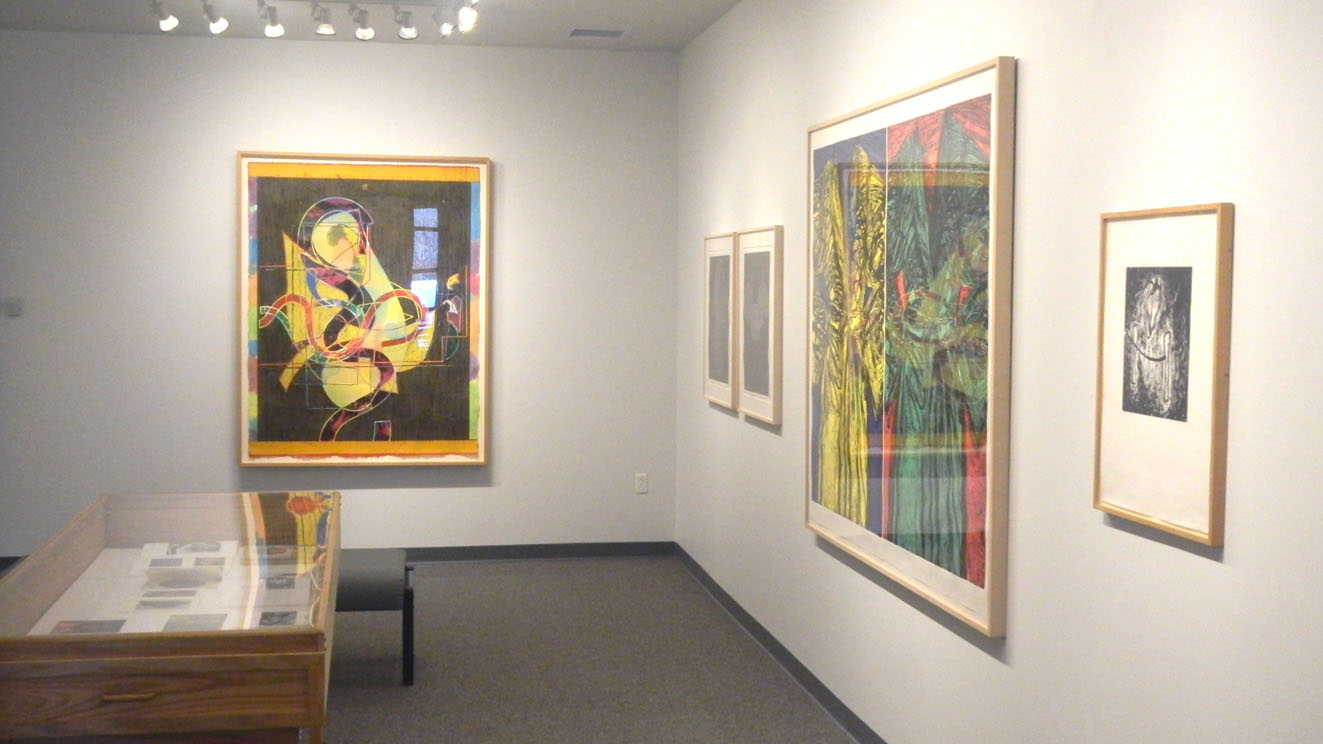
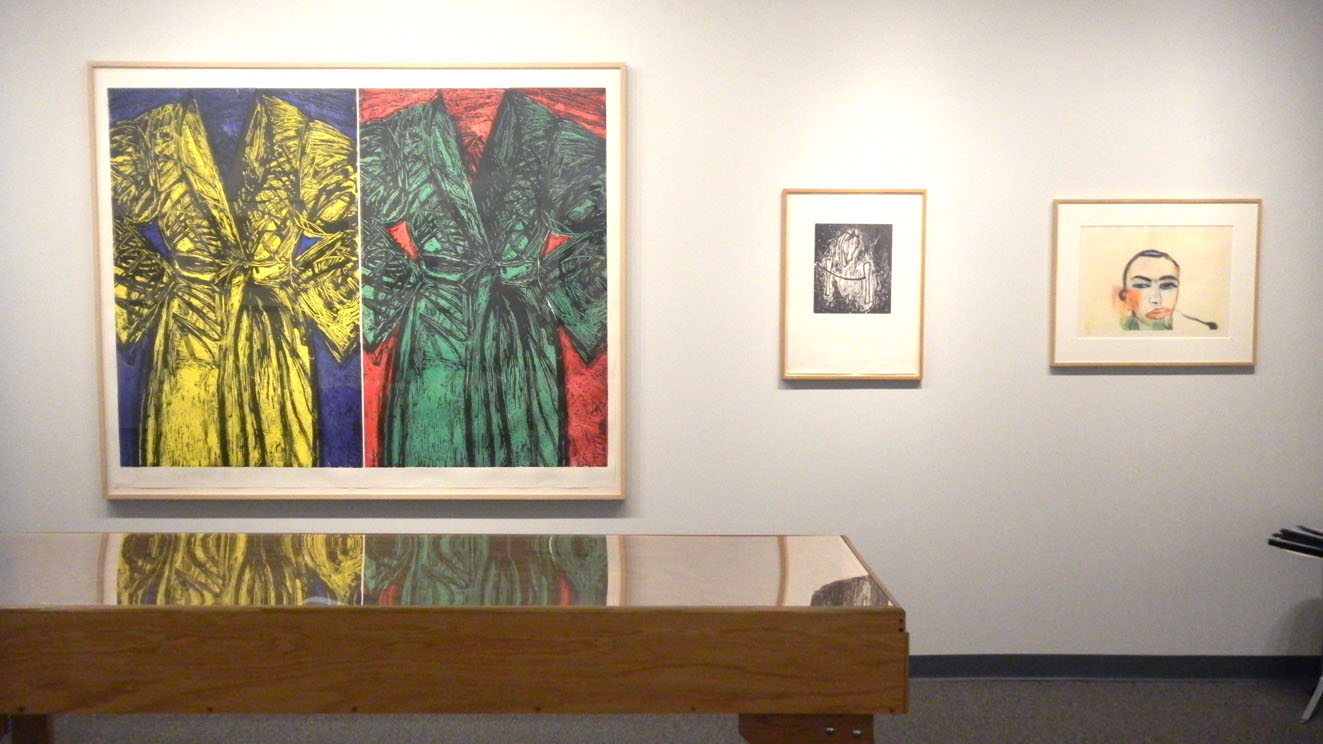
The current exhibition in The Maslow Study Gallery was installed for Peter Hoffer's printmaking students who are working on woodcut prints this semester. The selected prints from The Maslow Collection explore the range of image making techniques and effects that are possible with woodcuts, and additional mixed processes.
The untitled self portrait by Francesco Clemente that is often read as a watercolor was printed in the Japanese process know as ukiyo-e, a popular technique form the 17th and 18th centuries that uses multiple blocks for each color (for this work 22 woodblocks and 14 colors were used). More straight forward black and white woodblock prints by Mel Kendrick, Terry Winters, Susan Rothenberg, and Gerog Baselitz exhibit a range of textural and tonal possibilities through this printmaking process. The multiple use of the same large woodblock using different colors is evidenced in The Kindergarten Robes by Jim Dine, while multiple printmaking processes involving woodblock, lithography and screen printing are scene in Roy Lichtenstein's Two Paintings; and relief-print etching and woodcut are utilized in Frank Stella's Pergusa Three – State I.
Georg Baselitz, Head, 1981, 32 1/2 x 24Francesco Clemente, untitled (self portrait), 1984, 16 3/4 x 23
Jim Dine, The Kindergarten Robes, 1983, 60 x 75Mel Kendrick, untitled, 1990, (4 from a series of 6), 24 1/2 x 18 3/4 (each)
Sherrie Levine, Meltdown, 1989, (2 from a series of 4), 36 1/2 x 24 3/4 (each)
Roy Lichtenstein, Two Paintings, 1984, (woodcut, lighograph, screenprint and collage), 45 3/4 x 39
Susan Rothenberg, Head and Bones, 1983, 25 3/4 x 18 1/4
Frank Stella, Pergusa Three - State I, 1983, (relief-printed etching and woodcut), 66 3/8 x 51 1/2Terry Winters, Furrows, 1989, (2 from a series of 5), 29 1/2 x 23 1/4 (each)
Dec 13, 2010 - Jan 10, 2011
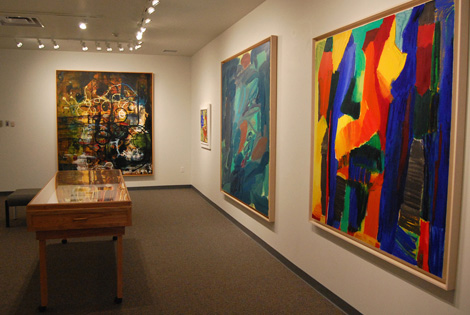
Abstraction: The Movement of the Hand
This exhibition was curated by Katie Camoni, a B.F.A. painting major, and Nikki Zarick, a B.A. art therapy major, in collaboration with Bob Schweitzer, Curator for The Maslow Collection. Using the Maslow Collection, they developed a conceptual theme around the idea of comparing and contrasting the hand movement and patterns used in abstract paintings by male and female artists.
The paintings selected by Katie and Nikki for this exhibition were completed between the years 1986 to 1992. The works by these three female and five male artists vary in size, content, and medium. The paintings are installed in a way that presents two similar hands, hung right next to two works that contrast the two before it. Even though the works contrast in hand, the artists' use of color and the flow to the pieces shows an over all relation between all of the works.
The artists included in this exhibition are: Rochelle Feinstein, Willy Heeks, Gary Lang, Melissa Meyer, Katherine Porter, Jerry Zeniuk, Bradley Wester, and Pier Consagra. This exhibition fulfills Katie and Nikki's final project for their 3-D class, taught by Ruth Koelewyn. The assigned project was entitled "found objects." Each student had to find objects and put them together in a way that would make them all relate. For their project Katie and Nikki chose to employ the curatorial practice of selecting individual works to address a particular concept or theme and present them in the context of a thematic exhibition.
This exhibition includes the following works:
Pier Consagra, untitled, 1989, mixed media on canvas, 24 x 22
Rochelle Feinstein, Big A Go Go, 1992, oil on linen, 70 x 75
Willy Heeks, Dome, 1990, oil on canvas, 88 x 78
Gary Lang, Back Out, 1988, oil on canvas, 27 x 27
Melissa Meyer, Volterra, 1990, oil on canvas, 80 x 78
Katherine Porter, 1000 Red Burning Nights, 1986, oil on canvas, 80 x 67
Bradley Wester, untitled, 1987-8, oil, dry pigment, and wood stain on Melamine panel, 24 x 23
Jerry Zeniuk, untitled # 153, 1991, oil on linen, 63 x 60
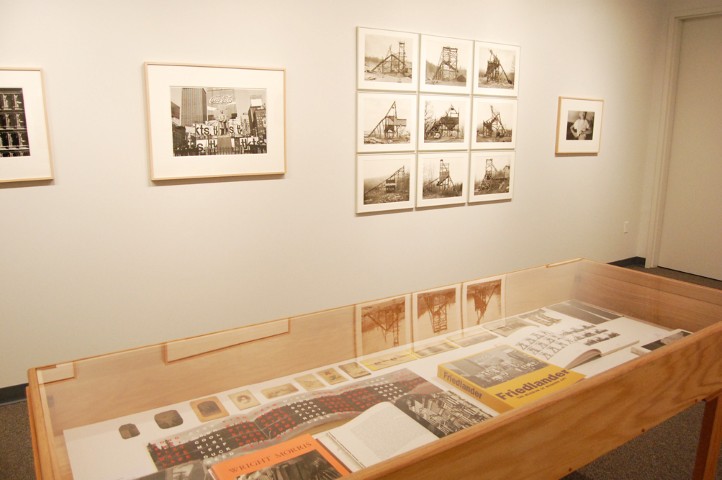
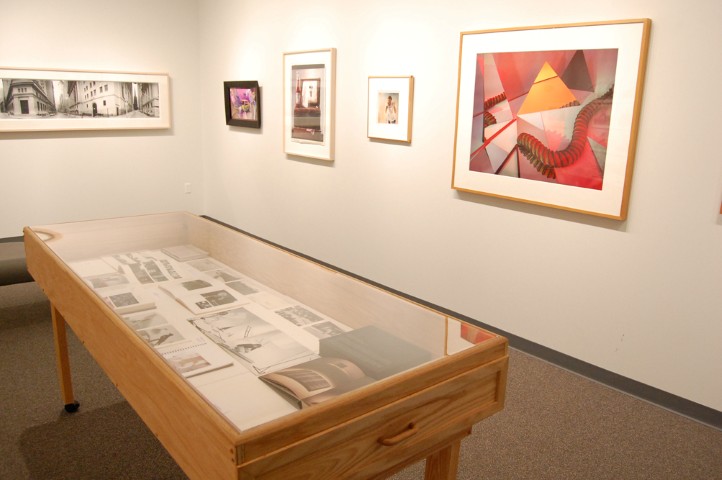
Oct 22, 2010 - Nov 18, 2010
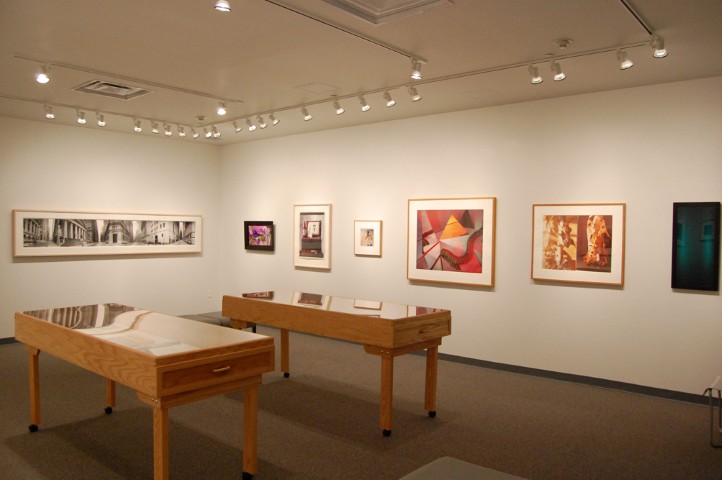
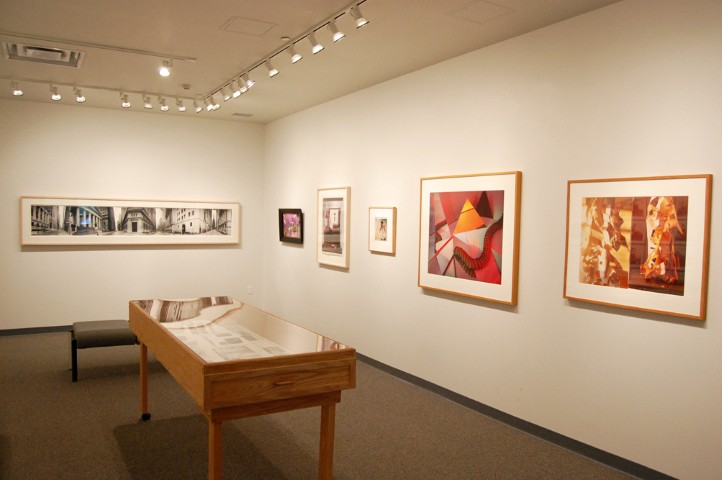
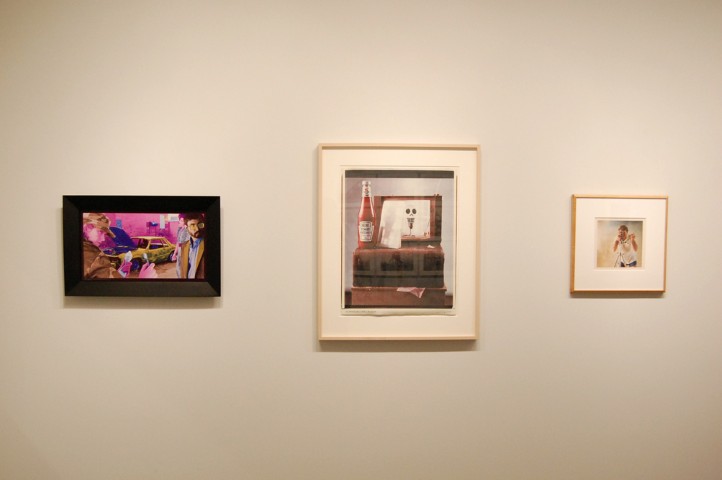
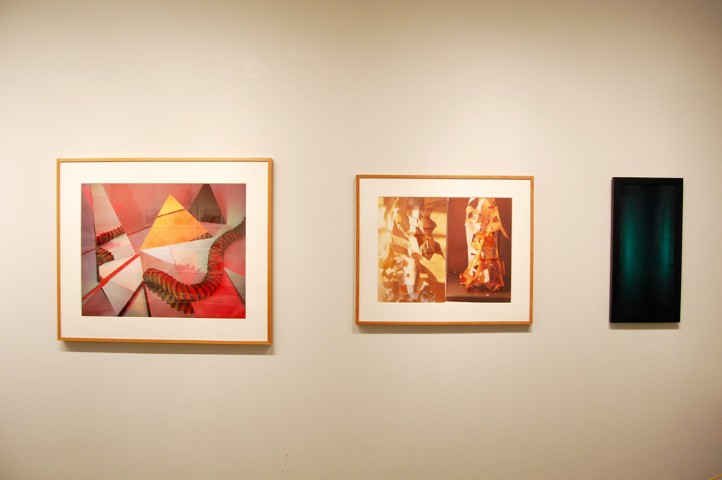
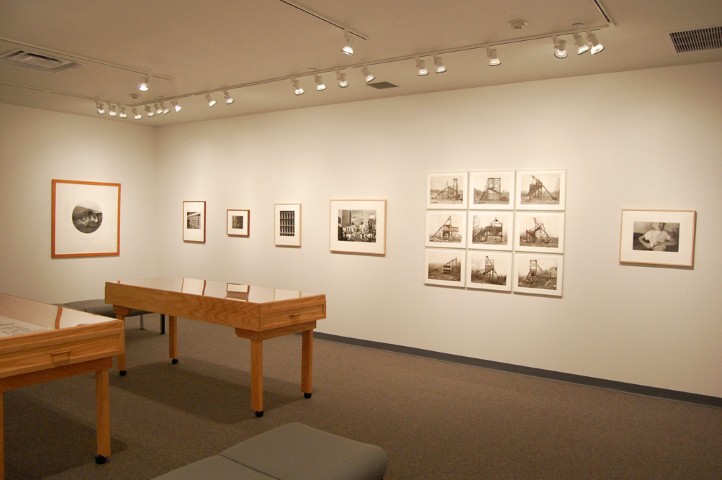
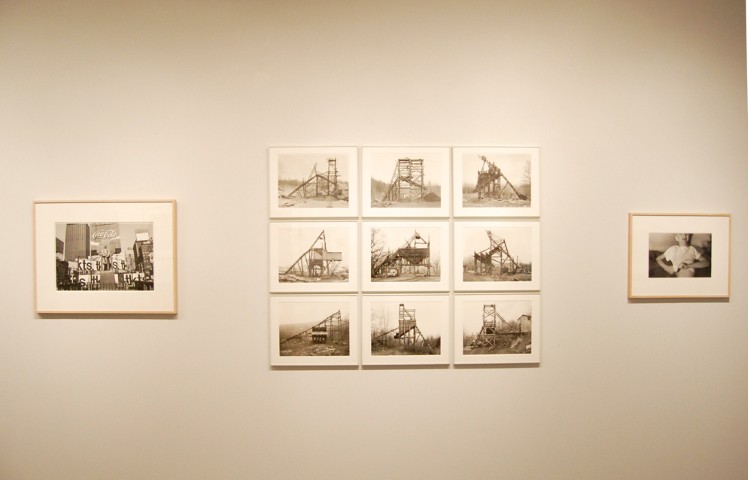
Photography: Vintage to Contemporary
Both Marywood University and the University of Scranton are offering courses in the history of photography this semester and the professors teaching these courses requested an exhibition of photographic works from The Maslow Collection that would provide a relevant historical overview for their students. Students will be required to complete research projects related to the artists and works in the exhibition. Note, in 2008 we presented a similar exhibition for the History of Photography students from both universities.
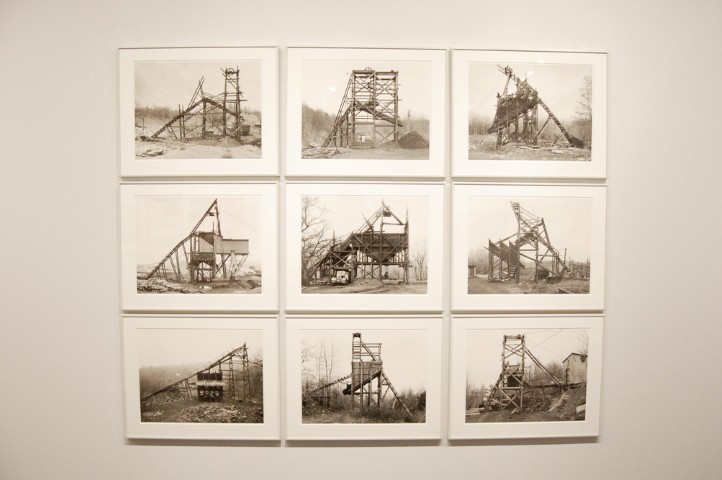
This exhibition of photographic works covers a period from the 1930s to the 1980s. (with earlier tintypes and carte de visites in the cases). Vintage prints from the 1930s to the 1960s include iconic works by Bernice Abbott, Wright Morris, and Evelyn Hofer. The gelatin silver prints by Lee Friedlander, Mark Cohen, Hilla and Bernd Becher, and Kenneth Snelson represent a changing attitude to subject matter in the 1970s. The 1980s color photographs, mostly done in the studio, are by Barbara Kasten, Sandy Skoglund, Robert Cumming, William Wegman, David Haxton, and Herwig Kempinger. The later works are more experimental in terms of process, materials and subject matter. One black and white image from this period by Hamish Fulton also opens up a dialogue on the relationship of the photographic image as "record" (or documentation) to the action of the artist, in this case a walk, which is the subject of his work.
Two additional works presented in the cases are from the Curator's collection. Eleanor Antin's "100 Boots" addresses the possible use of photography in a narrative project using mailed postcards over a period of nearly three years. The image by Alfredo Jaar from his Rwanda Project is contained in a black box and is not to be seen by the viewer (only the descriptive text on the box indicates the content of the image). In this manner of presentation Jaar questions the ability of the documentary image to confront us with an adequate representation of genocide and death, such as in Rwanda.
Bernice Abbott, The Automat, [1936], black and white photographHilla and Bernd Becher, Winding Towers, 1974 -1988, nine gelatin silver prints
Mark Cohen, Twisting, 1976, gelatin silver printRobert Cumming, Red Perceives Only a Bulb in the Outline, 1979, large format Polaroid
Lee Friedlander, Father Duffy, Times Square, New York City, 1974, gelatin silver print
Hamish Fulton, The Skylark and the Frog, 1986
David Haxton, untitled (266), 1983, EktachromeEvelyn Hofer, Haughwout Building, New York, c.1960, black and white photographBarbara Kasten, Construct NYC-8, 1983, Cibachrome print
Herwig Kempinger, untitled, 1989, C-printWright Morris, Drawer with Silverware, 1947, black and white photograph
Sandy Skoglund, The Laws of Interior Design, 1986, dye transfer printKenneth Snelson, Wall Street, 1980, silver contact print
William Wegman, Tripod, 1989, color photograph Also in cases:Eleanor Antin, 100 Boots, 1971-3, 8 mailed black and white postcards from a series of 51 imagesAlfredo Jaar, Katale Refugee Camp 50 kilometers north of Goma, Zaire, Wednesday August 31, 1994, color photograph (not to be visible) in a black box with text
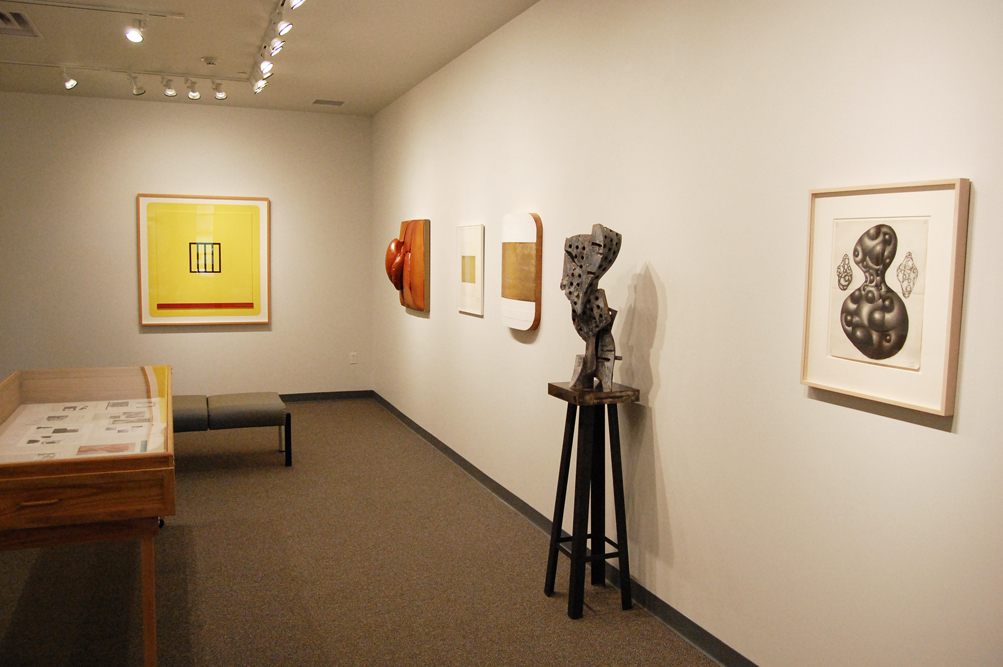
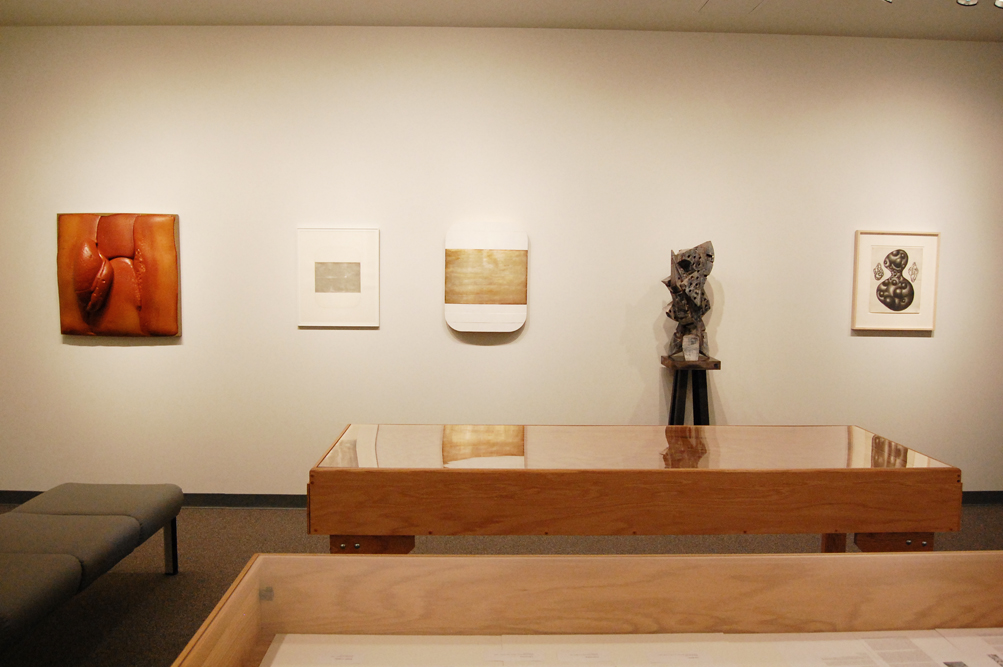
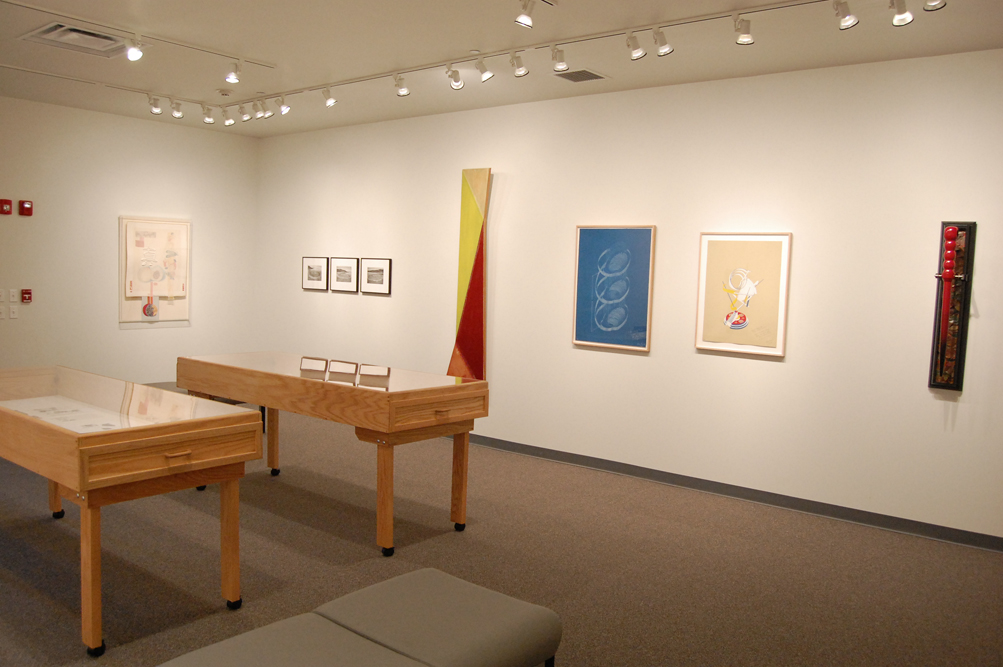
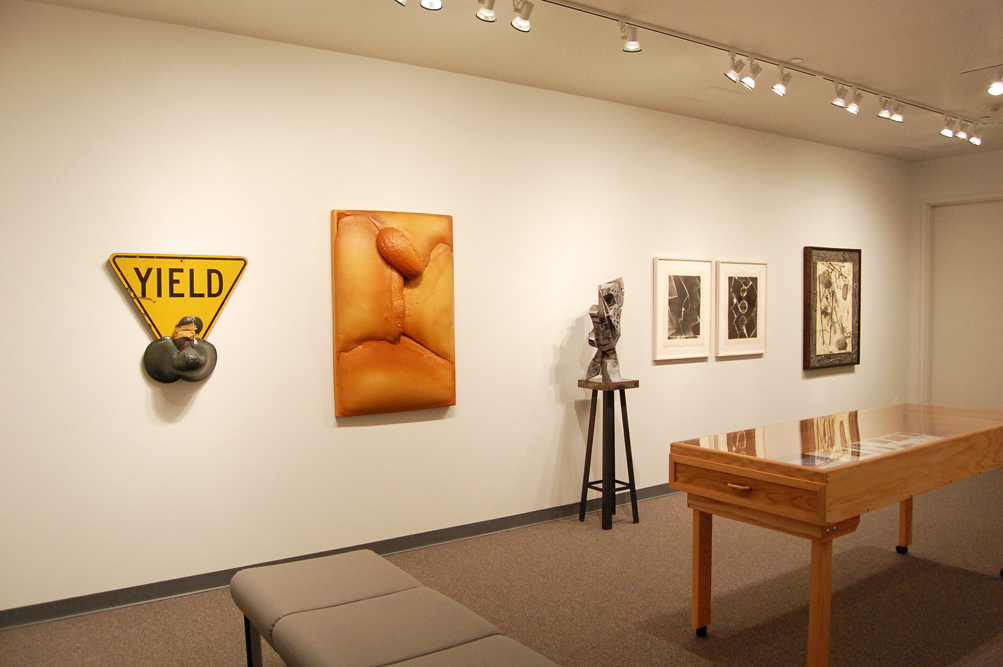
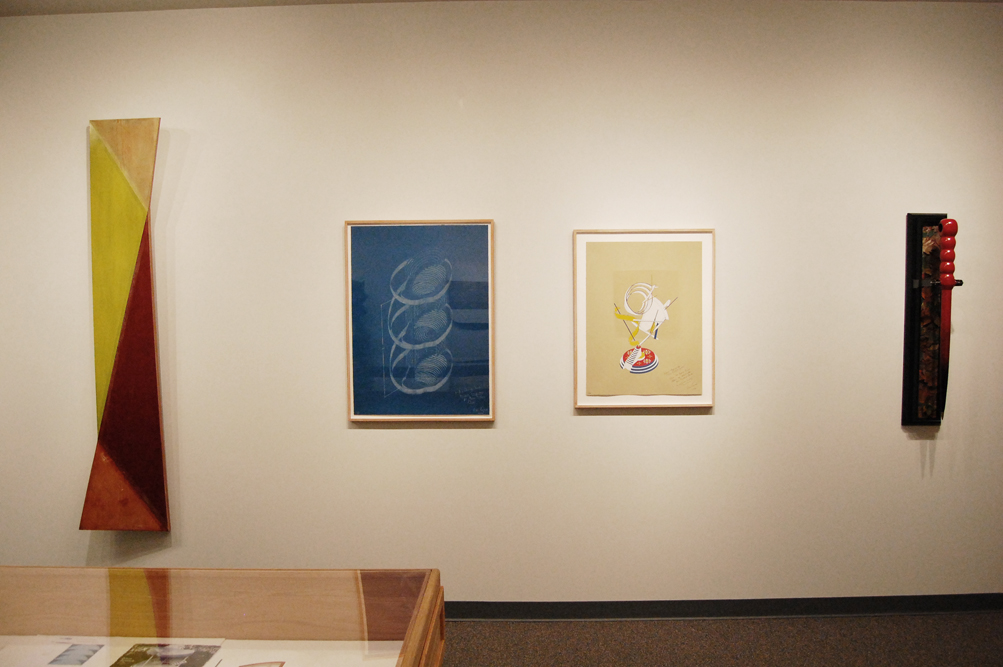
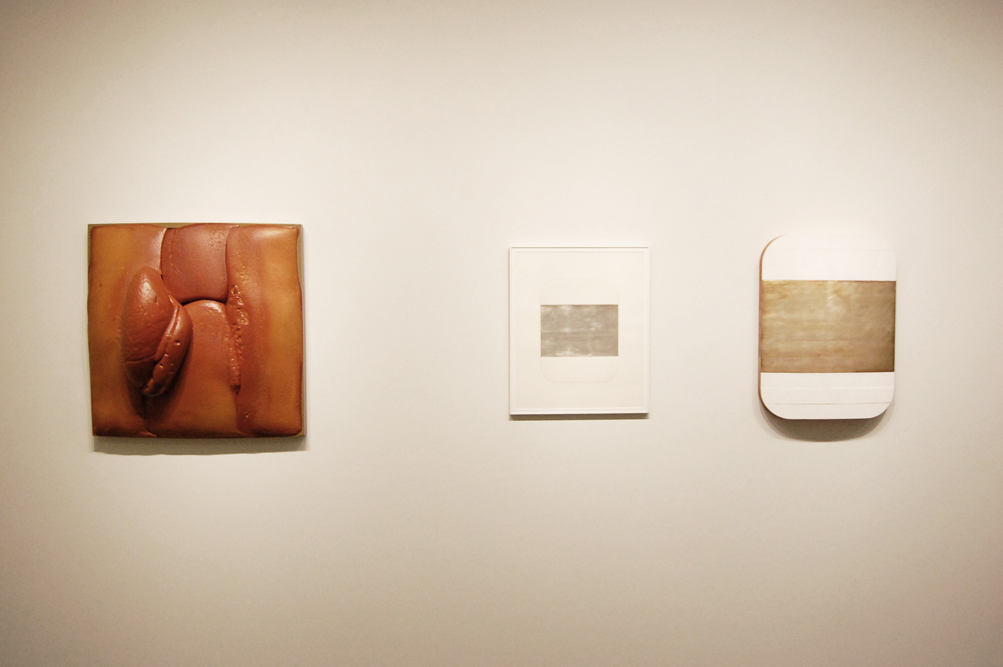
Oct 04, 2010 - Oct 18, 2010
3D Design
This installation brings together a number of diverse works from The Maslow Collection to provide a visual context to discuss issues in 3-D design. The exhibition was requested by Ruth Koelewyn, adjunct instructor for Marywood’s 3-D Design course.
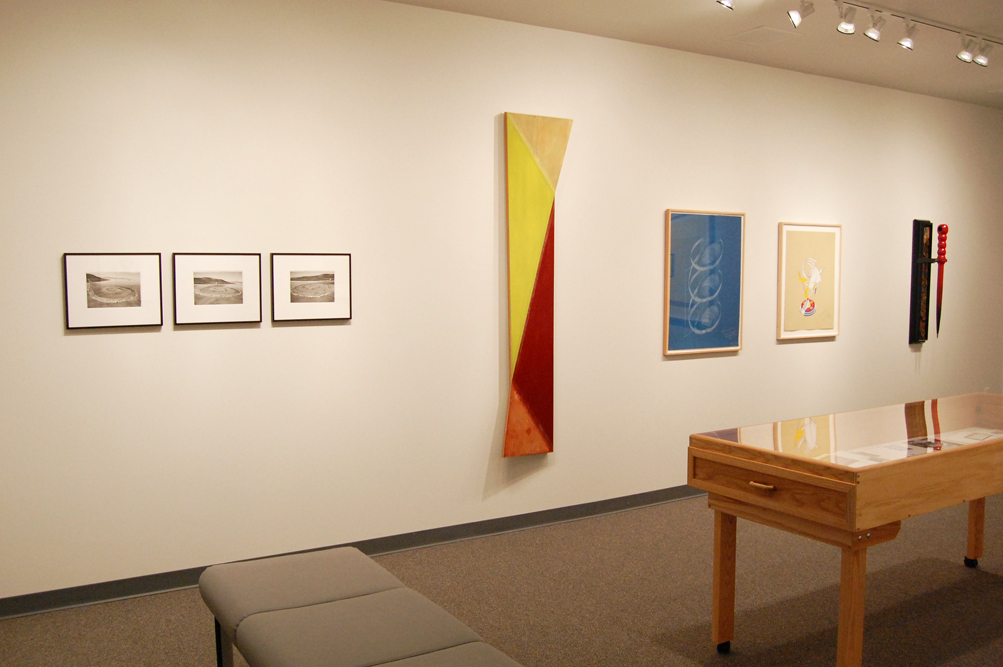
In this exhibition 3-D design is clearly represented through sculptural works by Tony Sorce, Robert Cumming, Kevin O’Toole, Mel Kendrick, and Tad Wiley. The vacuum formed relief print Prison by Peter Halley and a multimedia work by Robert Rauschenberg. Truth, extend the dialogue on shallow three-dimensional works. Two prints by Alice Aycock are direct studies for public sculptures that were later realized in Miami and New York City (and Strom King). A drawing by Karla Knight points to a sculptural form hovering in space, while the three early photographs of Robert Smithson’s Spiral Jetty by Gianfranco Gorgoni present a changing perspective on Smithson’s large scale earth work in the Great Salt Lake, Utah.
Alice Aycock, Untitled Central Park Project, 1987, screenprintAlice Aycock, Miami Proposal III / Above : The Cyclone, 1990, screenprint
Robert Cumming, Forefinger of Nature, 1986, wood and metalPeter Halley, Prison, 1987, vacuum formed relief print
Mel Kendrick, Basswood with Clay and Holes, 1986, basswood and clay
Karla Knight, Study for Descendant, 1989, Charcoal on paper
Kevin O'Toole, Study for LWR 86-92, 1992, oil pastel and silver leafKevin O'Toole, LWR 86-92, 1992, oil and silver leaf on paper pauplerRobert Rauschenberg, Truth #35 (from 7 Characters), 1982, collage mixed media
Robert Smithson, Spiral Jetty, (Great Salt Lake, Utah), 1970, 3 vintage photographs by Gianfranco GorgoniTony Sorce, Untitled-C, 1966-67, rigid polyurethane foam, wood, and vrnish
Tad Wiley, Bouy Tree, 1987, marine enamel and spar varnish on sugar pine
Aug 30, 2010 - Oct 03, 2010
The Maslow Collection: Context and Content [1 of 3 installations]
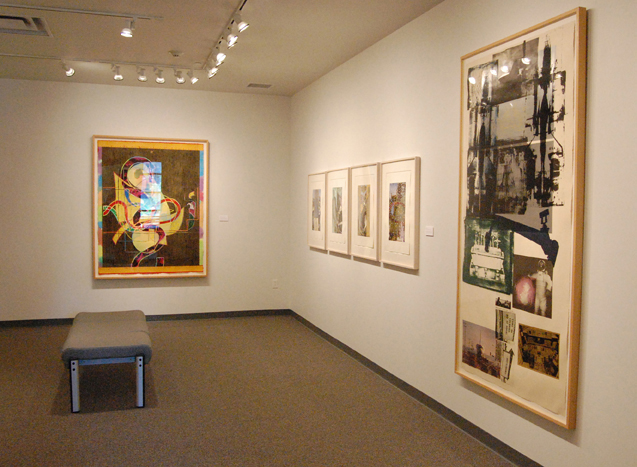
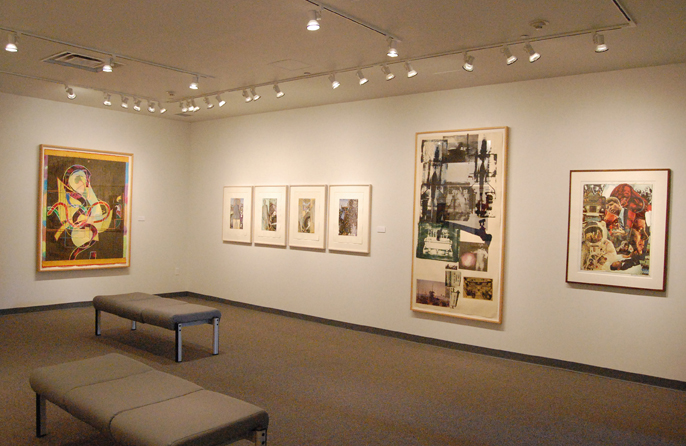
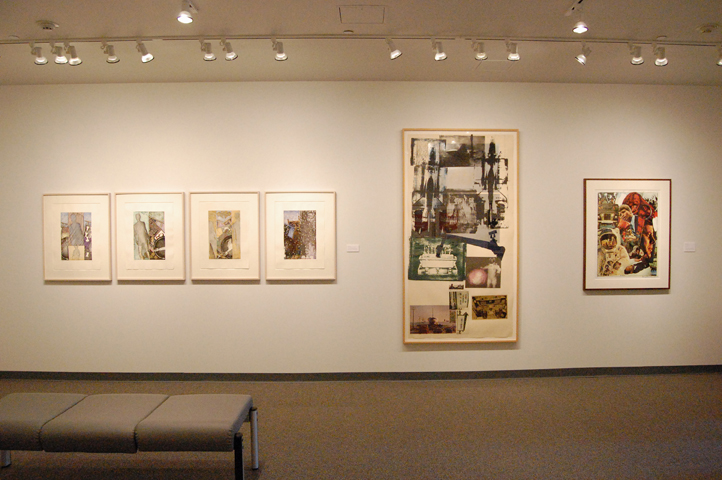
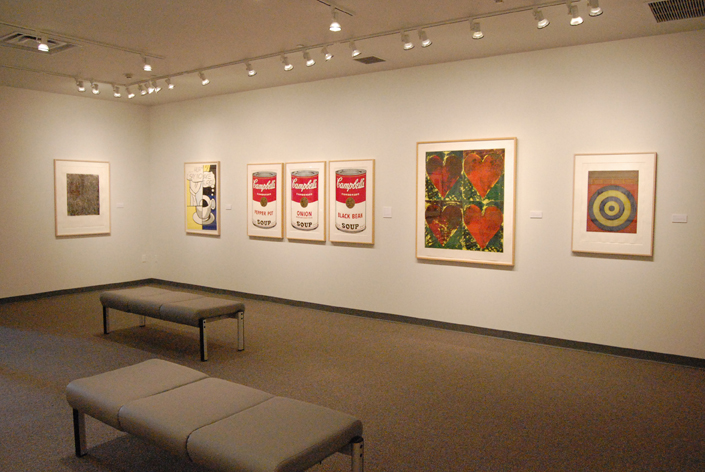
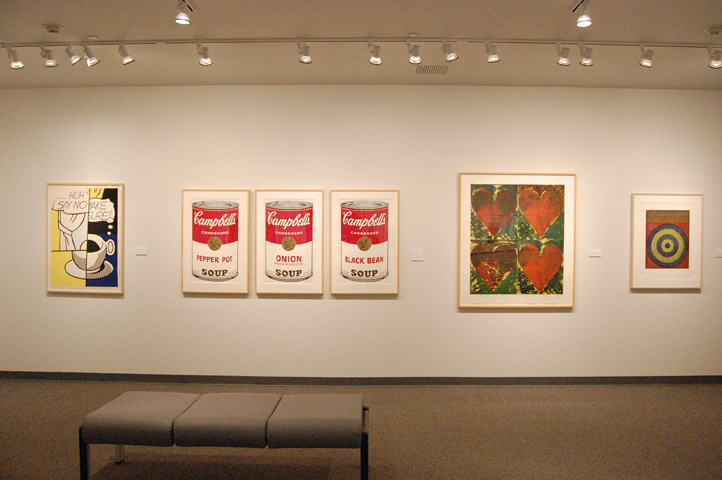
The exhibition currently in The Maslow Study Gallery for Contemporary Art is one component of the larger three gallery installation titled: The Maslow Collection: Context and Content. The overall theme of the three installations focuses on the development of The Maslow Collection in the 1980s and early 1990s. The exhibition in The Maslow Study Gallery presents one important early area of collecting for the Malsows, major prints by the most important and recognizable American artists of the time.
Jim Dine, L.A. Eyeworks, 1982, etching and carborundum, 50 1/2 x 44 [four sheets]
Jasper Johns, The Seasons, 1987, etching and aquatint from five copper plates, 26 1/4 x 19 1/4 each [four in series]
Jasper Johns, Target with Four Faces, 1979, color etching, 30 x 22 1/4
Jasper Johns, Target with Four Faces, 1979, color etching, 30 x 22 1/4
Roy Lichtenstein, Huh?, 1991, oil on paper
Robert Rauschenberg, Pergusa Three – State I, 1983, relief-printed etching and woodcut, 66 3/8 x 51 1/2
Robert Rauschenberg, Pergusa Three – State I, 1983, relief-printed etching and woodcut, 66 3/8 x 51 1/2
Frank Stella, Pergusa Three – State I, 1983, relief-printed etching and woodcut, 66 3/8 x 51 1/2
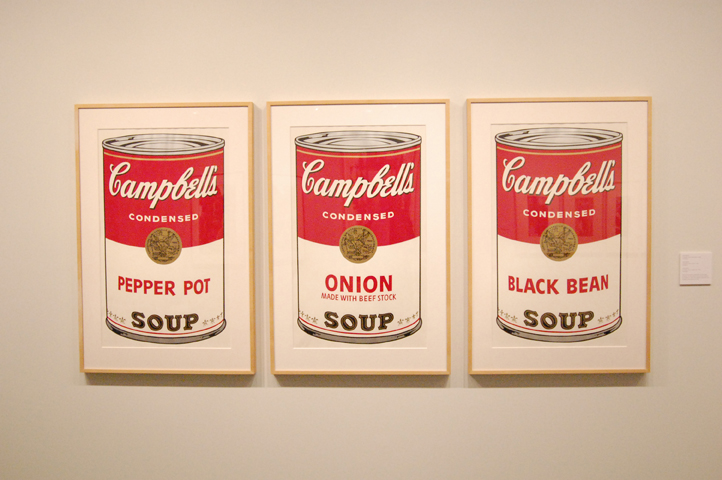
Andy Warhol, Black Bean, 1968, screenprint, 35 x 23
Andy Warhol, Onion, 1968, screenprint, 35 x 23
Andy Warhol, Pepper Pot, 1968, screenprint, 35 x 23
May 06, 2010 - Jun 05, 2010
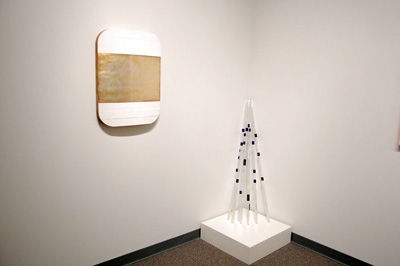
PATRICIA JOHANSON at Marywood: The Mary's Woods Project in Context
Internationally recognized environmental artist Patricia Johanson exhibits her new designs for the Marywood University Land Design/Environmental Remediation Initiative, along with selected drawings, documentation, and models of her other projects worldwide.
Mar 29, 2010 - Apr 25, 2010
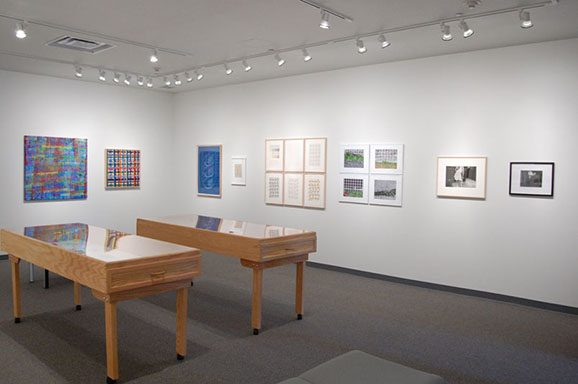
Generations Meet and Mix [Second Installation]
Exhibition of juried work by current Marywood art students will be curated with works drawn from The Maslow Collection. This second installation involves works by a few students who were familiar with many of the works in the Collection. Other students, who were not yet familiar with the Collection, presented works for the curator to determine and set up a potential dialogue.
Feb 20, 2010 - Mar 28, 2010
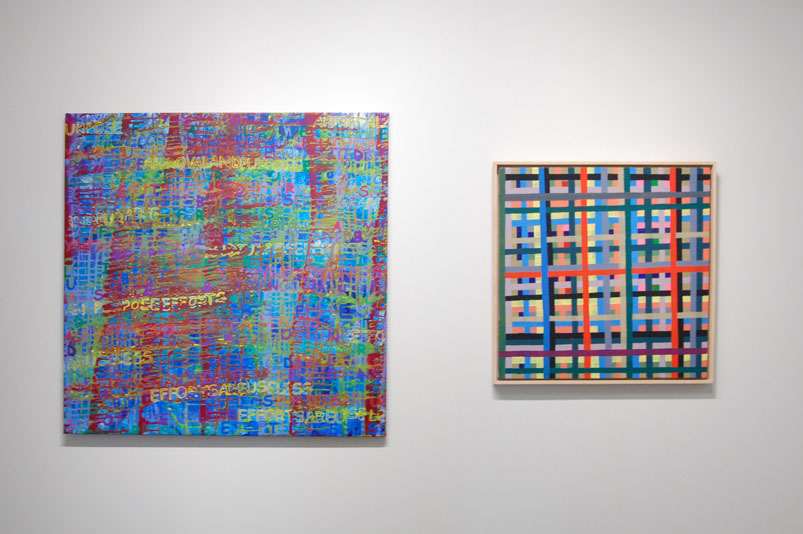
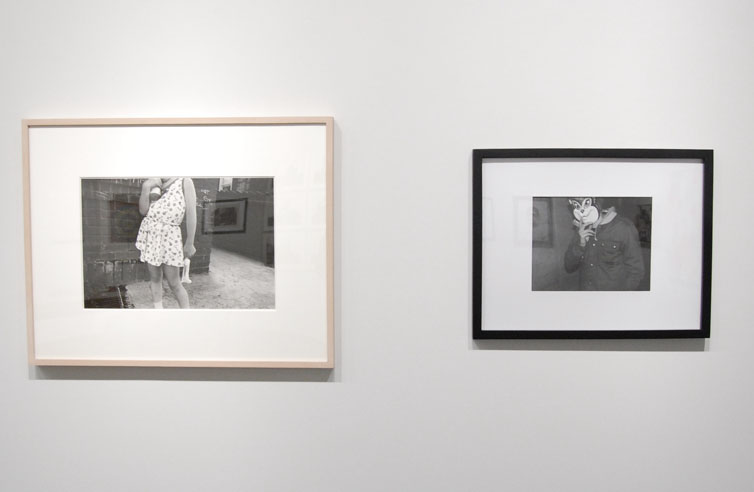
GENERATIONS MEET & MIX, Part I
Exhibition of juried work by current Marywood art students will be curated with works drawn from The Maslow Collection.
Jan 15, 2010 - Feb 14, 2010
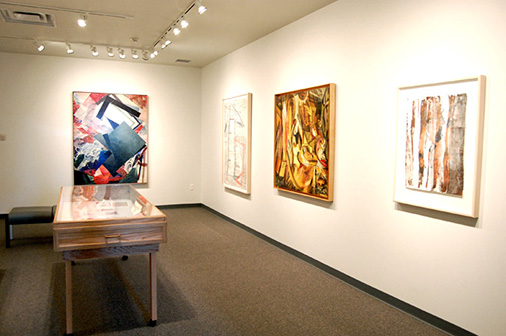
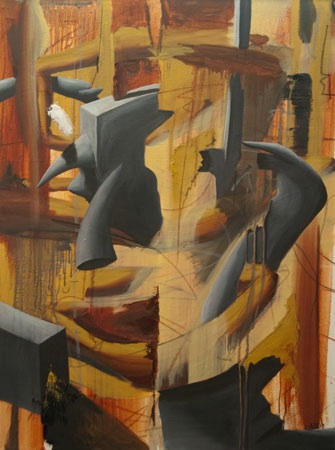
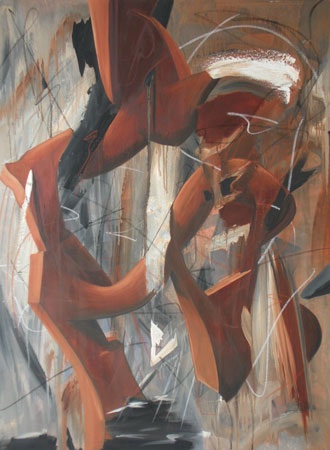
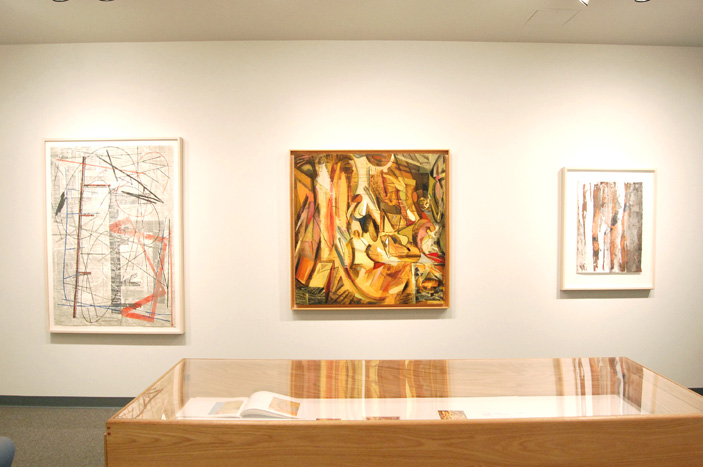
Dialogue
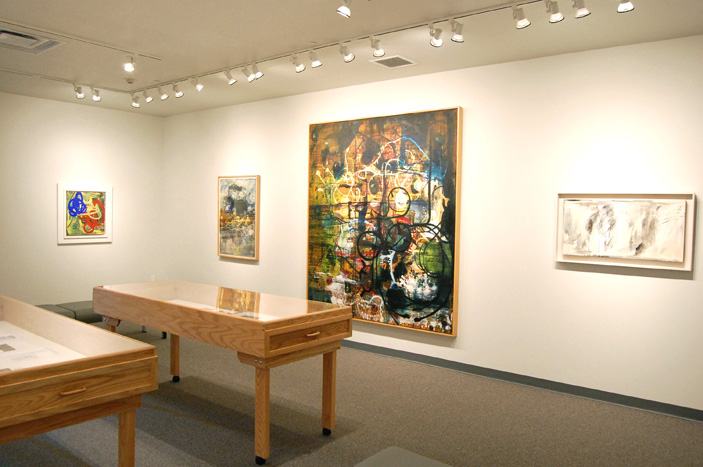
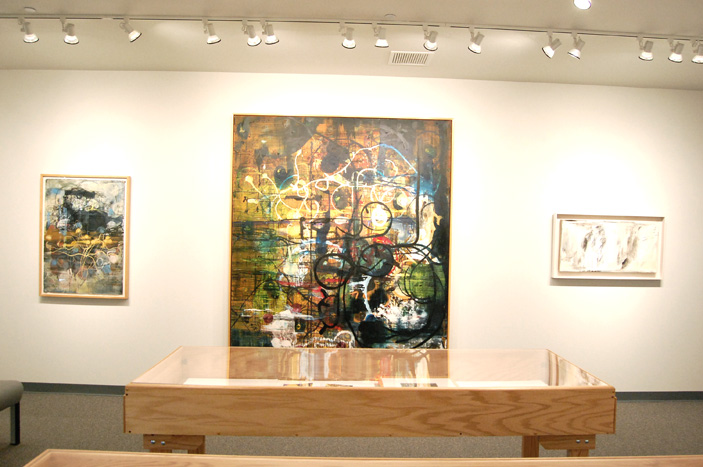
The current exhibition in The Maslow Study Gallery was curated by Ryan Hnat, a Marywood graduate student in painting, and a gallery assistant. This curatorial experience gave Ryan the opportunity to consider how certain works in The Maslow Collection relate to his own work and process. The works in the exhibition are therefore not necessarily unified in content or theme but rather individual elements in each work speak to one or more aspects in Ryan’s current approach to painting, and to the questions he his confronting in his own work.
In his exhibition statement Ryan comments: “What appeals to me in this extraordinary group of artists are the many different variations in line, material, and color. Anthony Sorce’s technique of layering thick sheets of paint on top of each other to create dynamic racing angles, and Jerry Buchanan’s structuring of painted shapes and implied lines bring a new perspective to my eyes, while William Heeks, with his massive painting titled ’Dome’, circumnavigates your entire being as you stand in front of it. Nancy Haynes and her serene colors along with Allison Maslow’s subtle collage bring a lighter feel to the bolder works in the exhibition. Frank Owen, Pier Consagra, and William Mentor allow you to see new perspectives on the use of line as shape. These works are essentially about their process to the end point and more importantly their command of compositional devices.”
Jerry Buchanan, Haywire, 1988-89, acrylic, charcoal, oil on plywood, 48 x 48
Pier Consagra, untitled, 1991, mixed media on canvas, 24 x 22
Nancy Haynes, Interrupt, 1991, oil on linen, 19 x 38
Willy Heeks, Dome, 1990, oil on canvas, 88 x 78
Willy Heeks, untitled, 1977, mixed media on paper, 44 3/4 x 32 3/4
Allison Maslow, Shhh, 2002, mixed media, 29 1/2 x 22 1/2
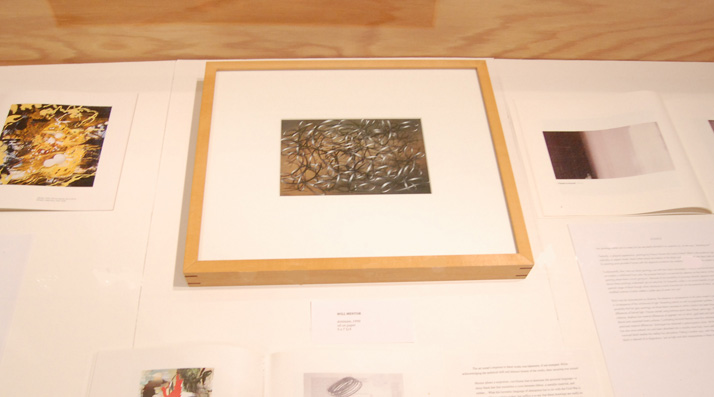
Will Mentor, Antietam, 1990, oil on paper, 5 x 7 3/4 [installed in display case, see photograph below]
Frank Owen, Vault, 1989, relief print, edition 7/13, 58 x 40 3/4
Anthony Sorce, Polarity, 1983, Rhoplex on canvas, 70 x 55 1/2
Oct 23, 2009 - Nov 10, 2009
Architecture II
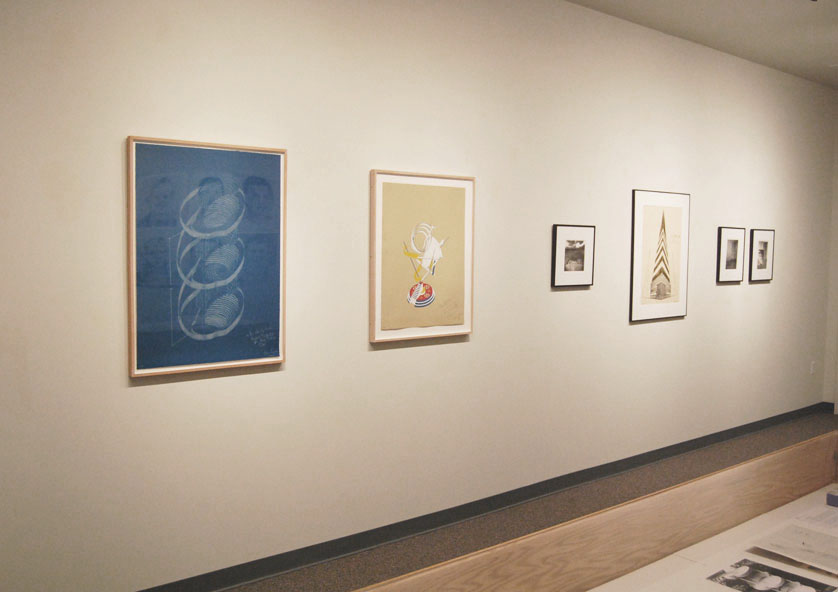
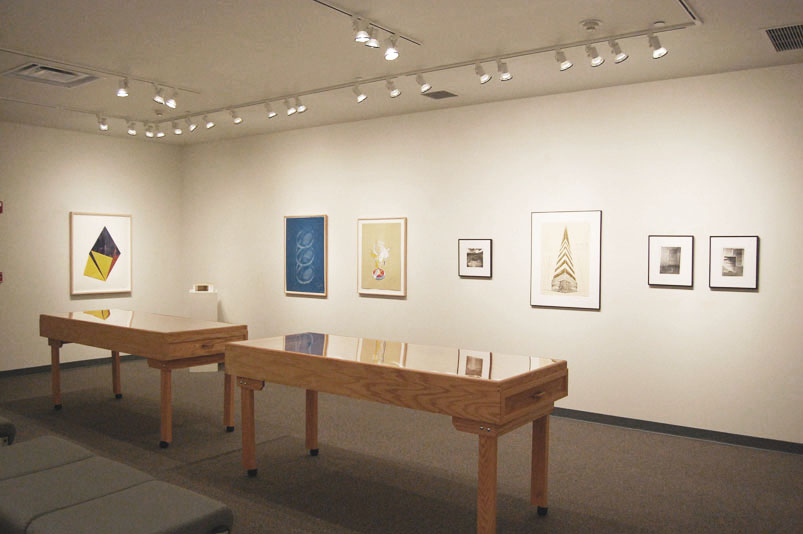
This is the second exhibition to be presented in The Maslow Study Gallery for Contemporary Art that addresses issues pertaining to art and architecture. Unlike the first exhibition, which was installed to coincide with two other architecture exhibition in the Mahady Gallery and the Suraci Gallery, this exhibition is held in conjunction with the formal opening of Marywood’s new School of Architectire.
The previous exhibition in The Maslow Study Gallery, “The Grid”, included Chuck Close’s handmade paper print of Philip Glass. The professors in the School of Architecture saw the opportunity to have their students refer to this work in an assignment that addressed “controlling tonal values”. The students used their Marywood Student ID Cards, enlarged their portraits, first by photocopy, and then by creating a 1⁄4” by 1⁄4” grid on a 18 x 24 Bristol Board for the tonal enlargement of their image using 5 pencils, from 6B to 6H. The portraits of 21 of the students in the class are presented in the installation.
In addition, this installation includes 4 works from The Maslow Collection (plus the Chuck Close print) and 4 works from the Curatorial Studies Research Library. The Golden Section, a proportional mathematical formula that has been used in architecture since the time of the early Greeks is the subject of Dorothea Rockburne’s “Radiance”, and the tunnel box by Jurgen Albrecht makes a strong reference to a model for sky lit angular rooms or passageways. Both of these works were included in the earlier architecture exhibition. Two works not exhibited before in the Maslow Study Gallery are by Alice Aycock. Both of these works are prints based on drawings for large outdoor sculptures. Many works by Aycock are grounded in architectural principles and are read as.
The works from the Curatorial Studies Research Library include two early photographs by Gordon Matta-Clark, who studied architecture at Cornell University, of “Pier In / Pier Out” the earliest of his works that lead to his development of the idea of “anarchitecture”, anarchy and architecture; a lithograph by the Cuban artist Carlos Garaicoa “Acerca de la consrtruccion de la verdadera Torre de Babel” that takes a run down building in Havana as the base for a projected “utopian” architecture; and a photograph by Will Insley of a large proposed structure “Building No. 17, Passage Space Spiral – Model. 1970”, Insley, who studied architecture at Harvard, also created models and plans that looked toward a futuristic or utopian architecture.
Jurgen Albrecht, untitled, 1990, museum board, paper, plastic, 3 3/8 x 10 x 22
Alice Aycock, Untitled Central Park Project, 1987, screenprint, 36 x 26
Alice Aycock, Miami Proposal III / Above the Cyclone, 1990, screenprint, 29 x 22 1/4
Chuck Close, Phil III, 1982, hamdmade paper, 69 x 53 1/2
Dorothea Rockburne, Radiance, 1983, lithograph on transpargra - printed on both sides, 40 x 32
This exhibition includes the following works from the Curatorial Studies Research Library:
Carlos Garaicoa, Accerca de la construccion de la verdadera Torre de Babel, 1973, screenprint, 27 x 19
Will Insley, Building / No. 17, Passage Space Spiral - Model, 1970, black and white photograph, 7 1/2 x 7 1/2
Gordon Matta-Clark, Pier In / Out, 1973, 2 black and white photographs, 10 x 8
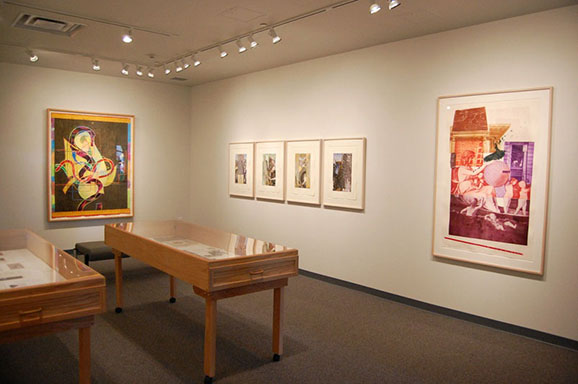
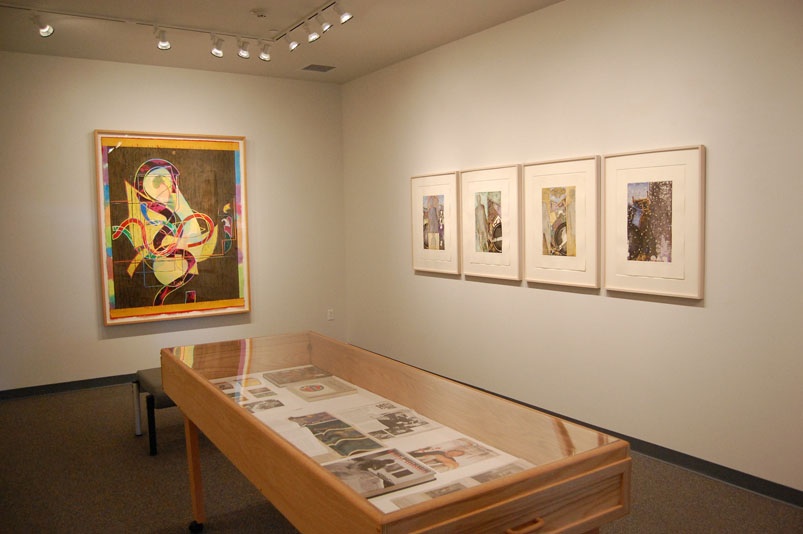
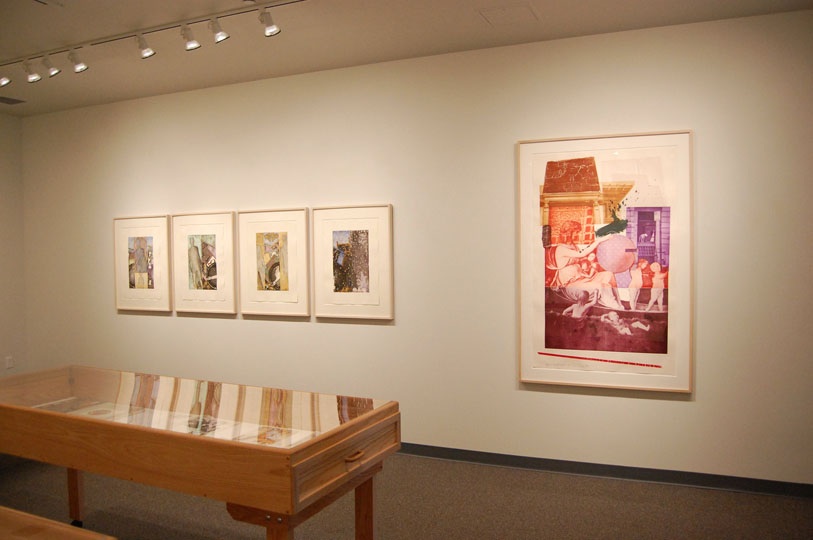
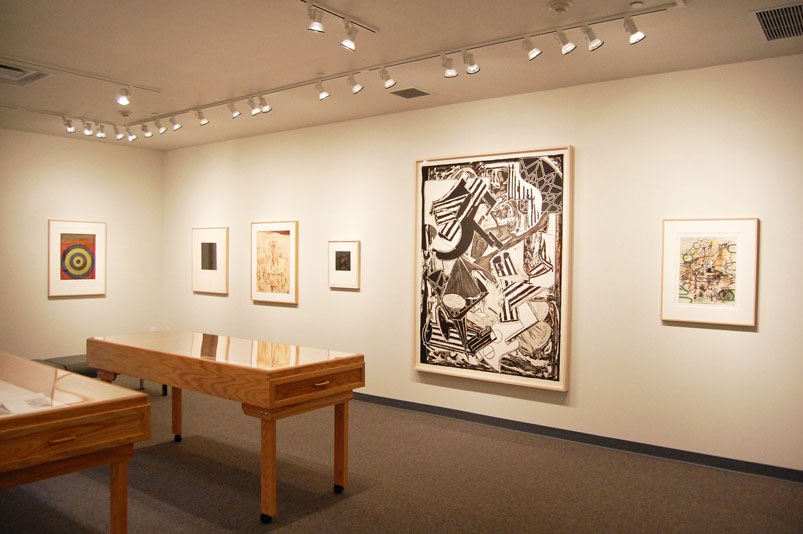
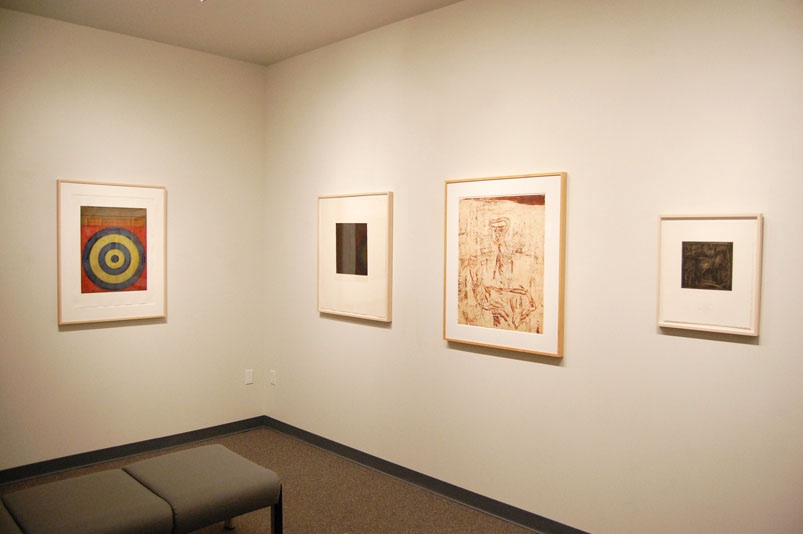
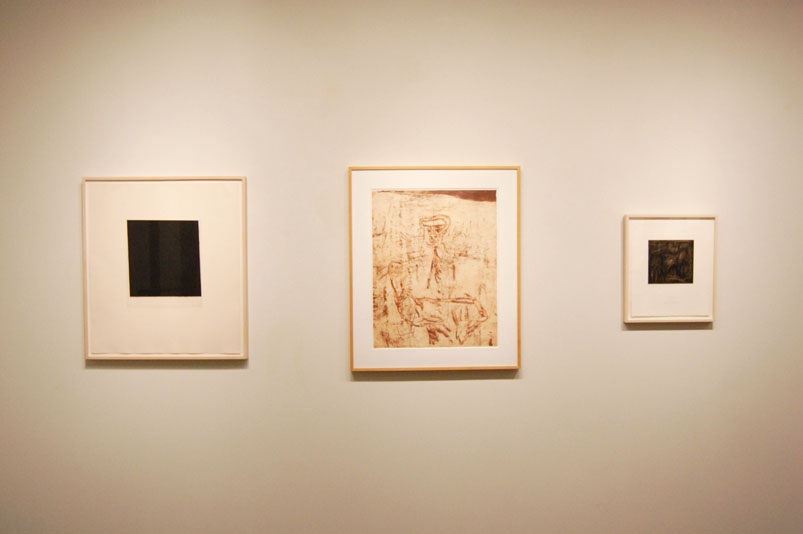
Nov 16, 2009 - Dec 11, 2009
Intaglio I & II
The current exhibition in The Maslow Study Gallery is the result of a meeting a few weeks ago with Peter Hoffer and the students in his printmaking class. The students had initially searched The Maslow Collection homepage and prepared lists of works that interested them. We then discussed these works and brought out a number from storage to preview.
The printmaking class this semester is working on intaglio processes, which could include etching, engraving, drypoint, or aquatint, therefore the selection of works for this exhibition are all intaglio prints. And since there are a number of significant and varied prints of this type in The Maslow Collection the Curator will change out four of the smaller works midway through the exhibition in order to provide the greatest depth possible for the consideration and examination of these processes by the students.
For a number of the works in this exhibition the artists and printmakers employed multiple processes to achieve the final prints. Frank Stella’s Pergusa Three – State I, used etching and woodcut, while in La Penna di hu he utilized etching and aquatint. Affirming Flame by Willy Heeks involved etching, drypoint and screenprinting, and the series of 4 works know as The Seasons by Jasper Johns involved etching and aquatint, as is the case also for Ellsworth Kelly’s Wall from 1979.
The works that will be changed out during the course of the exhibition will be those by Julien Schnabel, Melissa Meyer, Ellsworth Kelly and Willy Heeks, to be replaced with works by Francesco Clemente, Sandro Chia, and David Salle.
Willy Heeks, Affirming Flame, 1988, etching, drypoint, screenprint, 20 X 16, Edition: a/p
Jasper Johns, The Seasons, 1987, etching and aquatint from five copper plates, 26 1/4 x 19 1/4 each [four in series], Edition: 50/73 [ULAE – Universal Limited Artists Edition]
Jasper Johns, Target with Four Faces, 1979, color etching, 30 x 22 1/4, Edition: 10/88 [Petersburg Press]
Ellsworth Kelly, Wall, 1979, etching and aquatint, 31 1/2 x 28, Edition: 44/50 [Tyler Graphics]
Melissa Meyer, Ten Eyck (from Survey Suite II), 1992, intaglio, 18 x 15 1/4, Edition: 7/50
Robert Rauschenberg, Bellini #2, 1987, 11 color intaglio, 58 7/8 x 37 1/4, Edition: 25/48 [ULAE – Universal Limited Artists Edition]
Julian Schnabel, Tod Cage Without Bars, 1982, etching, 29 1/2 x 23 1/4, Edition: 8/50
Frank Stella, Pergusa Three – State I, 1983, relief-printed etching and woodcut, 66 3/8 x 51 1/2, Edition: 5/10 [Tyler Graphics]
Frank Stella, La Penna di hu, 1988, two color relief etching and aquatint, 77 1/2 x 58 3/4, Edition: 41/42 [Tyler Graphics]
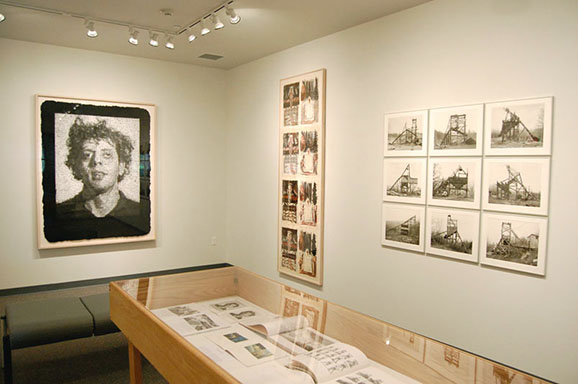
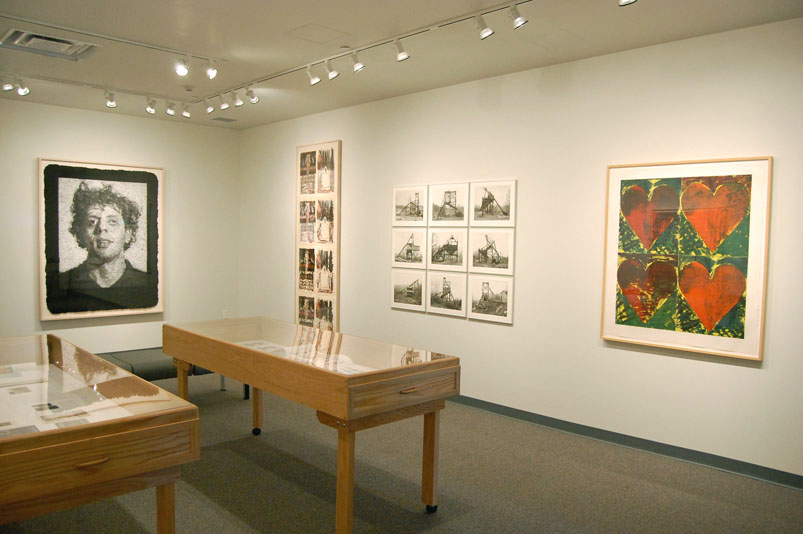
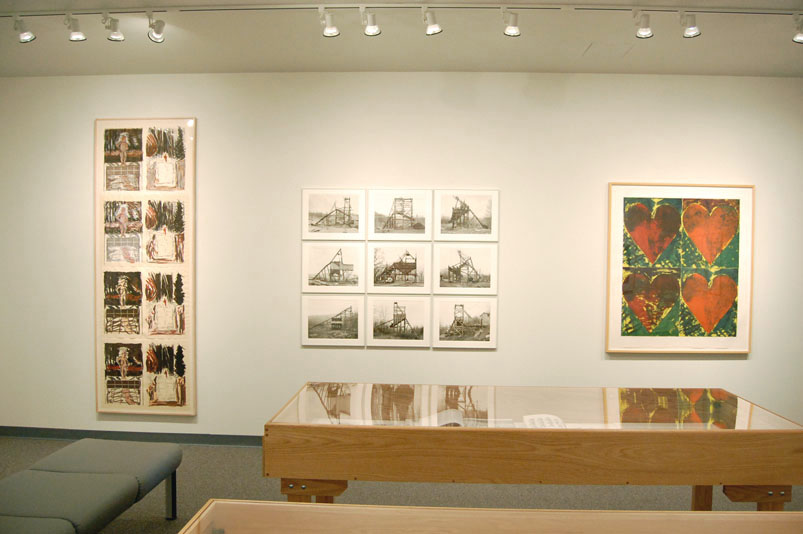
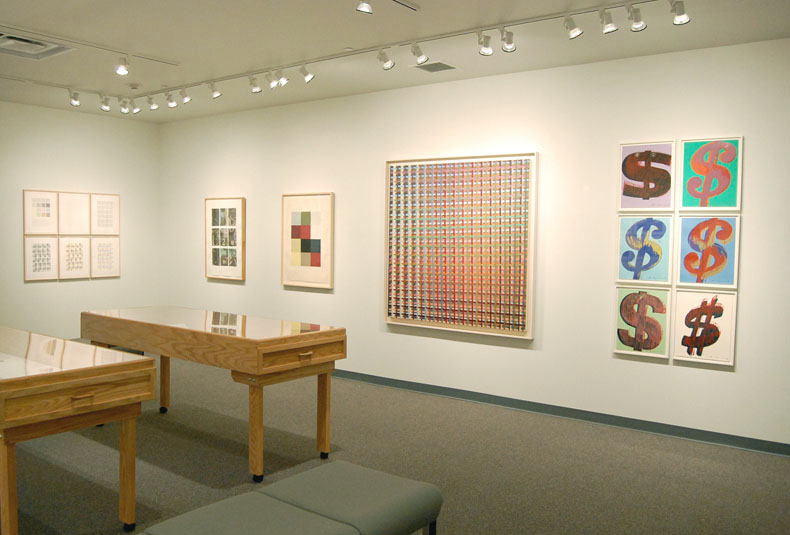
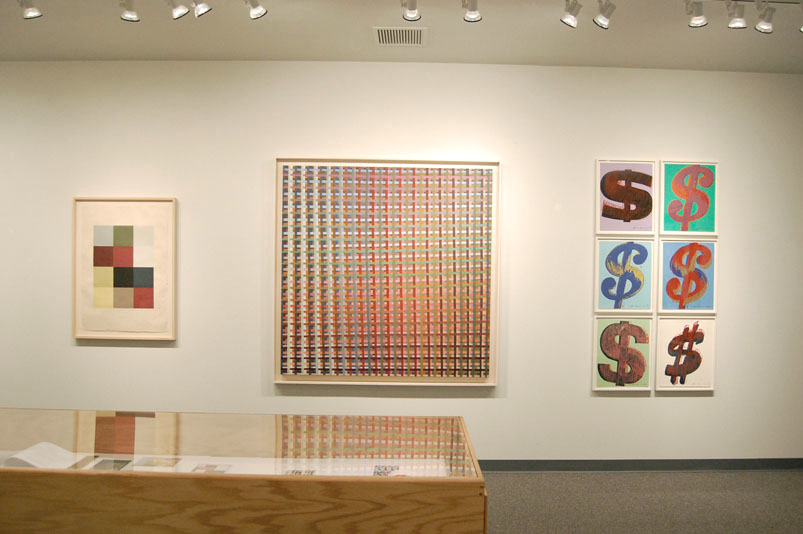
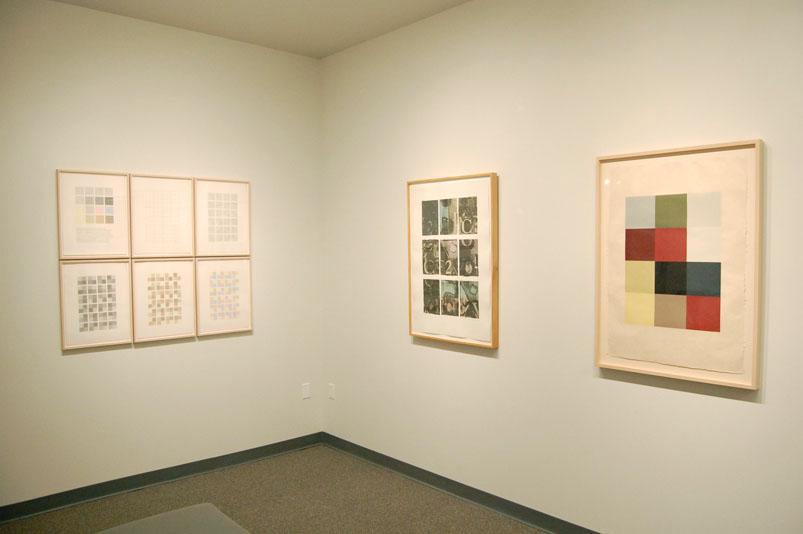
Aug 24, 2009 - Sep 21, 2009
The Grid
This exhibition examines the way "the grid" functions for various contemporary artists.
For certain artists the grid provides a way to organize information, present ideas and to establish categories for comparison [the Bechers, Jennifer Bartlett, Jasper Johns, and Jim Dine], or to create repetition that reflects media bombardment of images, often pointing to the numbing effect of repetition [Warhol].
Sol LeWitt has used the grid in both his sculpture and wall drawings since the 60s to contain and establish a systematized response to his conceptual statements or prescriptions. Chuck Close isolates detail from the whole when he uses the grid while in Meltdown Sherrie Levine has extrapolated information from one source and passed it through a computer program to generate a grid, in this instance from an image of a well know painting. The grid that Gary Lang creates is the result of an orderly placement of painted lines of various colors.
In each case the grid is apparent at first glance, but the function of the grid differs widely depending on each artist’s intent and use.
Jennifer Bartlett, In the Garden #40, 1983, color screenprint / woodcut (printed on four sheets), 23 x 30 (each sheet)
Hilla and Bernd Becher, Winding Towers, 1974 -1988, nine gelatin silver prints, 16 x 20 (each)
Chuck Close, Phil III, 1982, hamdmade paper, 69 x 53 1/2
Jim Dine, L.A. Eyeworks, 1982, etching with carborundum [four sheets in the grid], 50 1/2 x 44
Jasper Johns, Voice 2, 1983, lithograph, 36 1/2 x 25 1/2
Gary Lang, Mirror, 1991, acrylic on canvas, 69 x 60
Sherrie Levine, Meltdown, 1989, woodcut (one of four prints), 36 1/2 x 25 3/4
Sol LeWitt, Serial Systems, 1977, screenprint (six prints in the series), 19 1/4 x 14 1/4 (each)
Andy Warhol, $1, 1982, screenprint (6 in the series), 19 2/3 x 15 3/4 (each)
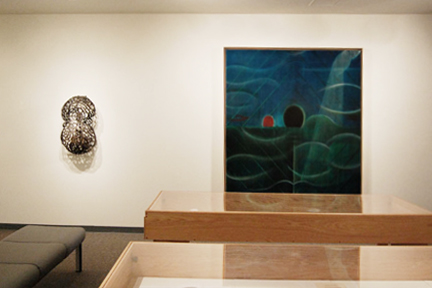
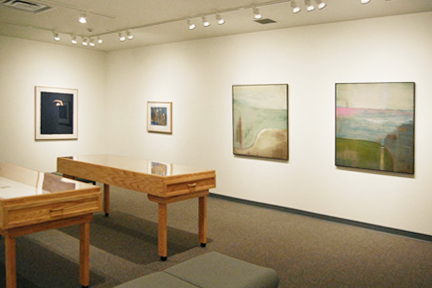
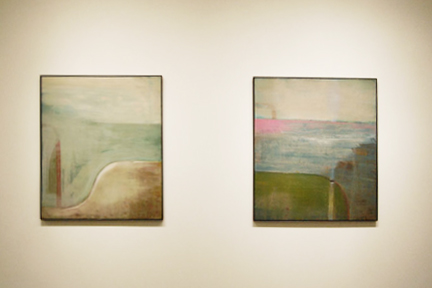
May 01, 2009 - May 25, 2009
Water: A Student Curated Exhibition
This exhibition was curated by Samantha Urbanick, an Arts Administration student at Marywood, upon the completion of her internship with The Maslow Collection. Following is a statement that Samantha prepared to accompany the exhibition:
"The collection of works that I have selected for this exhibition share a common theme of water. I chose to present this theme using abstract examples of water, opting for paintings that display cool tones coupled with that ephemeral, relaxing feeling one often experiences while swimming. I invite viewers to lose themselves in the modern pointillism of Joseph DiGiorgio's Oceanside No. 11 and to sink into Robert Moskowitz's print, Swimmer, which was the inspiration for the entire exhibit.
It was a wonderful experience working with The Maslow Collection, and I hope you enjoy my selections from the collection as much as I do."
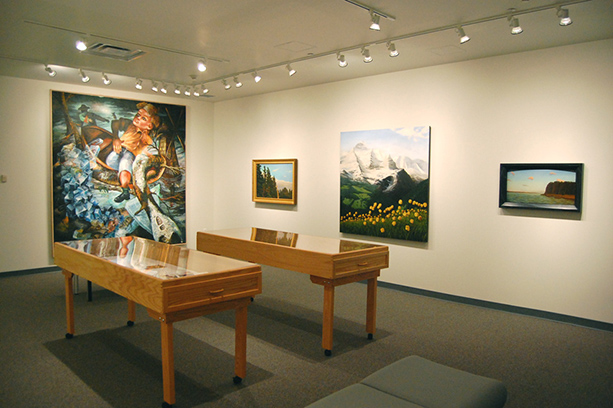
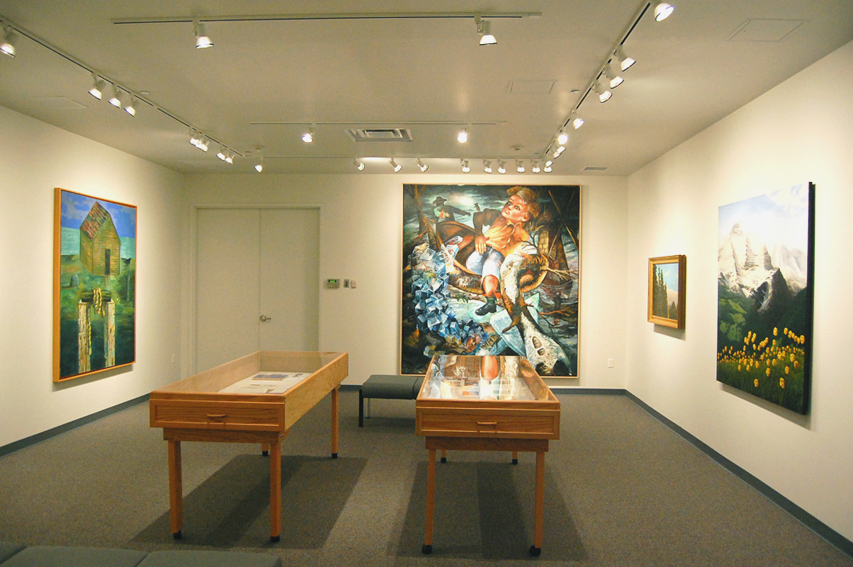
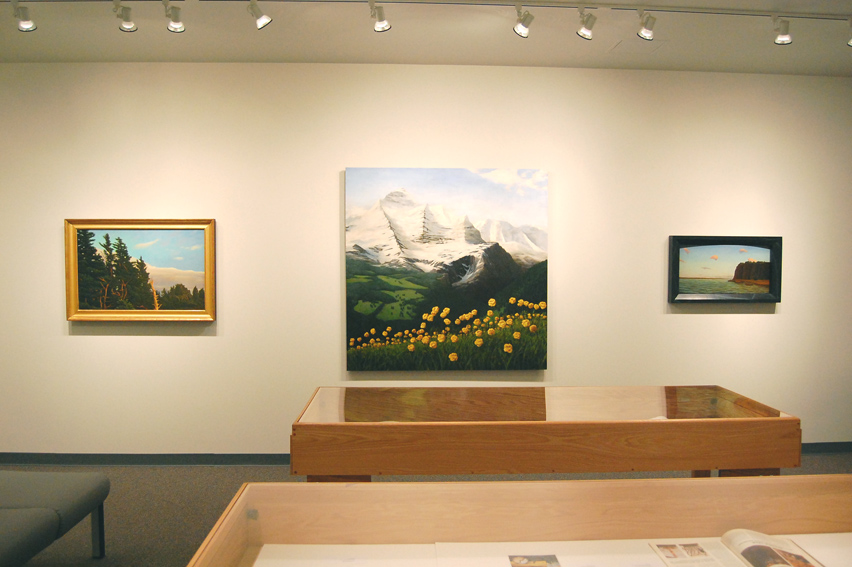
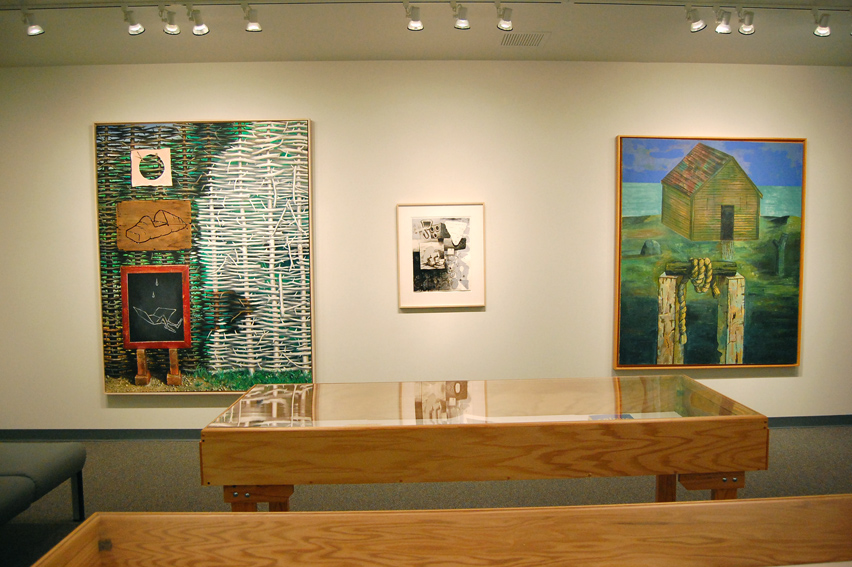
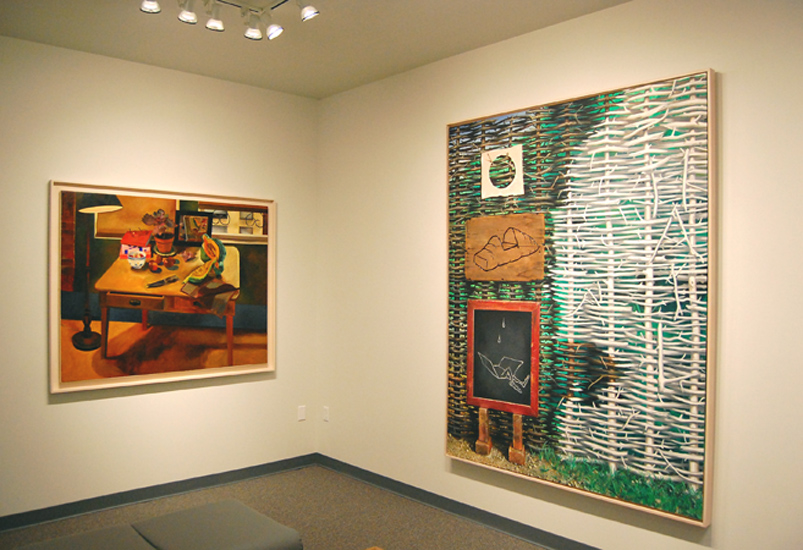
Apr 04, 2009 - Apr 27, 2009
Painting (+): Figurative and Landscape II (and one Still Life)
This exhibition is Part II of the earlier "Painting (+): Figurative and Landscape 1" exhibition that was presented in The Maslow Study Gallery during November and December of 2008. Works included in this current exhibition are by Anne Abrons, John Beerman, Steven Campbell and Edward Henderson along with 2 of the artists who we included in the first installment, David Hornung and Tracy Grayson.
The landscape is the subject of the works by Grayson and Beerman in this current exhibition. One of the two works by Beerman seen here, Unpossessible Being, clearly speaks to his interest in the point of view of the Hudson River School painters of the mid to late 19th century. The Scottish born artist Steven Campbell frequently paints works that appear to relate to a rather elaborate, often somewhat humorous, story line or folktale, as if an illustration of a story he may have once heard as a child while sitting on his grandfather's knee. The still life, Fall, by Anne Abrons is rather straightforward with signs of an influence from Cezanne. The two works by Henderson in this exhibition challenge our observation and acceptance of what is real, with “meaning” always giving way to ambiguity, while Hornung’s Outermost House creates a desolate desert environment where the house never really comes to rest in the landscape.
Anne Abrons, Fall, 1990, oil on linen, 46 x 60
John Beerman, Trees and Sky, Looking Eastward, Sandia Peak, N.M., 1989, oil on linen, 30 x 43 3/4
John Beerman, Unpossessible Being, 1986, oil on wood and masonite, 20 1/2 x 35 1/2
Steven Campbell, Young Man Frozen by a Waterfall, 1985, oil on canvas, 103 x 95
Tracy Grayson, untitled, 1989, oil on wood, 60 x 60
Edward Henderson, untitled, 1990, mixed media on paper, 23 x 17 1/2
Edward Henderson, Vein, Vain, Vane, 1985-6, oil and inlaid wood on canvas, 84 x 66
David Hornung, Outermost House, 1988, oil on linen, 72 x 60
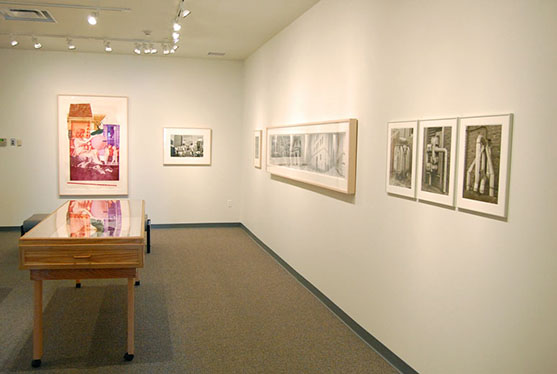
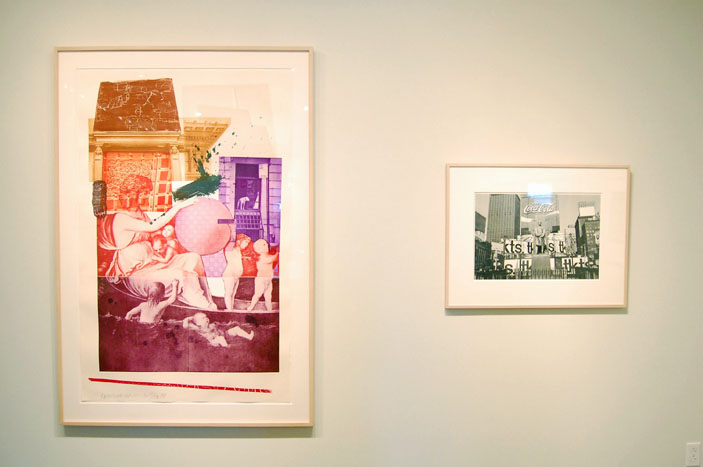
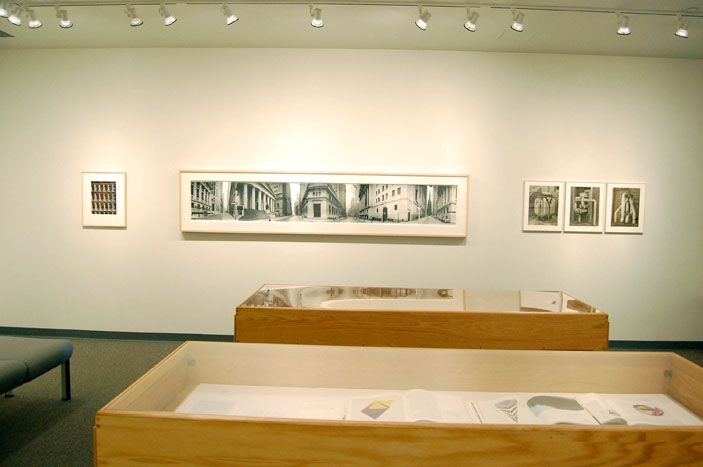
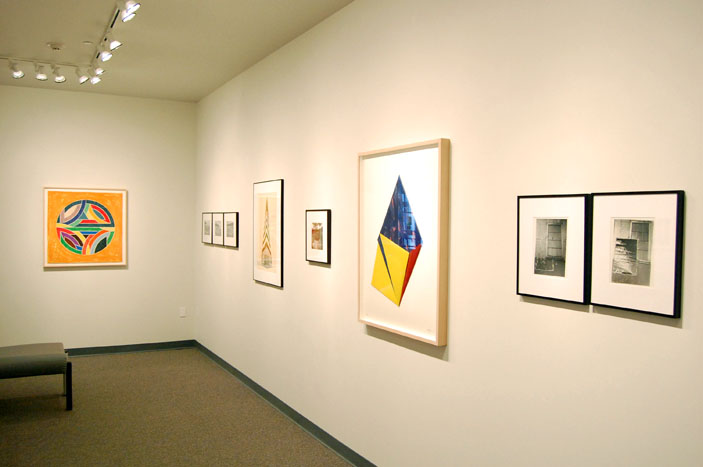
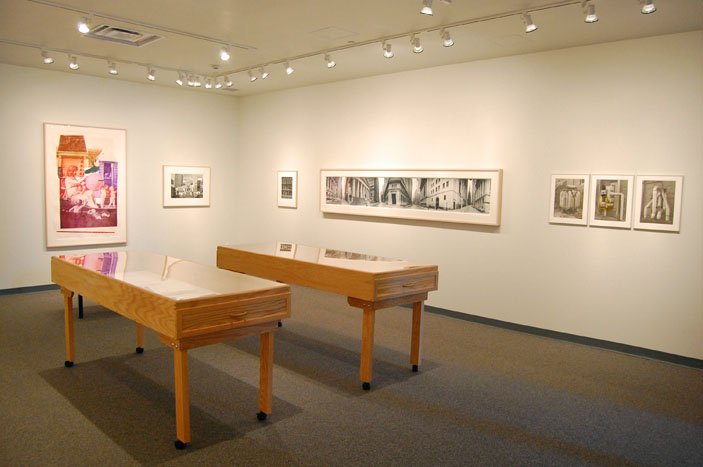
Feb 07, 2009 - Mar 22, 2009
Architecture: From Concepts to Details
The current exhibition in The Maslow Study Gallery is presented in conjunction with the concurrent exhibitions in the two other Marywood galleries: "Frozen Music: Frank Gehry & the Walt Disney Concert Music Hall" and "Build. Pennsylvania Architects".
Selections from The Maslow Collection included in this exhibition that make visual or theoretical references to architecture range from Dorothea Rockburne's "Radiance" and Frank Stella's "Singerli Variation Squared with Colored Ground IV" to Robert Rauschenberg's "Bellini #2" and Jurgen Albrecht's untitled tunnel box. The mathematical formula for The Golden Section, used in architecture for centuries, is the basis of Rockburne's print, while the protractor variations in Stella's work form the abstract center of the ancient Hittite circular city, Singerli. Rauschenberg's work contains collaged architectural elements of renaissance buildings and 20th century architecture. The tunnel box by Jurgen Albrecht makes a strong reference to a model for sky lit angular rooms or passageways. In addition to these works, a number of related photographic images by Bernd and Hilla Becher, Evelyn Hofer, Kenneth Snellson, and Lee Freidlander are included in the exhibition. The installation of the Rauschenberg print and the Freidlander image next to each other provides a counterpoint to the artist's assemblage of diverse architectural elements to create a total work, and the natural develop of New York City's architecture over time.
Works from the Curatorial Research Library are also presented in this exhibition, including early images by Gordon Matta-Clark of "Pier In / Pier Out", the earliest of his works that lead to his development of the idea of "anarchitecture"; a lithograph by the Cuban artist Carlos Garaicoa "Acerca de la consrtruccion de la verdadera Torre de Babel" that takes a run down building in Havana as the base for a "utopian" architecture; a photograph by Will Insley of a large proposed structure "Building No. 17, Passage Space Spiral – Model. 1970", and three photographs of Robert Smithson's "Spiral Jetty". Additional related books and images are located in the two gallery cases.
Jurgen Albrecht, untitled, 1990, museum board, paper, plastic, 3 3/8 x 10 x 22
Bernd & Hilla Becher, Coal Mines (details), 1988, black and white photographs - series of 3, 20 x 16
Lee Friedlander, Father Duffy, Times Square, New York City, 1974, black and white photograph,15 1/4 x 22 3/4
Evelyn Hofer, Haughwout Building, New York, c. 1960, black and white photograph, 13 1/2 x 10 1/2
Robert Rauschenberg, Bellini #2, 1987, intaglio - 11 color, 57 7/8 x 37 1/4
Dorothea Rockburne, Radiance, 1983, lithograph on transpargra - printed on both sides, 40 x 32
Kenneth Snelson, Wall Street, 1980, silver contact print, 15 1/2 x 106
Frank Stella, Singerli Variation Squared with Colored Ground IV, 1981, offset lithograph and screenprint, 32 x 32
This exhibition includes the following works from the Curatorial Research Library:
Carlos Garaicoa, Accerca de la construccion de la verdadera Torre de Babel, 1973, screenprint, 27 x 19
Will Insley, Building / No. 17, Passage Space Spiral - Model, 1970, black and white photograph, 7 1/2 x 7 1/2
Gordon Matta-Clark, Pier In / Out, 1973, 2 black and white photographs, 10 x 8
Robert Smithson, Spiral Jetty, Salt Lake City, Utah. 1970, black and white photographs - 3 views, 8 x 10